Lizard-953-E
Lizard-953-E
drag to rotate · scroll / pinch to zoom
Astrographical Info
| Age | 6.998•10⁹ years |
|---|---|
| Axial Tilt | 4°19'01.40" |
| Class | Terrestrial Exoplanet |
| Diameter | 22,967.96 km (1.8025⨁) |
| Gravity | 1.8937 ''g'' (18.570853105 M/s²). |
| Mass | 6.153 Earths |
| Suns | 1 (Lizard-953-A) |
Orbital
| Orbital Period | 1.121 years |
|---|---|
| Rotation Period | 12h 48m00.00s |
| Semimajor Axis | 1.15 AU |
| Solar Day | 12h49m00.10s |
| System | Lizard-953 System |
Atmosphere
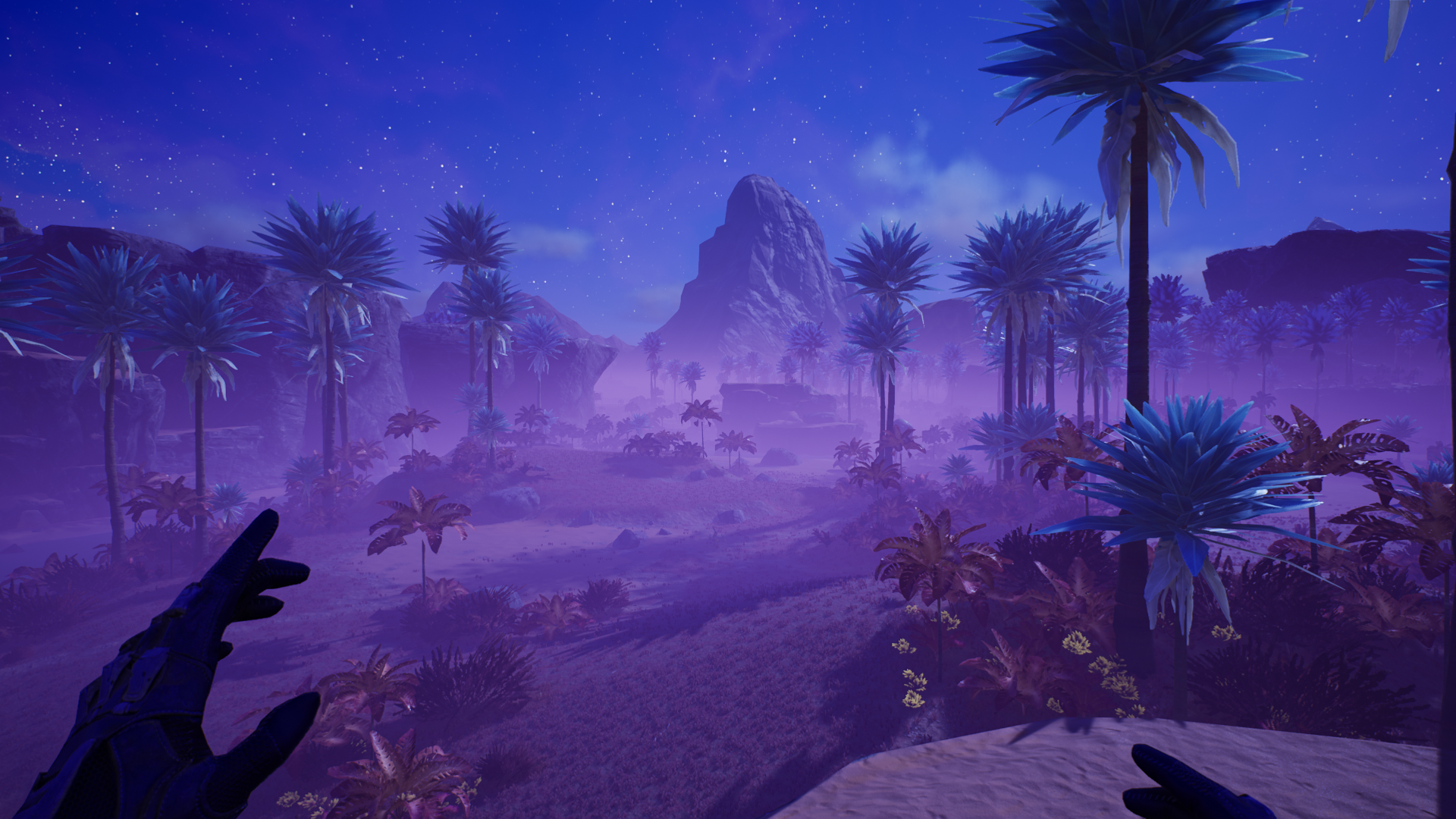
| Atmospheric Color | Blue |
|---|---|
| Atmospheric Composition | Helium(>60%) Oxygen(>30%) Argon (>9%) Propane (>1%) Xenon (>50 ppm) Hydrogen sulfide (>10 ppm) Carbon Dioxide (>1 ppm) |
| Atmospheric Toxicity | Breathable |
| Atmospheric Pressure | 16.5 psi (1.122758 Atm) |
| Greenhouse Eff | 32.94 °F |
| Temperature | 77.974 °F |
Surface
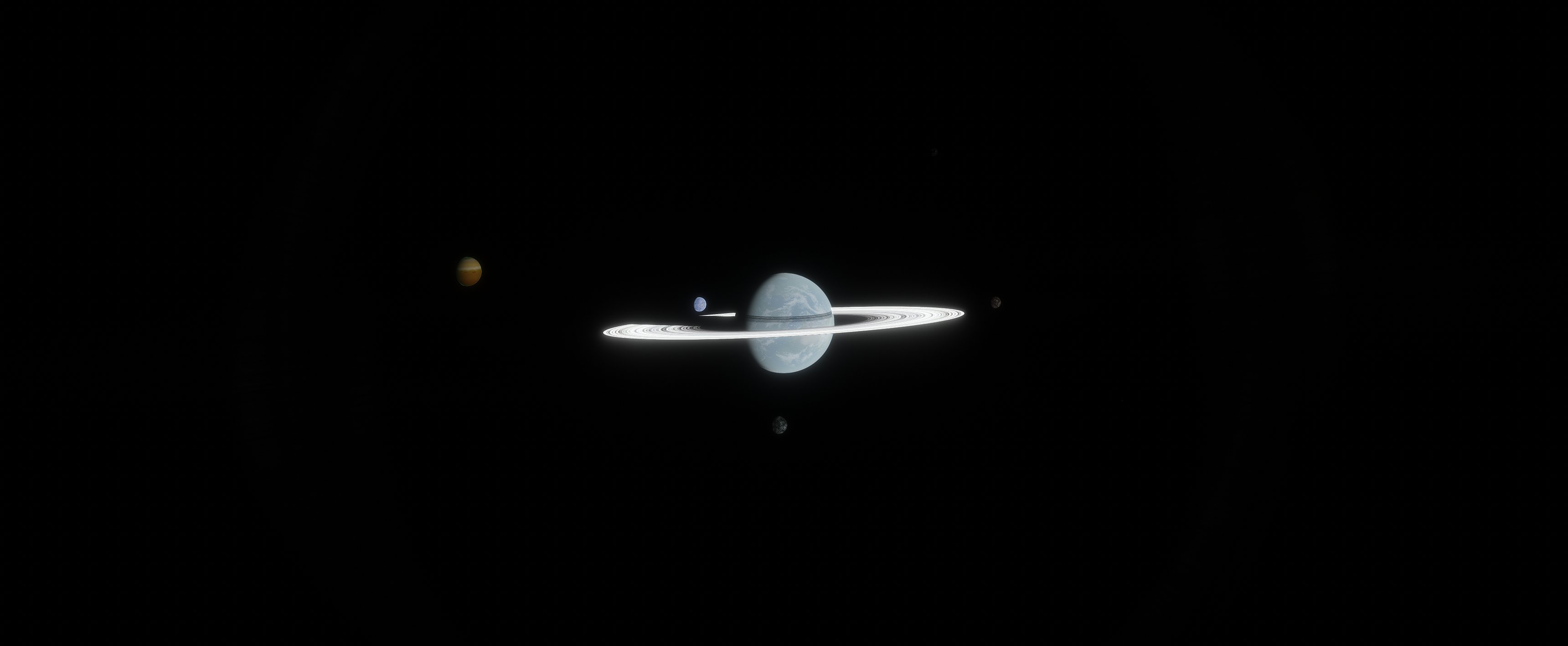
| Major Moons | (Neclite, Ulvarvis, Thietenia, Ruvohines, Zurn) |
|---|---|
| Moons | 27 (presumably) moons, including: *Neclite *Thietenia *Ulvarvis *Ruvohines *Zurn |
| Sea Composition | H₂O |
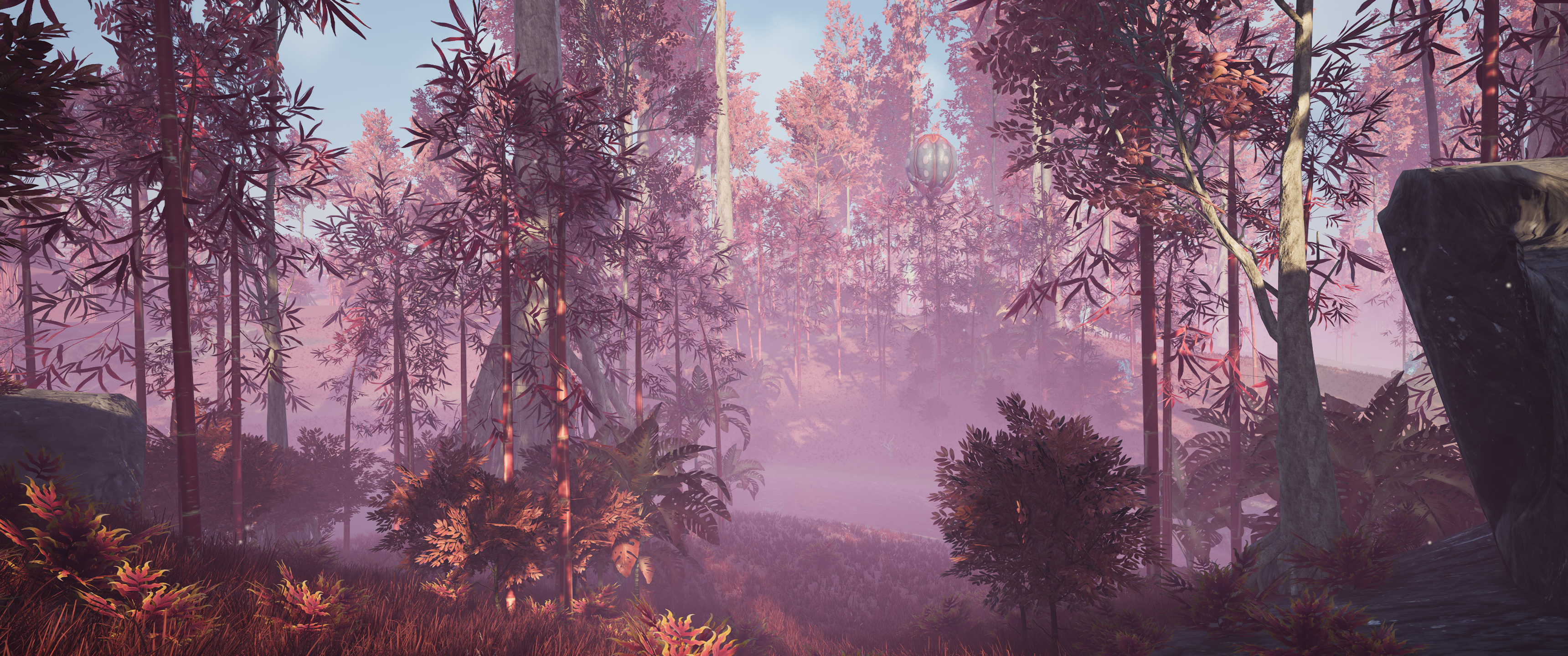
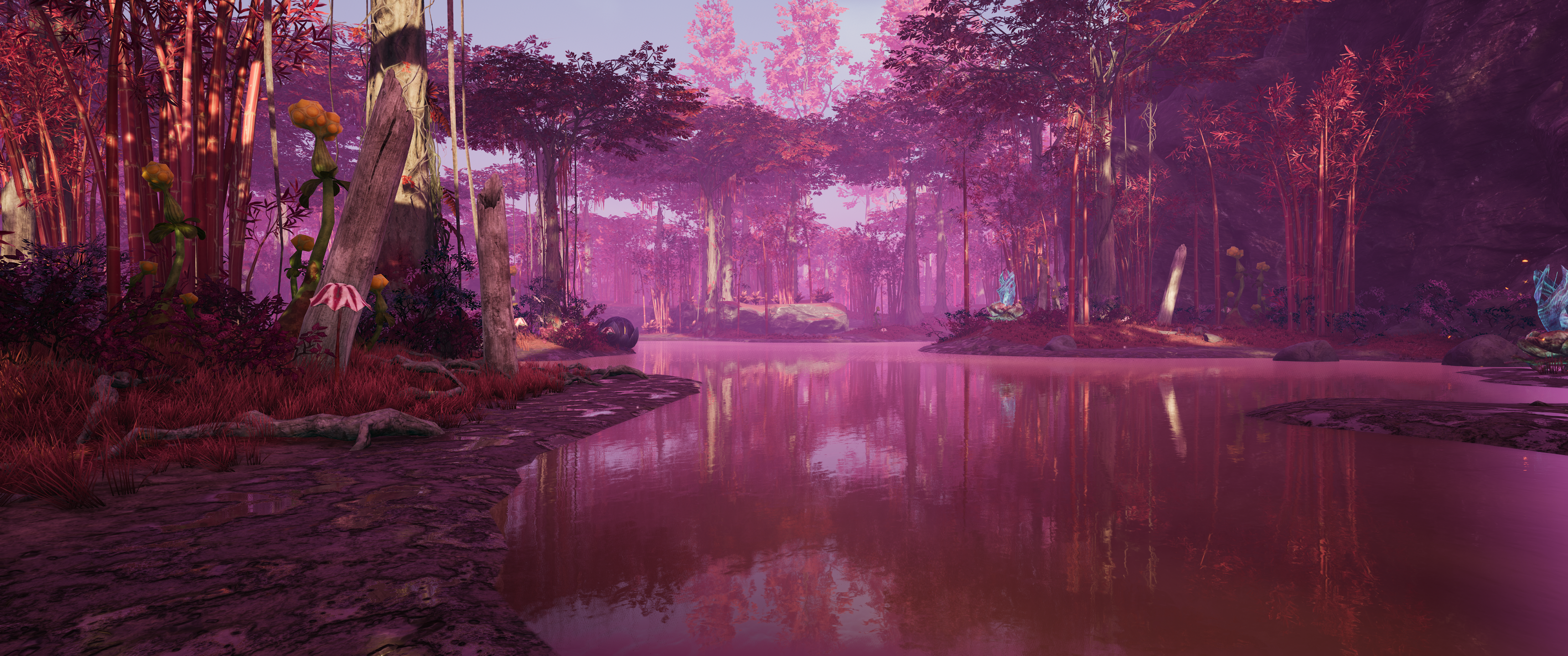
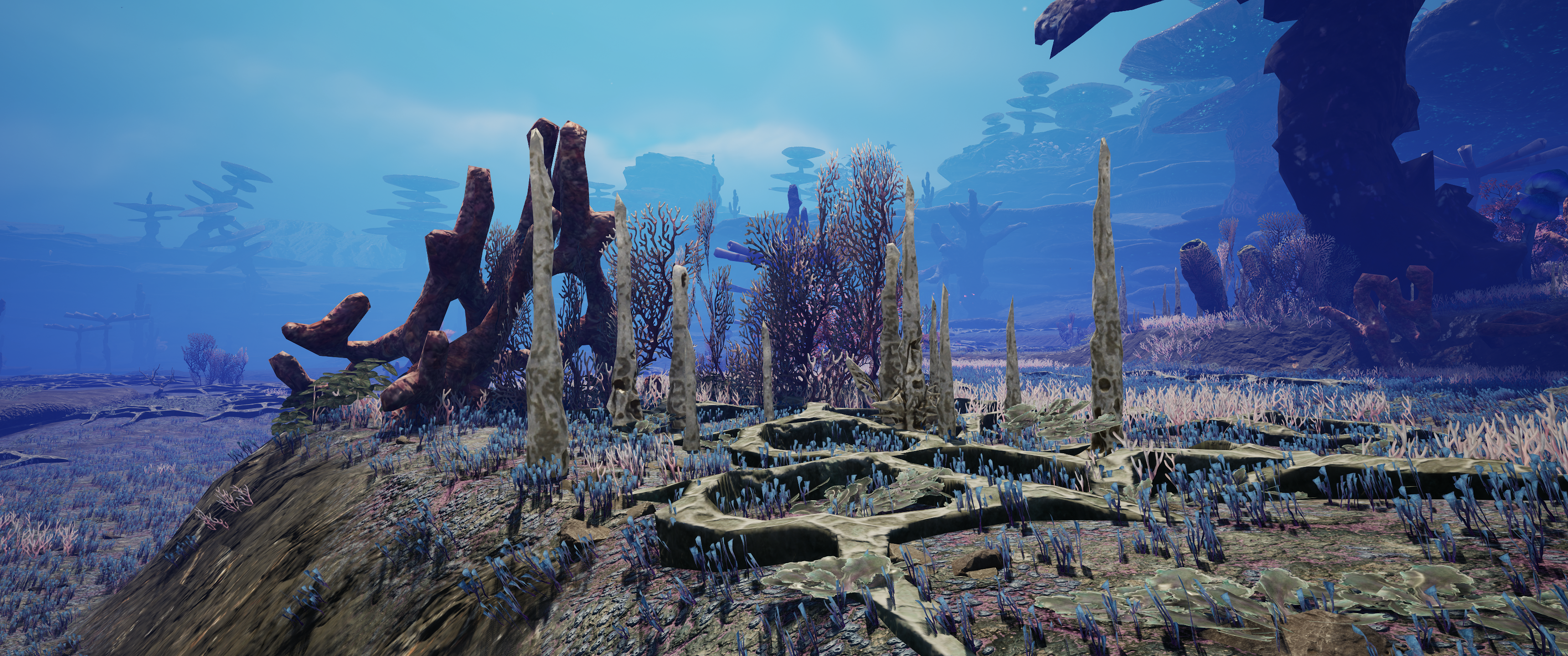
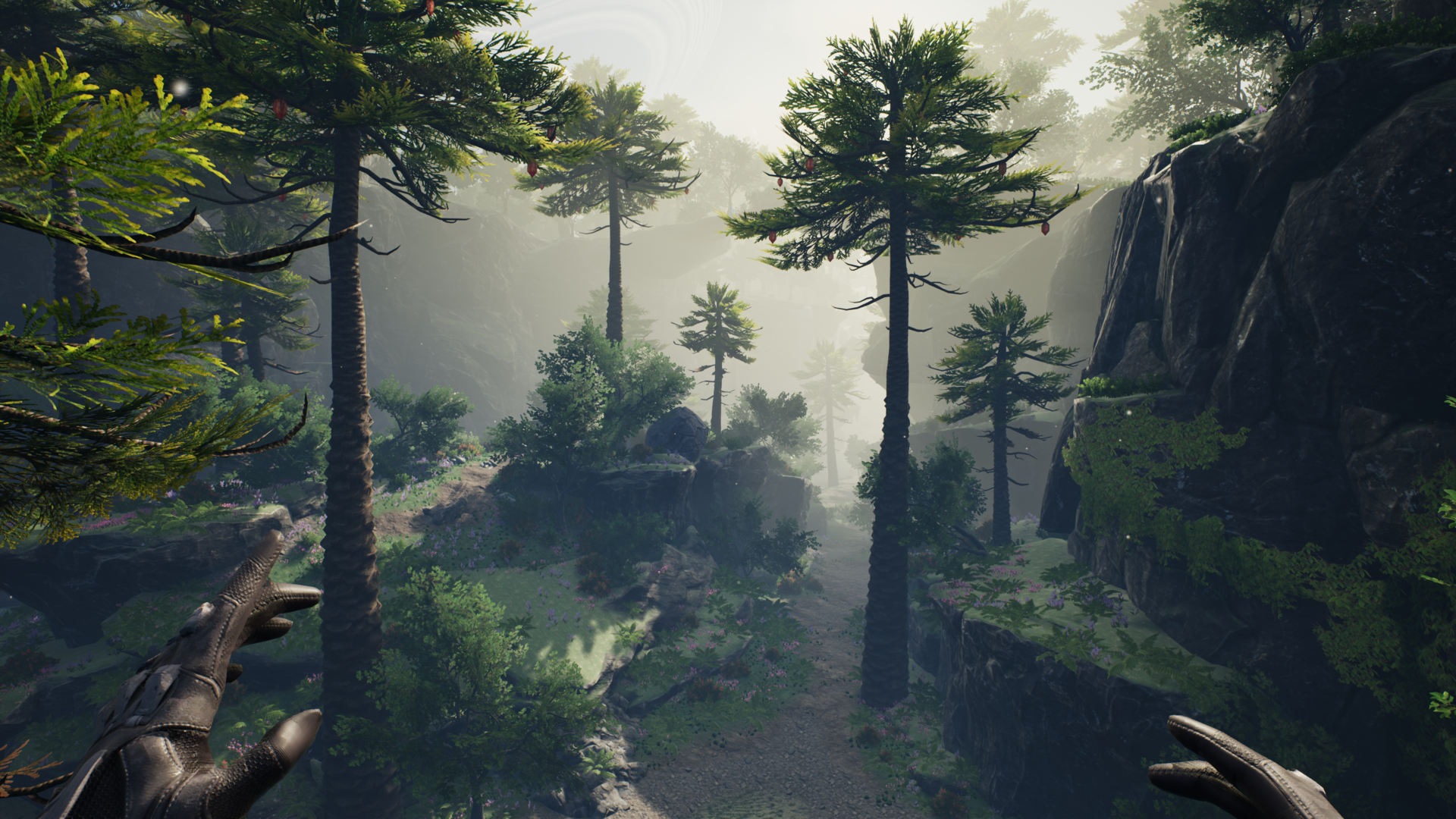
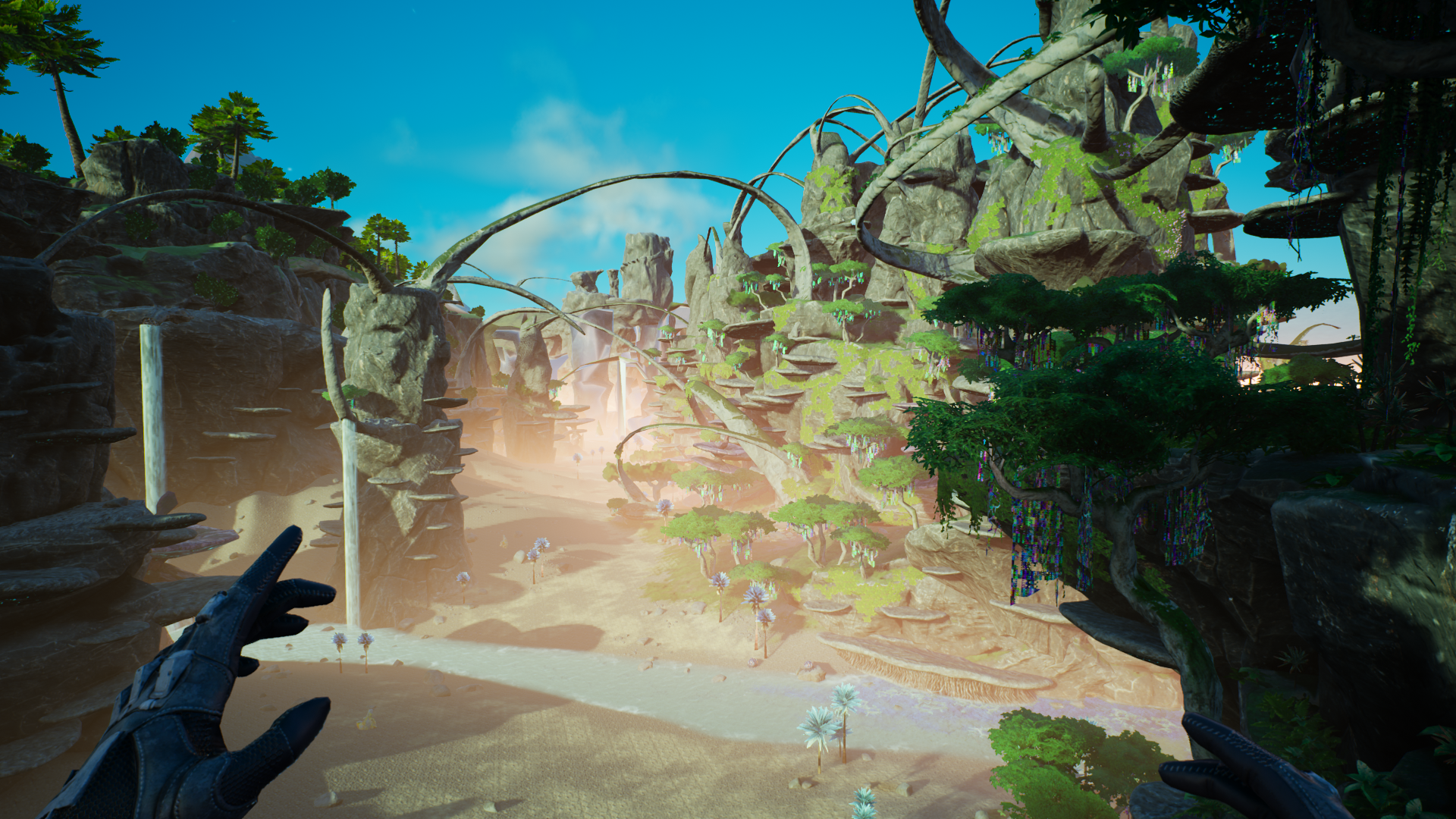
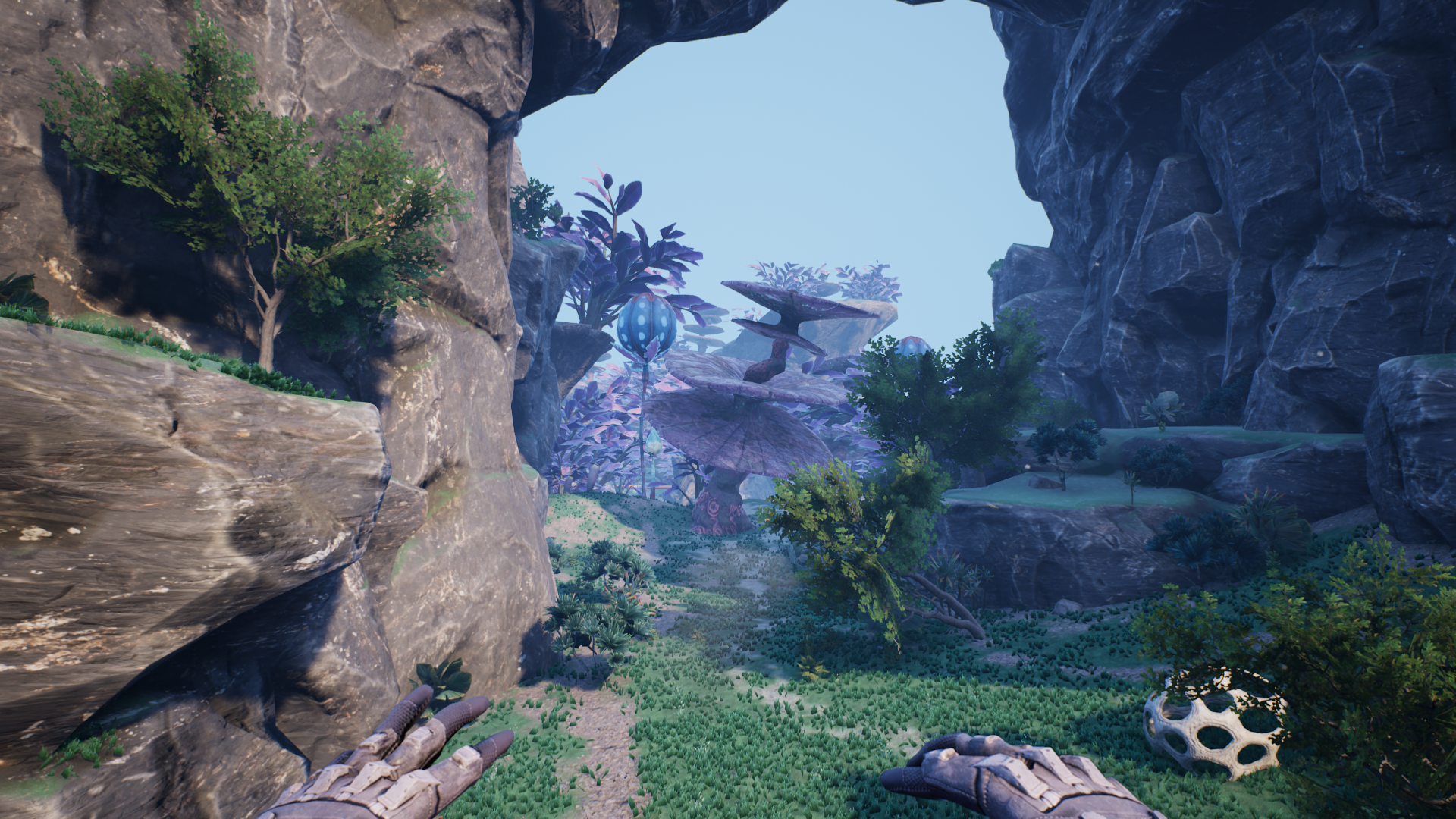
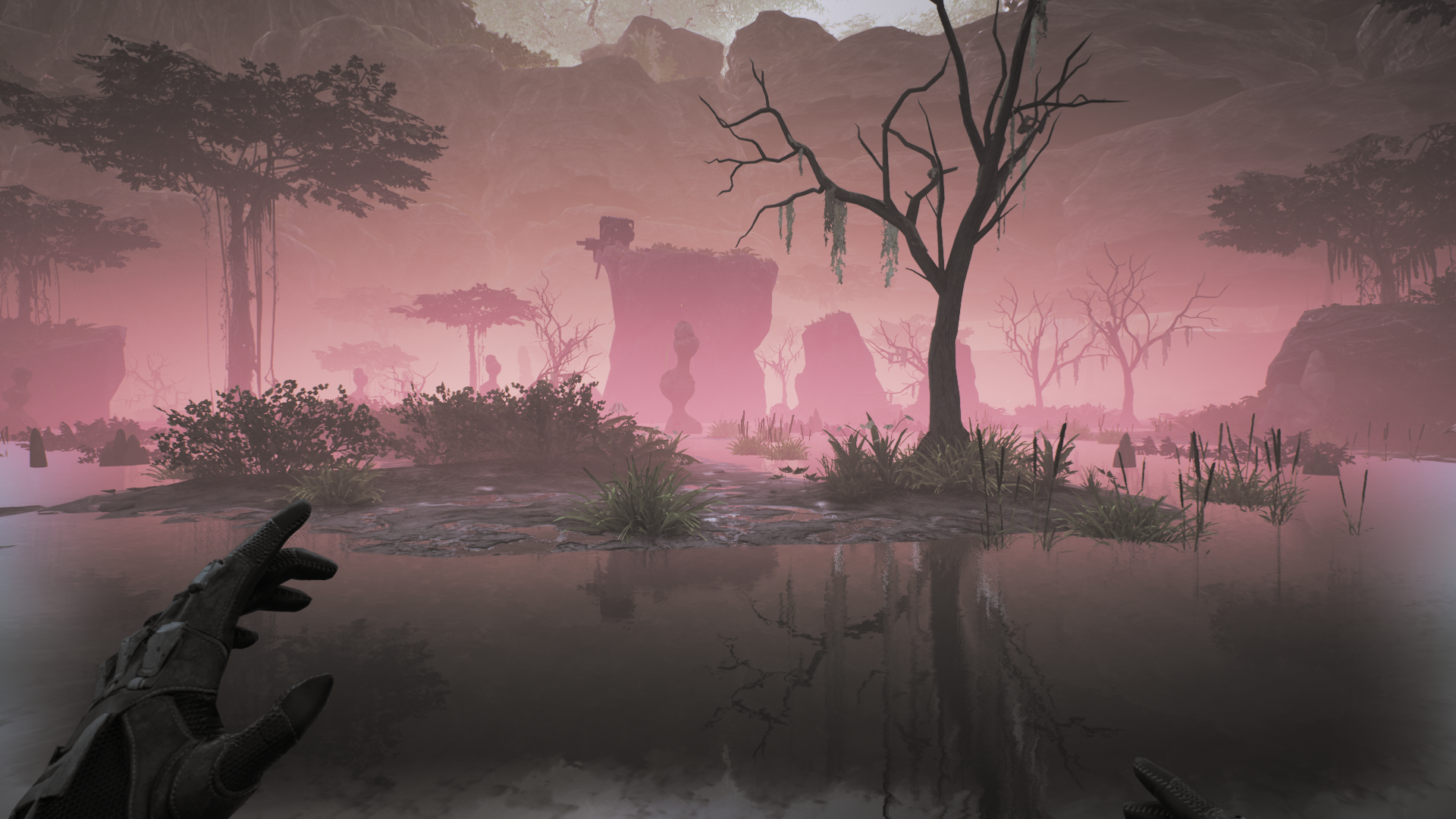
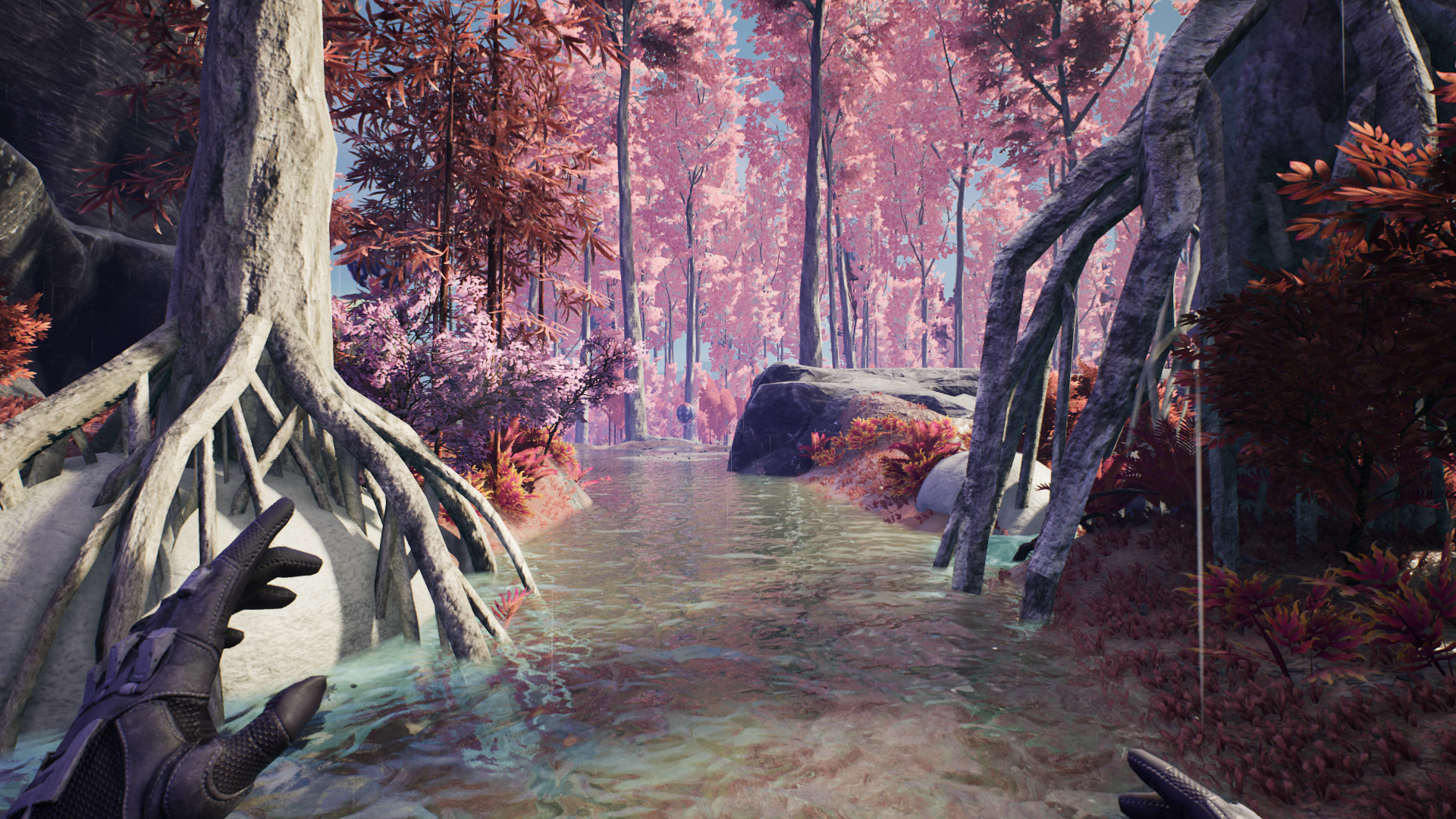
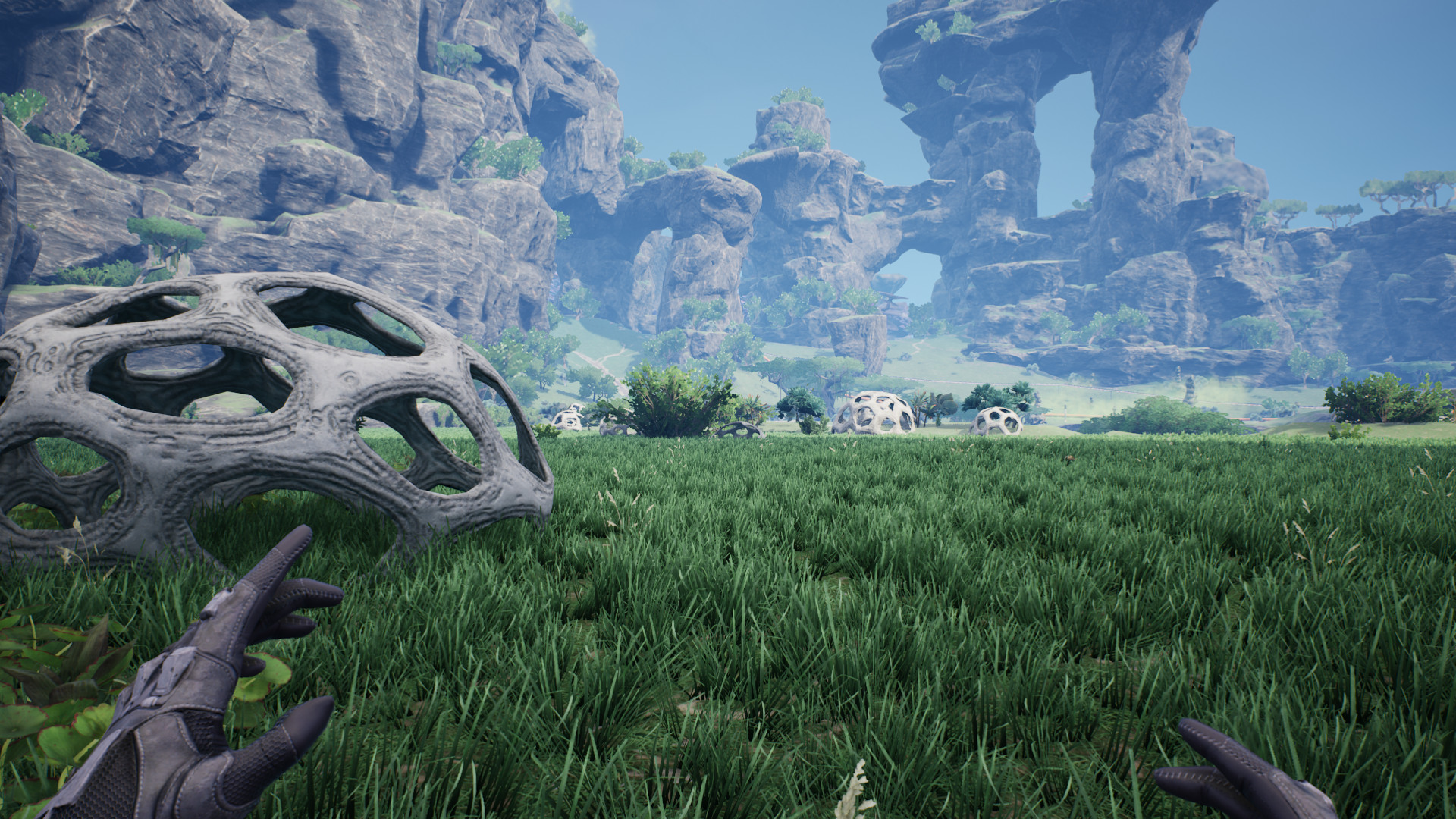
| Terrain | Mountainous Jungle |
| Water State | Liquid |
Other
| Affiliations |
|
|---|---|
| Anomaly Strength | 34.6 I/u |
| Apparent Mag | Om 88 |
| Apparent Size | 0°00'03.51" |
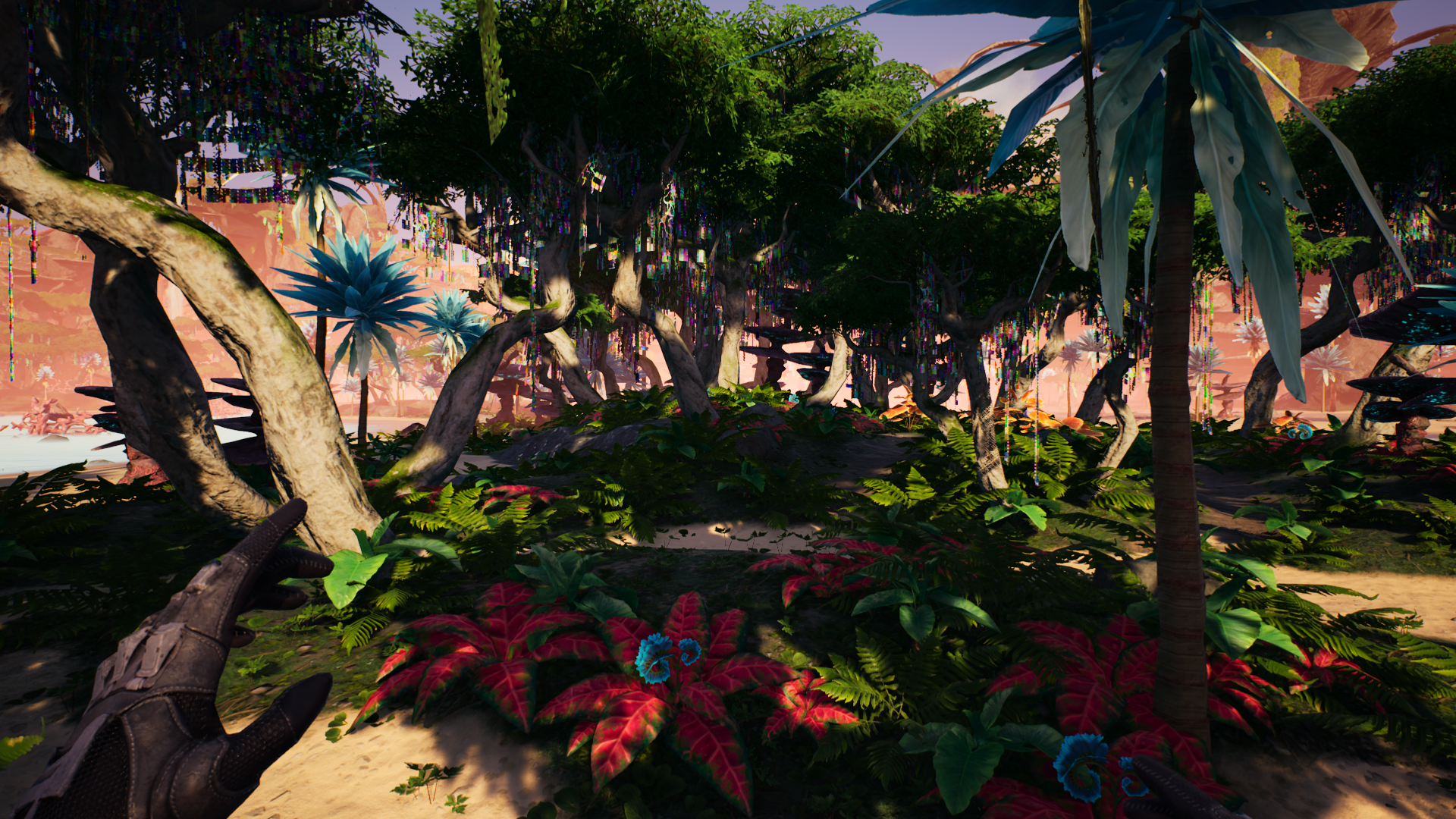
| Climate | Tropical |
| Esi | 0.878 |
| Galactic Address | {{Sgad|Abydosg|30|38|28|31|32}} |
| Government | Stable |
| Languages Spoken |
|
| Other Notes | Also Referred as "Nimbiano" |
| Phase | 0.909 |
| Primary Core Element | Copper |
Contents
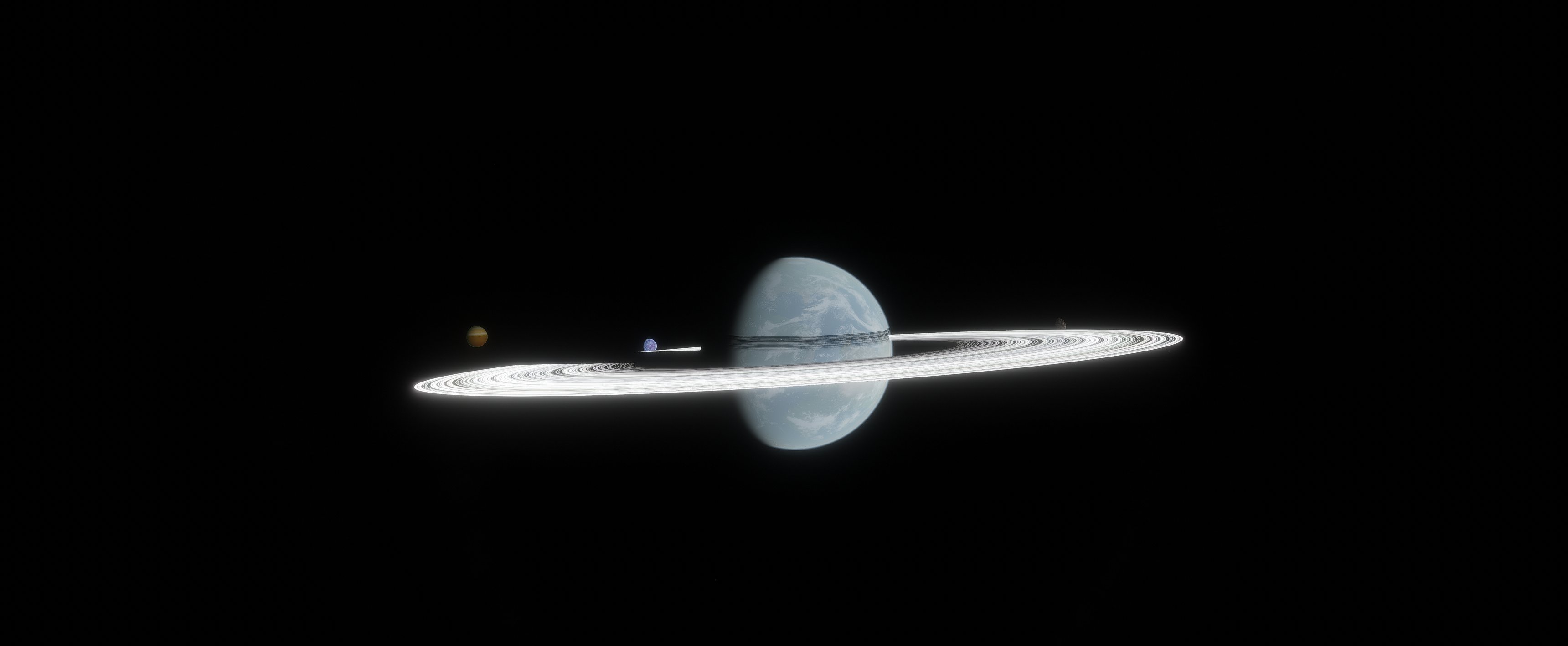
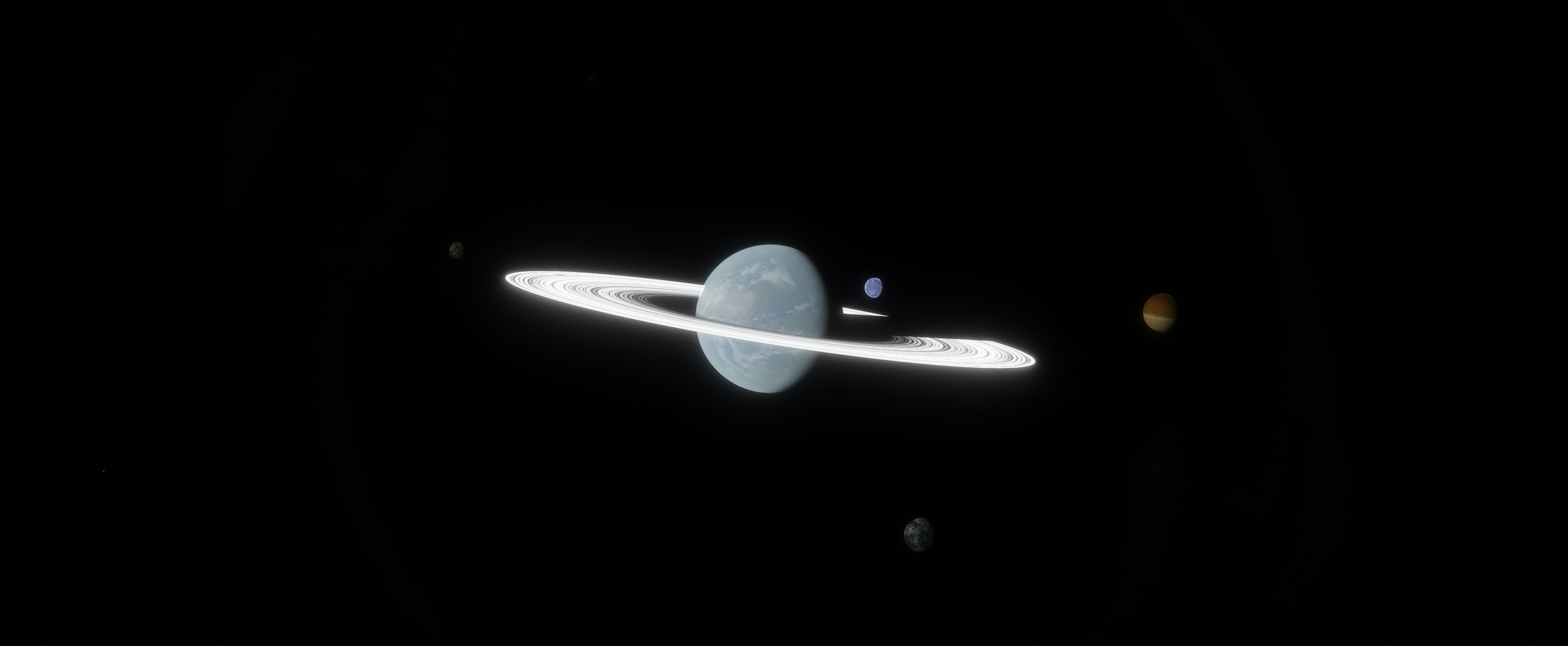
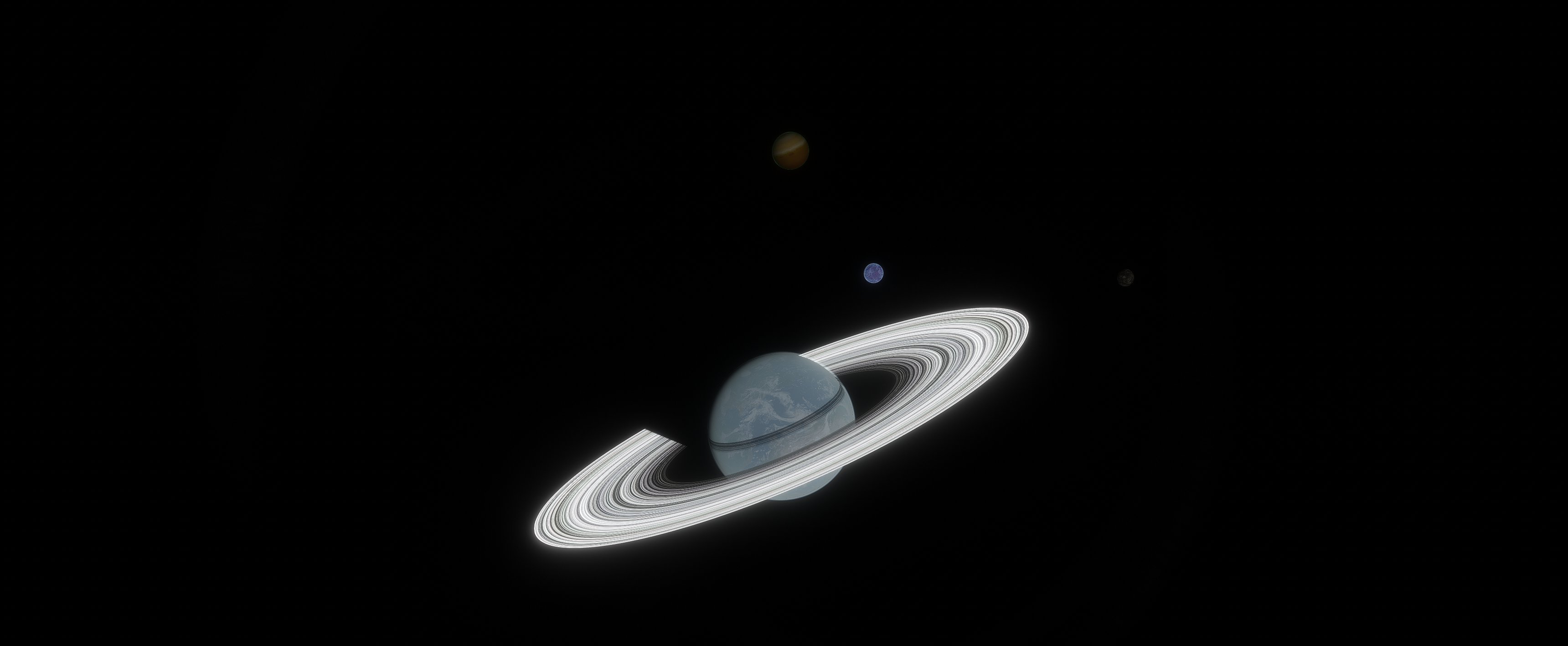
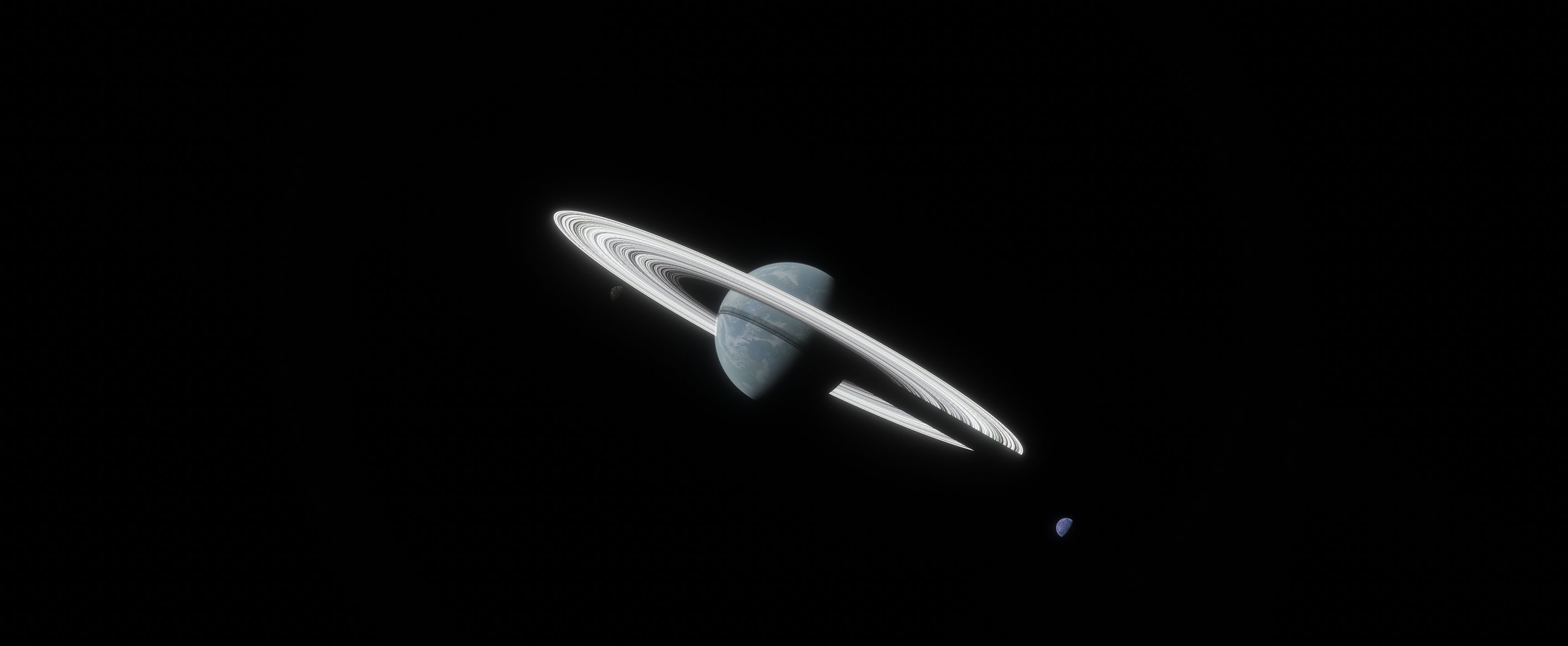
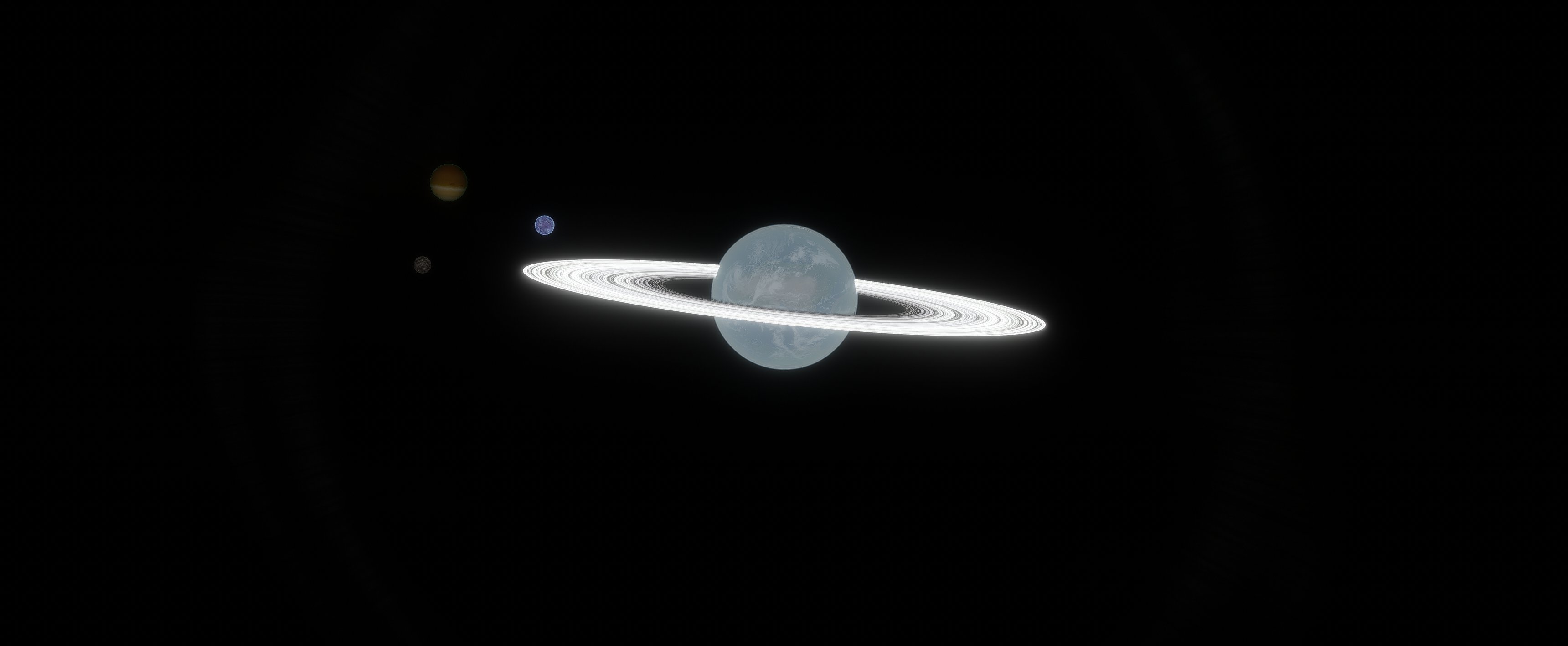
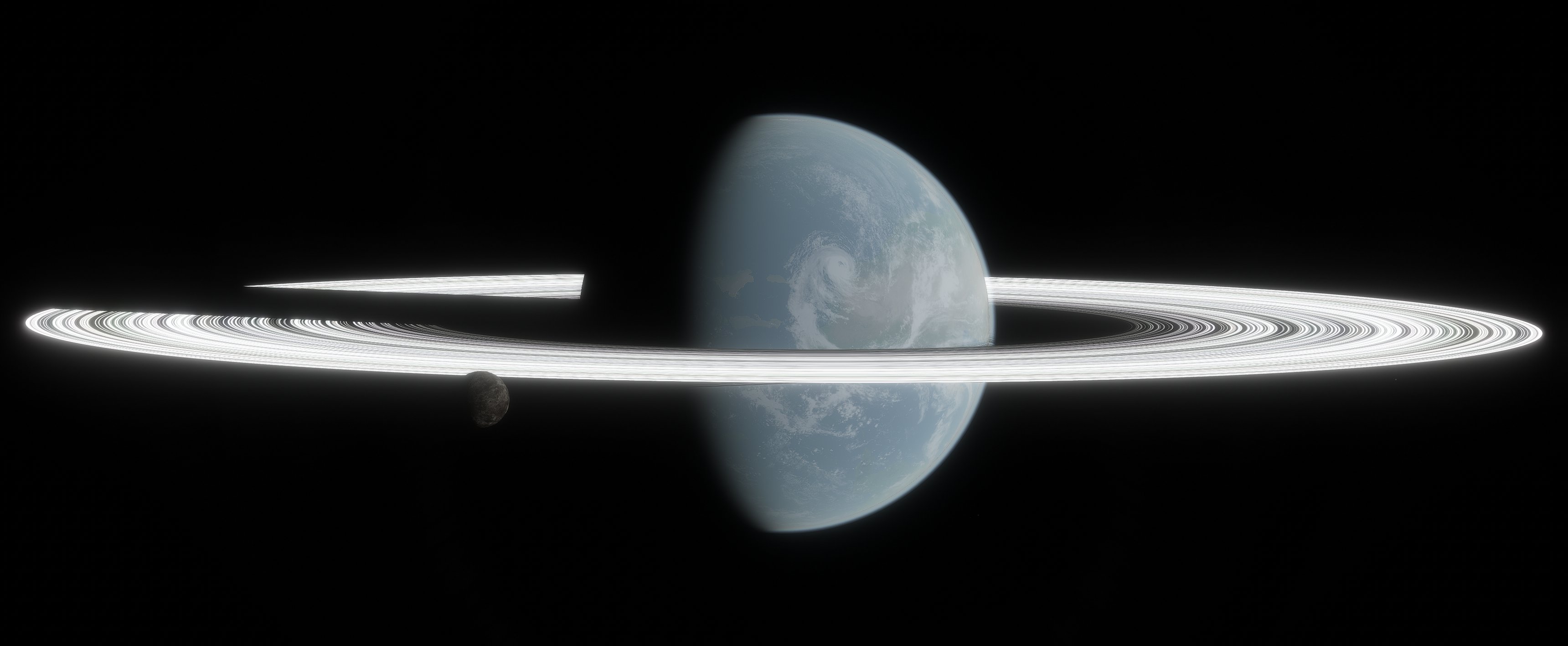
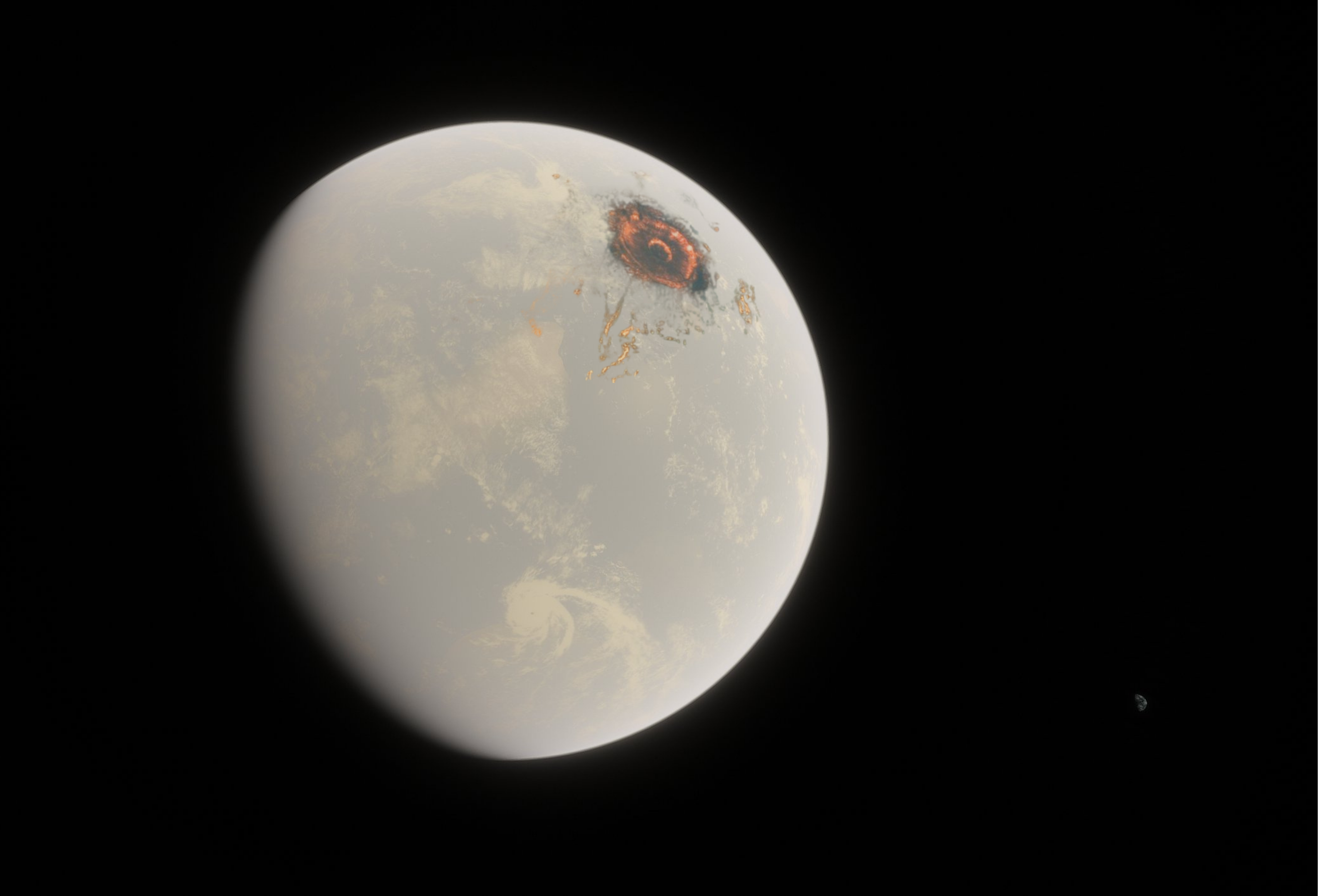
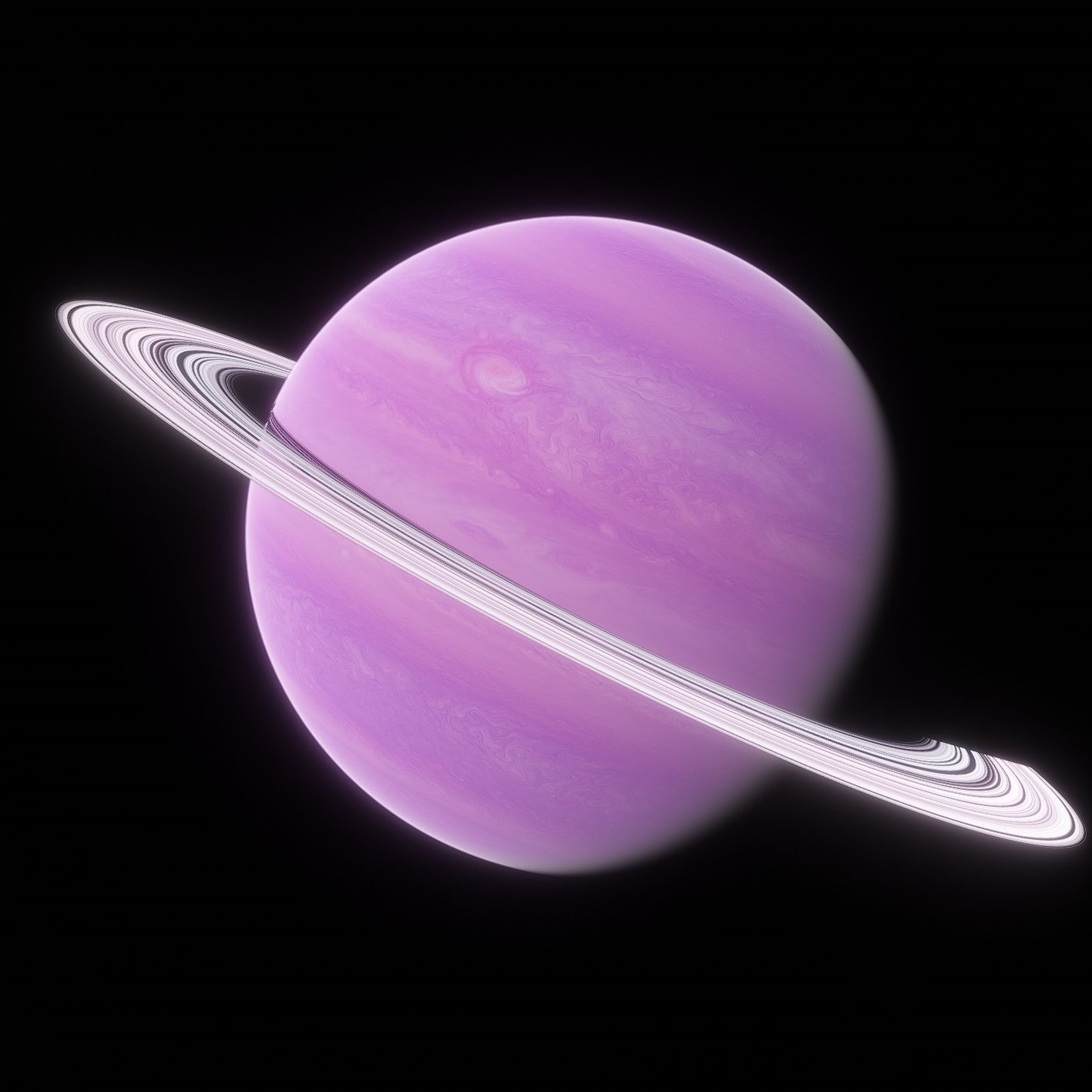
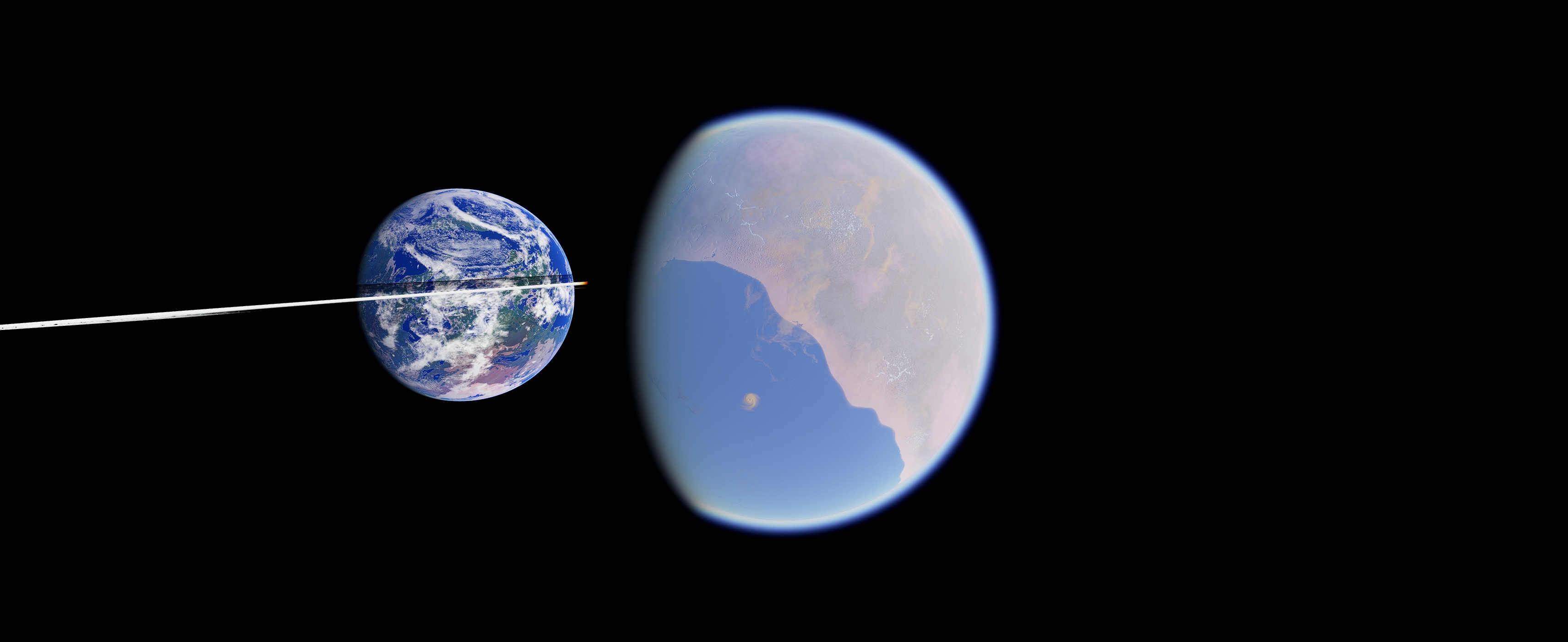
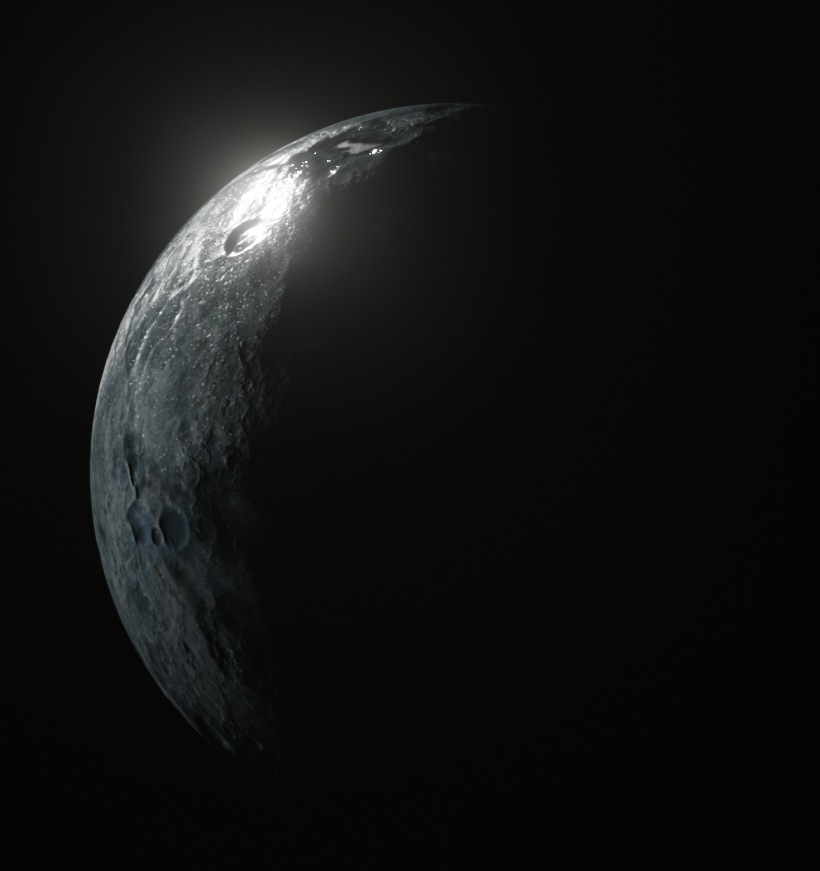
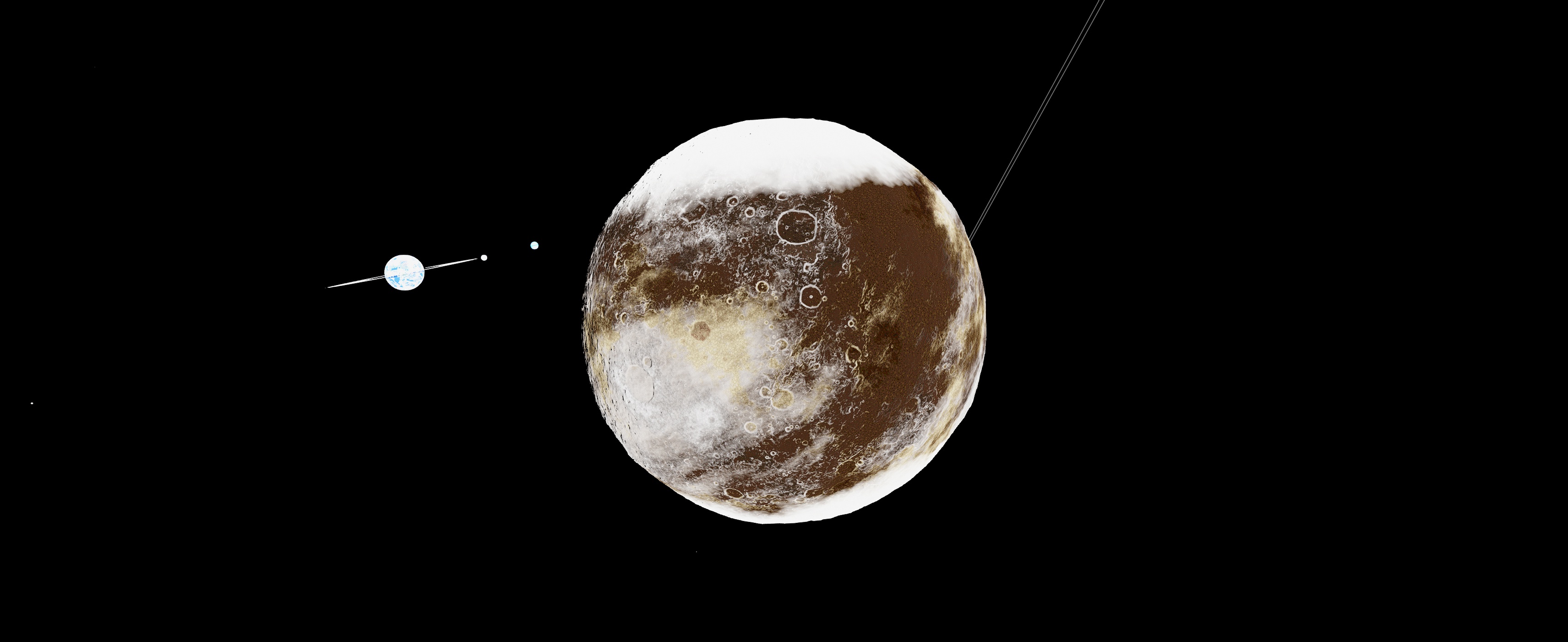
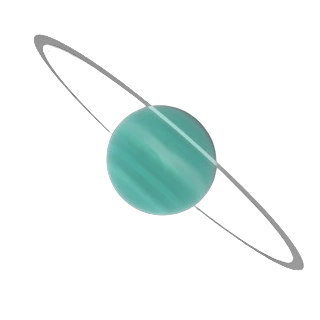
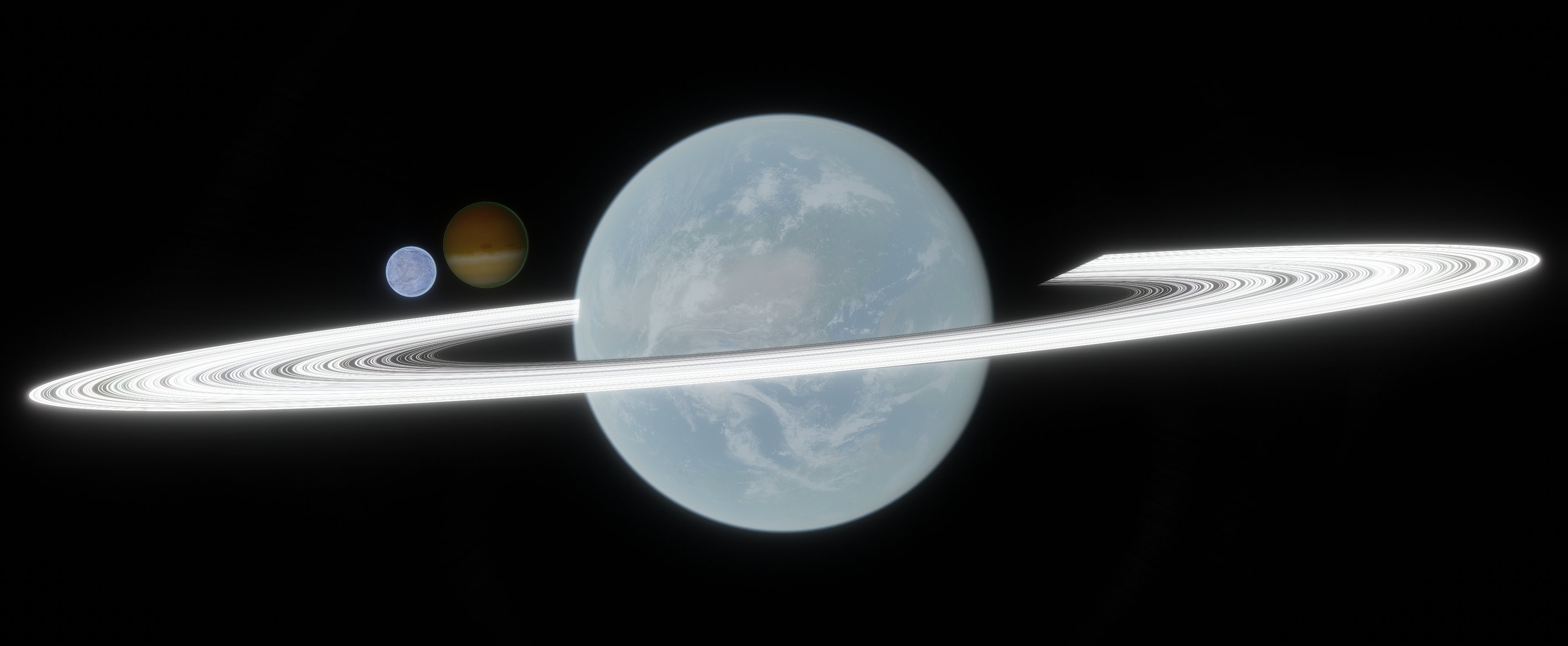
Lizard-953-E is the code-name of the exoplanet which serves as the main setting of Lizard-Planets.
Lizard-953-E: A Celestial Enigma
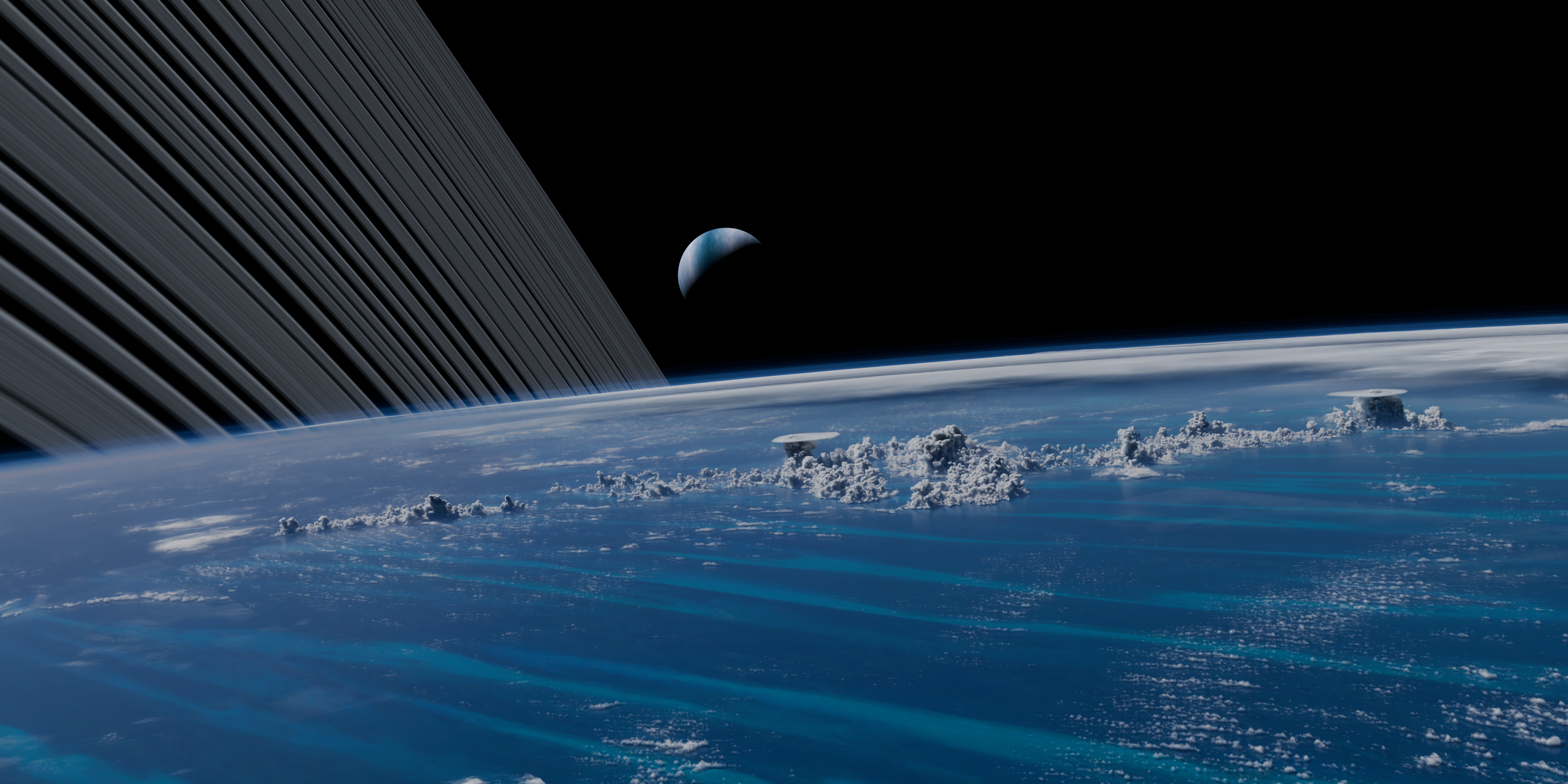
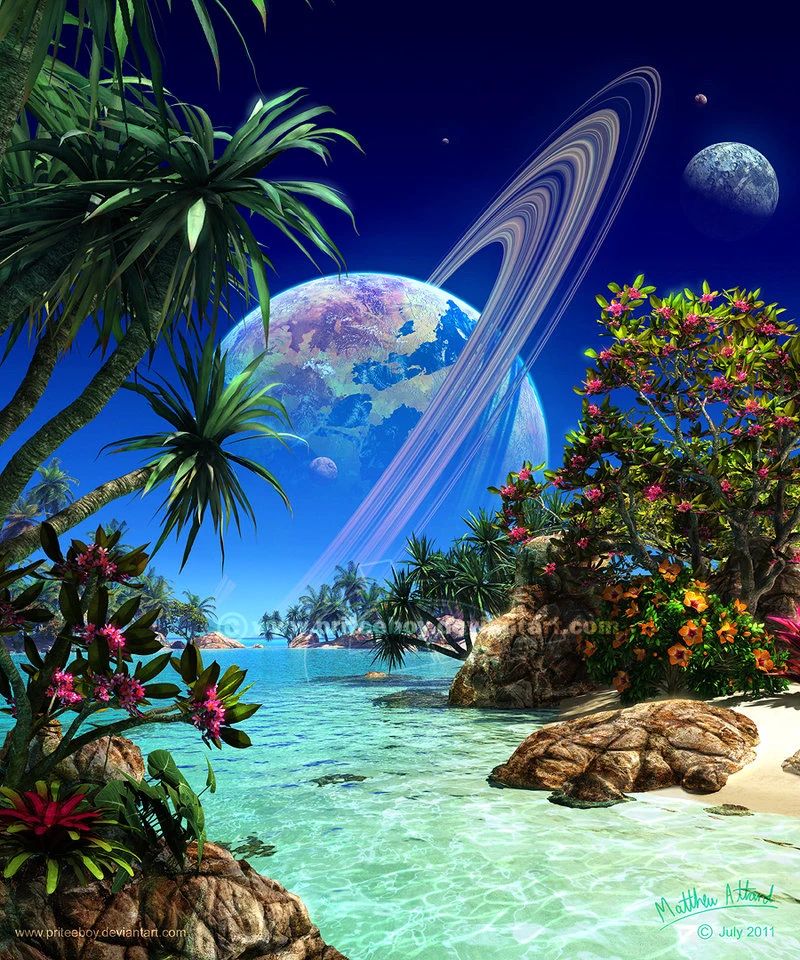
Lizard-953-E is a fascinating and mysterious planet located in the distant reaches of the Absthaca galaxy. This unique world is known for its striking green and blue hues, reminiscent of Earth's lush jungles and deep oceans, but with an otherworldly twist. Orbiting a bright, young star, Lizard-953-E has captured the imagination of astronomers and explorers alike with its potential 27 moons, each contributing to the planet's distinctive charm and scientific intrigue.
Geography and Climate
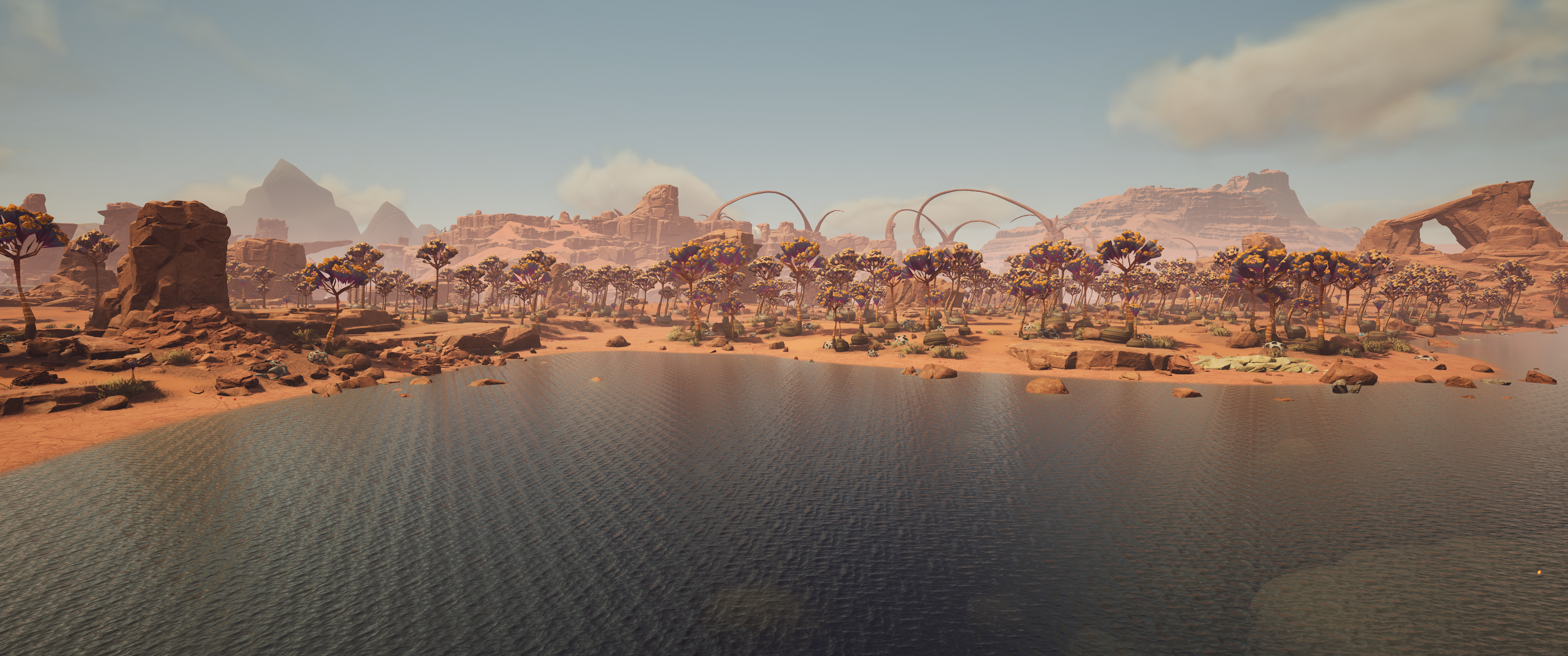
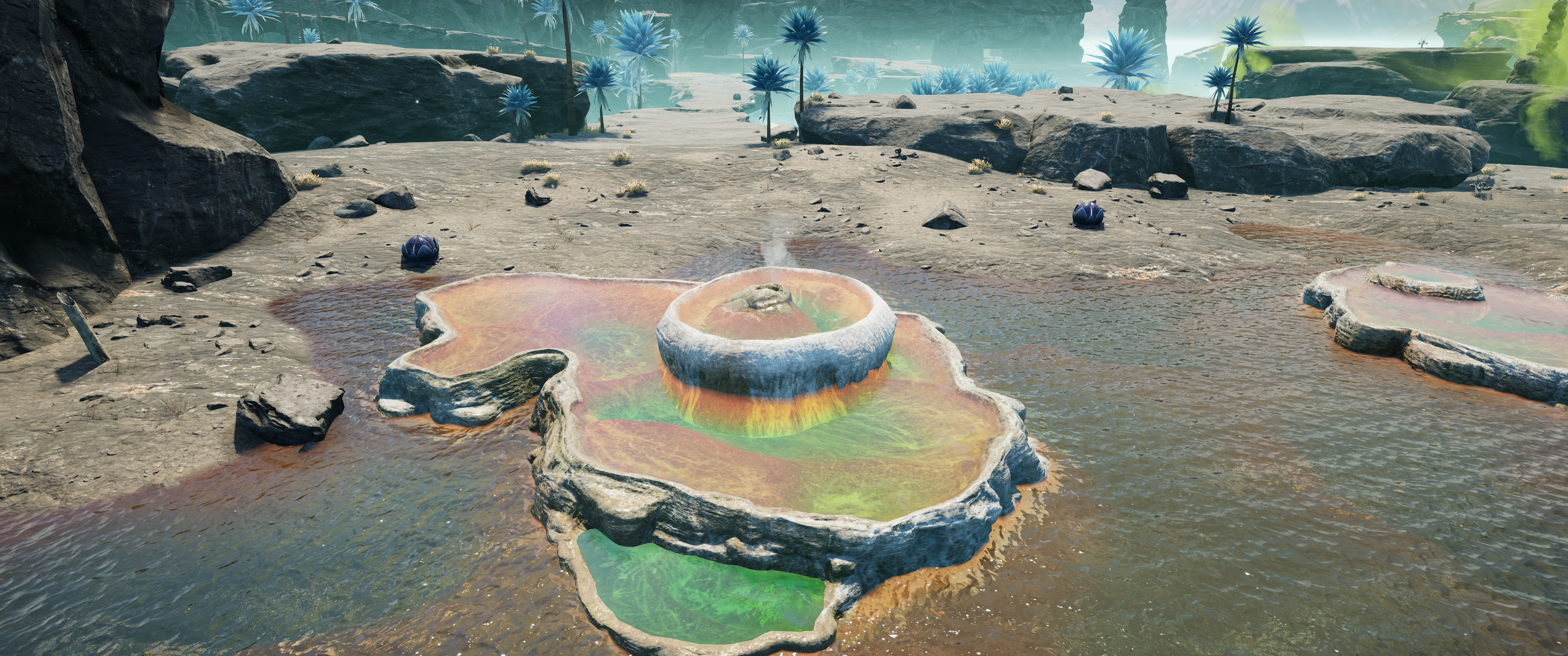
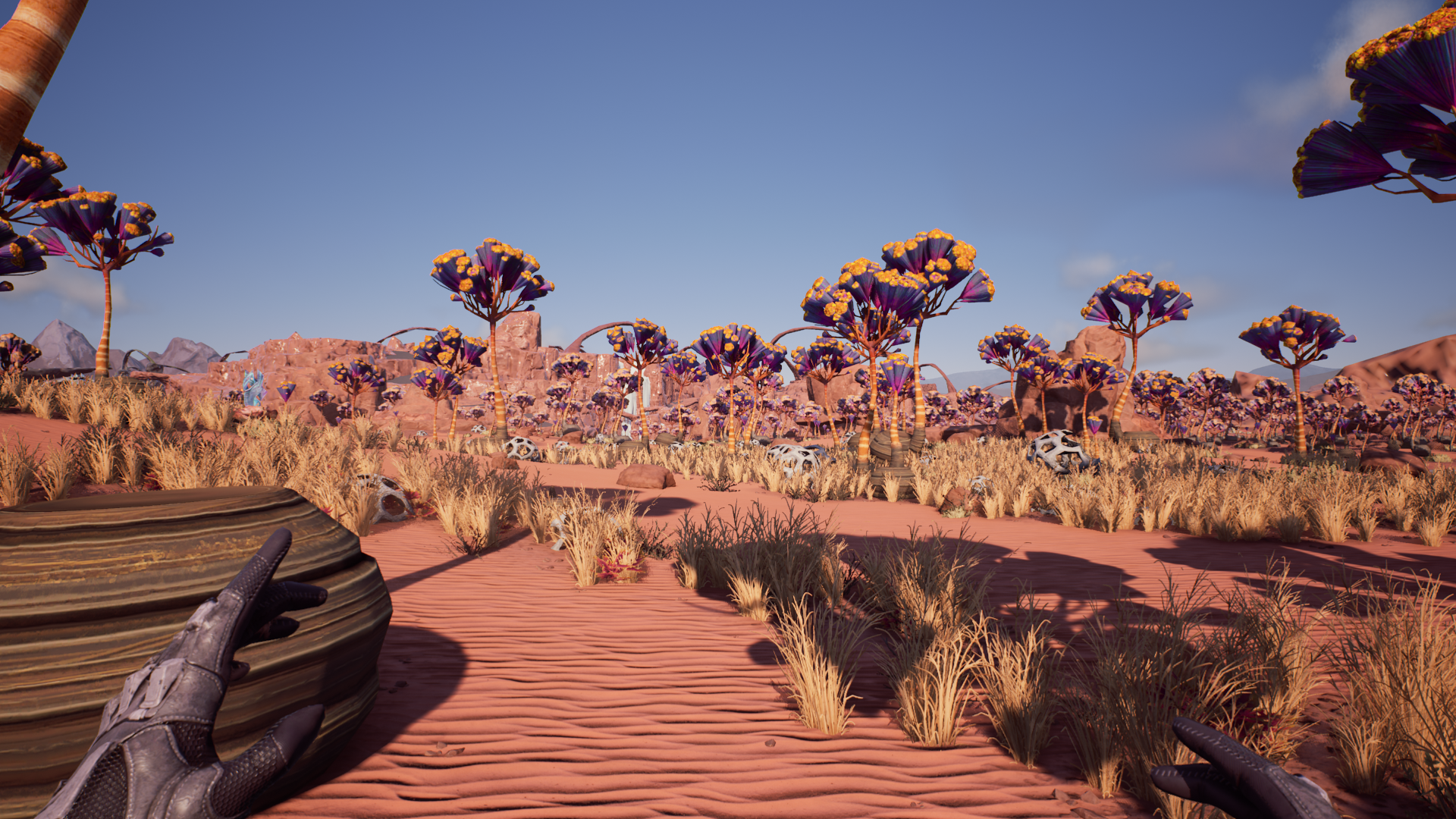
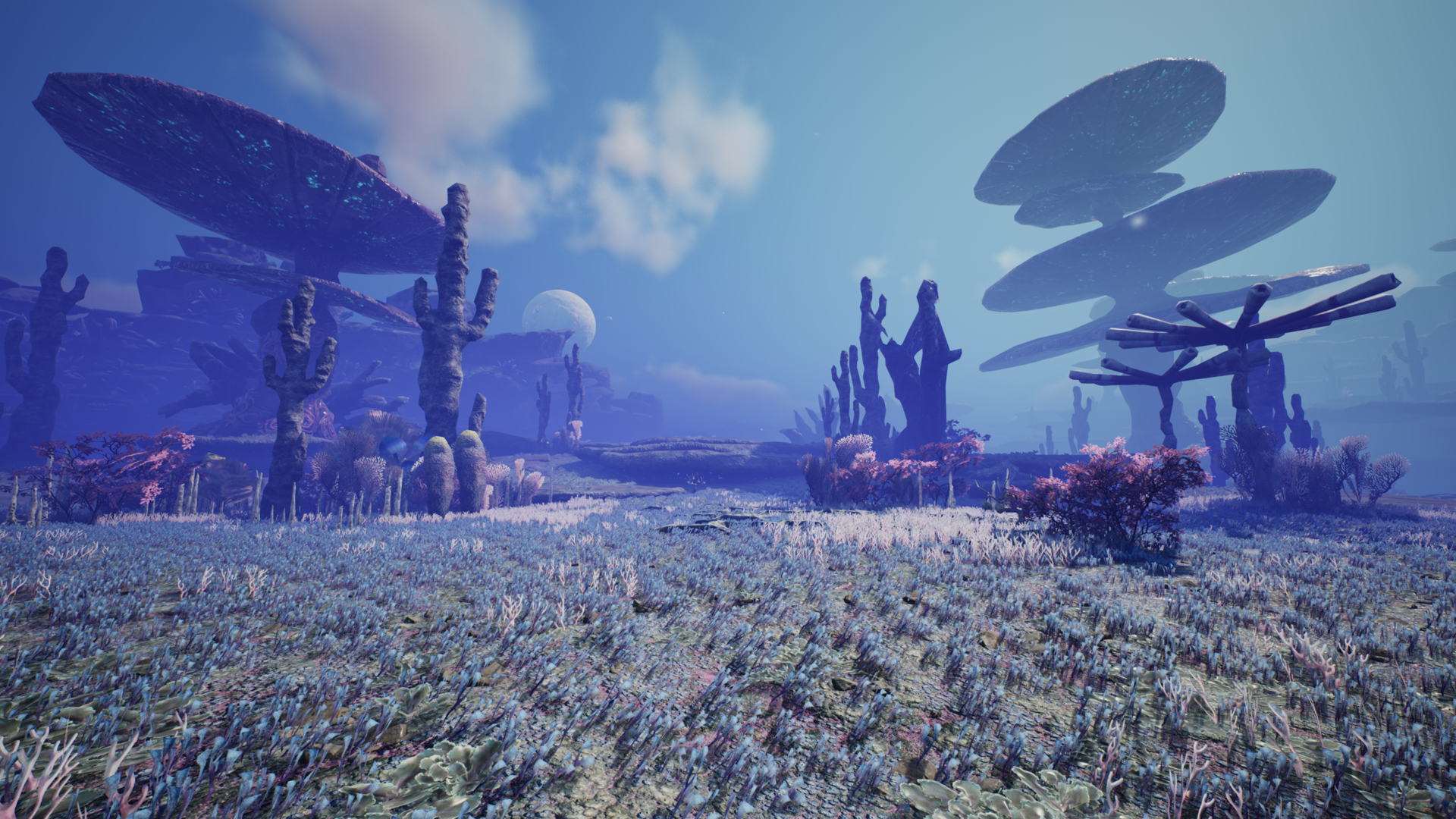
The surface of Lizard-953-E is a mesmerizing mosaic of dense, verdant forests, expansive deserts, and sprawling mountain ranges. Its atmosphere is thick with a mix of Helium and oxygen, interspersed with exotic gases that give the sky an iridescent glow during sunrise and sunset. The climate varies dramatically across the planet, from the tropical heat of the equatorial regions to the icy tundras of the polar caps.
Moons of Lizard-953-E
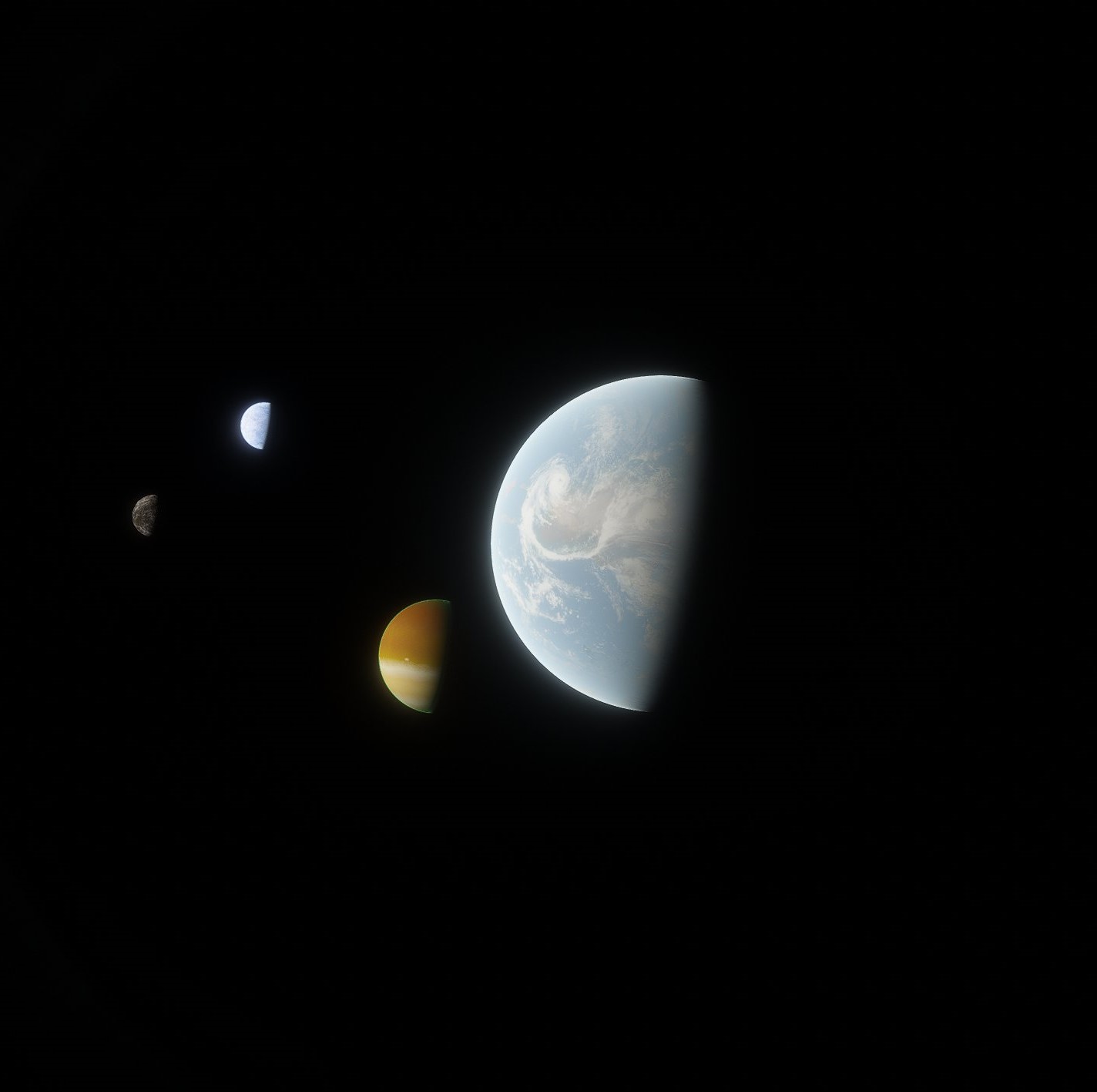
The planet's moons are a significant point of interest, as their number remains a subject of debate among scientists. With the potential of having 27 moons, Lizard-953-E boasts a complex gravitational ballet that affects its tides, weather patterns, and even its geological activity. Each moon is unique in its composition and characteristics:
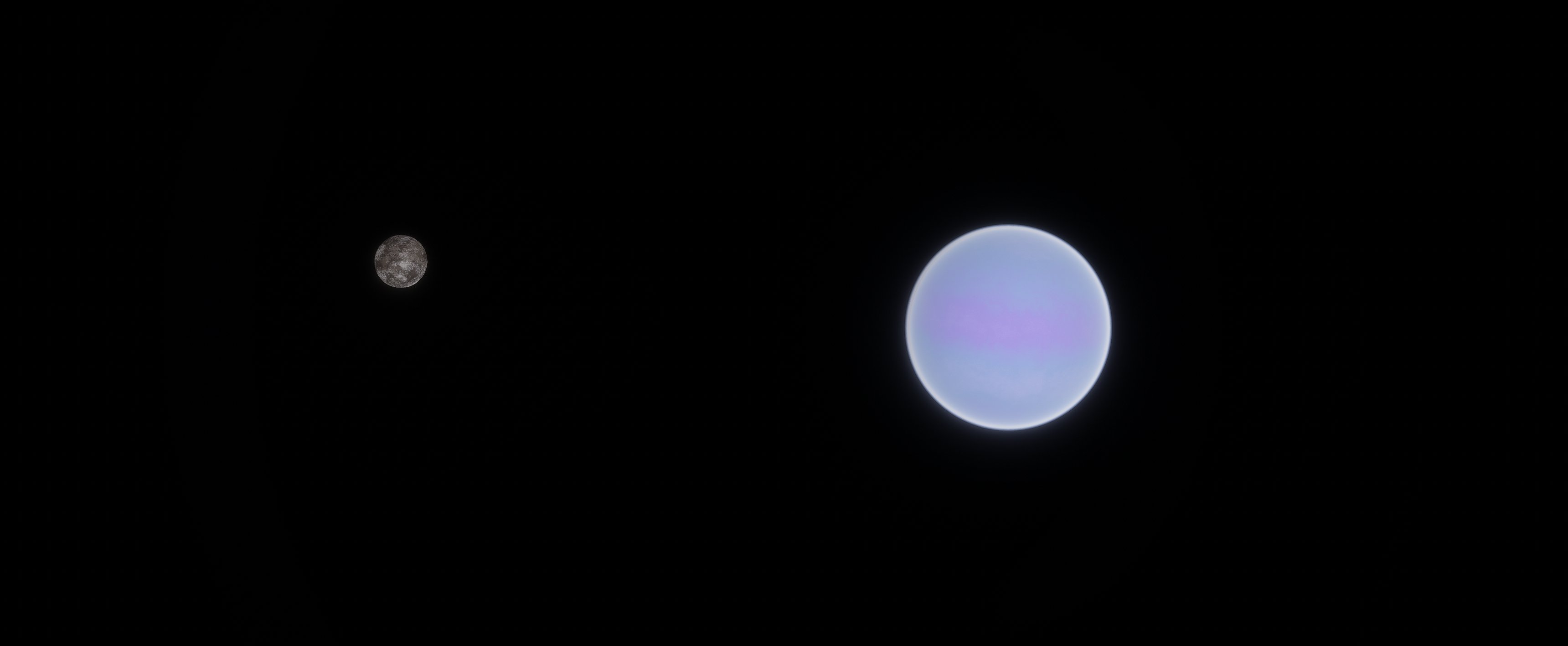
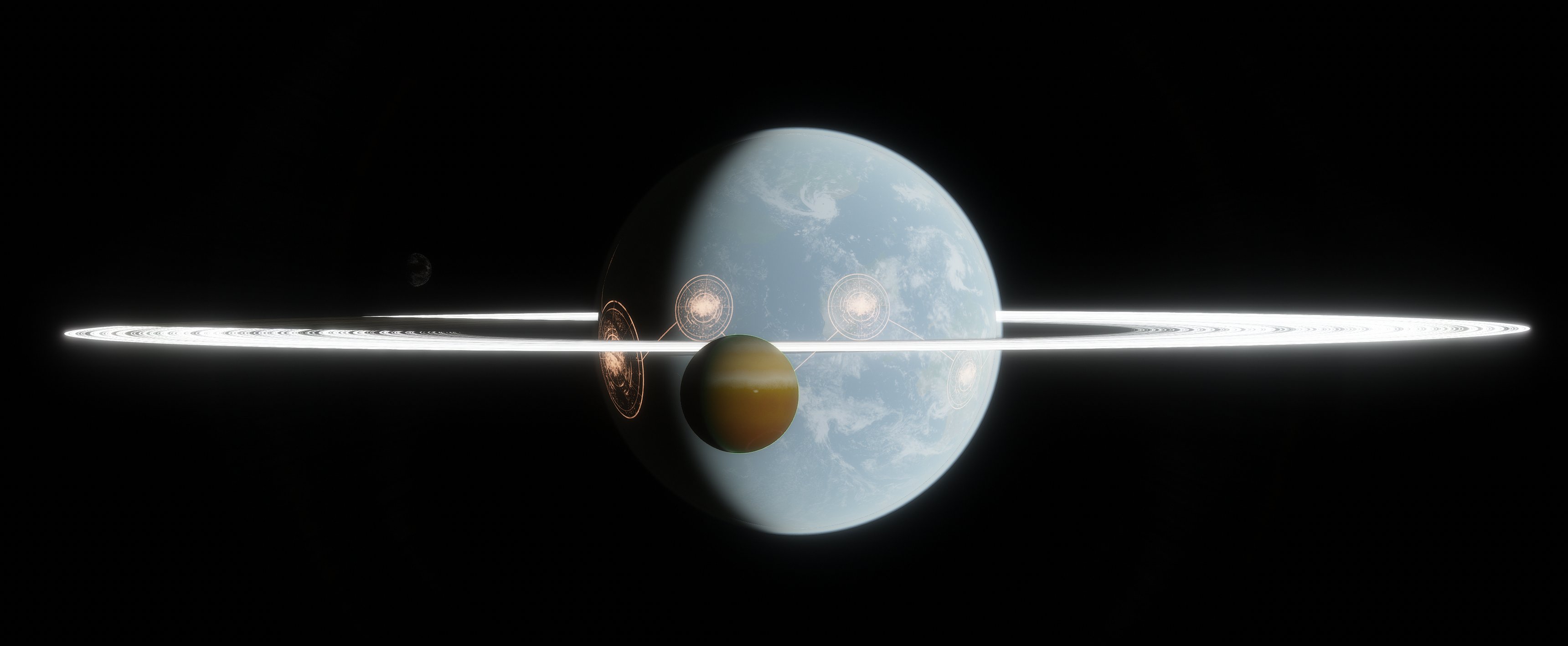
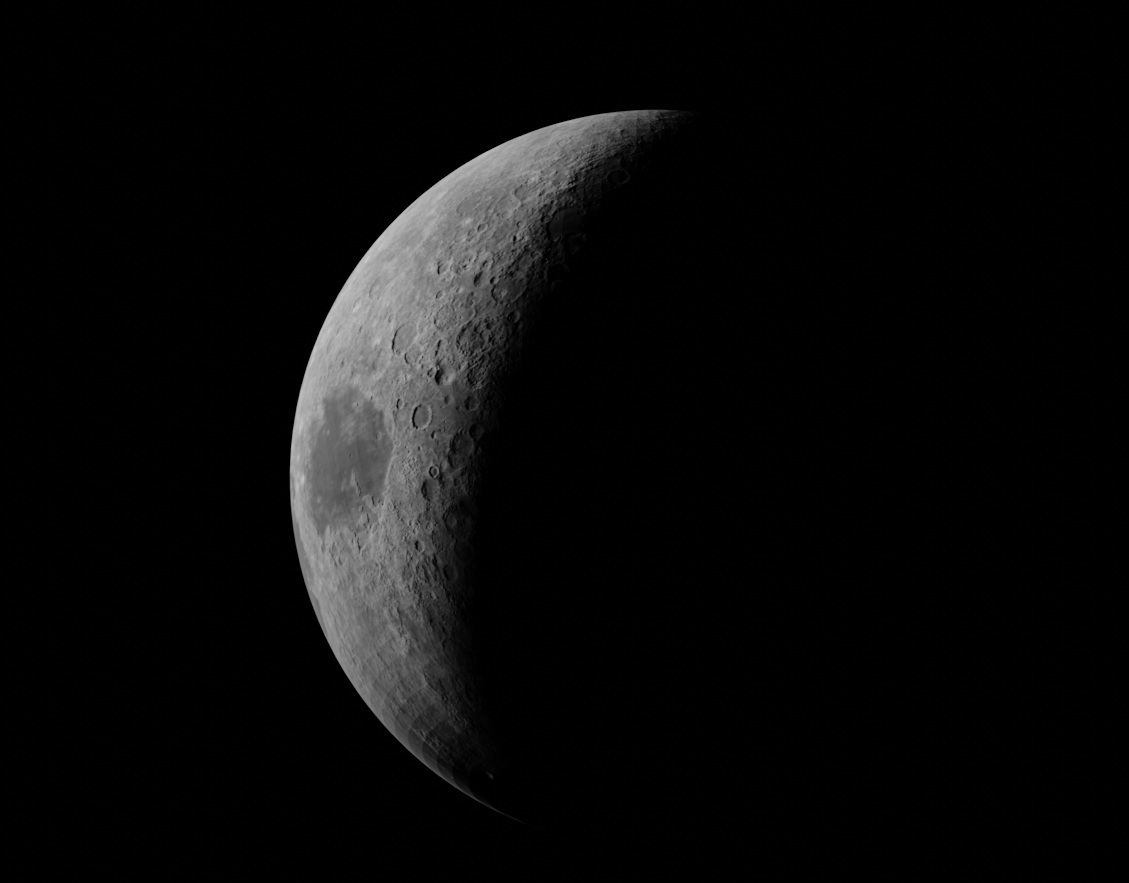
- Neclite - The largest moon, covered in clouds due to it being a gaseous moon, causing it to shine brightly in the night sky.
- Thietenia - A rocky moon with deep canyons and signs of ancient volcanic activity.
- Ulvarvis - Known for its greenish hue, possibly due to extensive mineral deposits.
- Ruvohines - A water-rich moon with vast sub-surface oceans.
- Zurn - A fiery moon with active volcanoes and a thin atmosphere.
- (Others) - Each of the remaining moons exhibits bland and strange rock formations to mysterious underground caverns and reflective surfaces that capture the planet's light.
Life and Exploration
While definitive evidence of life has been found on Lizard-953-E Due to it being the lizards homeworld, the planet's diverse ecosystems and the potential for liquid water on some of its moons suggest that it could harbor microbial or even more complex forms of life. Exploratory missions by the Lizards have revealed intriguing patterns and structures, hinting at the possibility of past civilizations or natural phenomena yet to be understood.
Cultural Impact
In the annals of space exploration lore, Lizard-953-E has become a symbol of mystery and potential. It features prominently in the tales of interstellar travelers and the dreams of those who yearn to uncover the secrets of the universe. Its captivating beauty and the enigma of its many moons continue to inspire stories, art, and scientific quests.
Magnetosphere
Lizard-953-E, a terrestrial planet teeming with life, boasts one of the most formidable magnetospheres ever observed in the cosmos. Generated by the planet's rapidly spinning iron-nickel core, this magnetic field is incredibly strong, extending millions of kilometers into space. The magnetosphere of Lizard-953-E is so powerful that it deflects solar wind particles far beyond the planet's orbit, creating a vast protective bubble around the planet.
This immense magnetic field captures high-energy particles, producing intense radiation belts similar to Earth's Van Allen belts but on a much grander scale. The interaction between the magnetosphere and the solar wind generates stunning auroras, illuminating the planet's poles with dazzling displays of light that can be seen from its surface and even from nearby space.
The strength of Lizard-953-E's magnetosphere is crucial for sustaining its vibrant ecosystems. By shielding the planet from harmful solar and cosmic radiation, it helps maintain a stable and habitable environment. The electromagnetic forces at play also influence weather patterns and atmospheric dynamics, contributing to the planet's rich biodiversity.
Lizard-953-E's magnetosphere not only protects its life forms but also influences its geological features. The electromagnetic interactions with the planet's crust can induce electric currents, which in turn affect tectonic activity and volcanic processes, creating a dynamic and ever-changing landscape.
In summary, the magnetosphere of Lizard-953-E is not only a testament to the planet's dynamic interior but also a source of awe and wonder, showcasing the raw power of planetary forces at work in the universe and playing a vital role in sustaining the diverse life forms that call this extraordinary planet home.
Conclusion
Lizard-953-E stands as a beacon of curiosity and wonder in the vast expanse of space. Whether it ultimately has 27 moons or fewer, the allure of this distant world remains undiminished. As technology advances and new missions are launched, the secrets of Lizard-953-E may one day be revealed, offering new insights into the nature of our universe and the endless possibilities it holds.
The Formation of Lizard-953-E and Its Moons
Early Origins and Transformation from a Gas Microgiant:
Around 6.9 billion years ago, in the early stages of the Lizard-953 system, a massive gas microgiant emerged from the surrounding cosmic nebula. At this time, Lizard-953-E was a swirling mass of hydrogen, helium, and heavier gases, its core forming in the heart of a dense molecular cloud. The planet's initial size was estimated to be about 10,241 km in diameter, making it significantly smaller than its current size of 22,967.96 km, and it was classified as a gas microgiant.
Lacking the mass to retain large amounts of hydrogen for an extended period, the planet began to undergo a series of transformational events. Over billions of years, Lizard-953-E's outer gas layers gradually dissipated due to intense radiation from its nearby sun and the dynamic forces of its own internal processes, which caused the planet's atmosphere to contract and compress.
The Capture of Moons and Planetary Growth
As Lizard-953-E began shedding its gaseous envelope, the planet's core grew more solidified and its gravity became stronger, pulling in nearby objects. A chaotic period of moon formation ensued, as debris from the surrounding debris disk and passing objects were drawn into the planet's gravitational field. The combination of intense gravitational forces, large impacts, and the gradual accretion of material allowed Lizard-953-E to eventually form its five major moons.
Neclite
- Formation: Neclite is the largest and most distinct of Lizard-953-E's moons. It was originally a rogue planet that passed near the planet during the early stages of Lizard-953-E's evolution. The gravitational pull from Lizard-953-E captured Neclite, pulling it into orbit. Over time, Neclite's surface became a frozen, gas-like mixture of methane and ammonia, leading to the gas moon's eventual formation.
- Current State: Neclite has a diameter of 4,723 km, making it the largest of the moons. Its composition and gas layers are remnants of the time it was a wandering body before it became captured.
Ulvarvis
- Formation: Ulvarvis was likely a large asteroid from the outer region of the system, which was drawn into Lizard-953-E's gravitational influence after the planet's atmosphere started to shrink. Initially a rocky body, Ulvarvis collided with nearby debris, creating a fragmented moon that would later reform into a rough, cratered sphere.
- Current State: Ulvarvis retains a rocky composition with minimal atmosphere, dotted with large impact craters, and orbits the planet in a slightly eccentric orbit.
Thietenia
- Formation: Thietenia was formed from a debris field near Lizard-953-E's early gas envelope. The debris coalesced into a smaller moon after being gravitationally disrupted by the planet's growing core. It is theorized that Thietenia was once part of a larger moon that was shattered in a catastrophic collision, its fragments reassembling into the smaller moon we see today.
- Current State: Thietenia's surface is covered in ice and rocky materials, with a relatively stable orbit, and a peculiar atmosphere rich in nitrogen, oxygen, and methane, which may have been captured during the planet's atmospheric evolution.
Ruvohines
- Formation: Ruvohines likely originated as a large comet that entered the planetary system after Lizard-953-E's transformation. The planet's gravity captured the icy body, and its volatile gases were frozen over time due to the cooler conditions of the system.
- Current State: Now, Ruvohines is a moon covered in thick ice and frozen gases, with a thin atmosphere mostly made up of carbon dioxide, nitrogen, and argon.
Zurn
- Formation: Zurn is believed to have once been a piece of a much larger moon, which broke apart due to a catastrophic event involving a large asteroid collision. The pieces of the original moon coalesced into the smaller, irregular moon that now orbits Lizard-953-E. Its highly eccentric orbit is a relic of the violent disruption that created it.
- Current State: Zurn's surface is a mix of rocky terrain and ice deposits, with scattered, smaller fragments still orbiting it. This gives it a fragmented, almost asteroid-like appearance from afar.
The Final Stages and Temperate Evolution
As Lizard-953-E's gaseous envelope continued to dissipate, the remaining mass of the planet's core became more condensed and stabilized. The planet's atmosphere, rich in helium, oxygen, xenon, and propane, formed a thick, but breathable composition for potential future lifeforms, which gave rise to the temperate conditions that dominate the planet today.
Over the course of millions of years, Lizard-953-E's surface became increasingly solidified, giving it its current rocky and oceanic nature. Its evolution was a result of the gradual cooling of the core, the loss of its initial hydrogen-rich atmosphere, and the influence of the planet's growing gravity, which helped shape its present-day state as a temperate super-Earth. The intense gravitational pull and orbital resonance of the moons also played a key role in shaping the planet's current orbital dynamics and environment, contributing to the atmospheric pressure and greenhouse effect that sustains the planet's climate.
The transition from a gas microgiant to a temperate super-Earth with its moons solidified Lizard-953-E's place as a hub for various species, including the Lizards, whose civilization flourished under the protection and influence of the planet's moons.
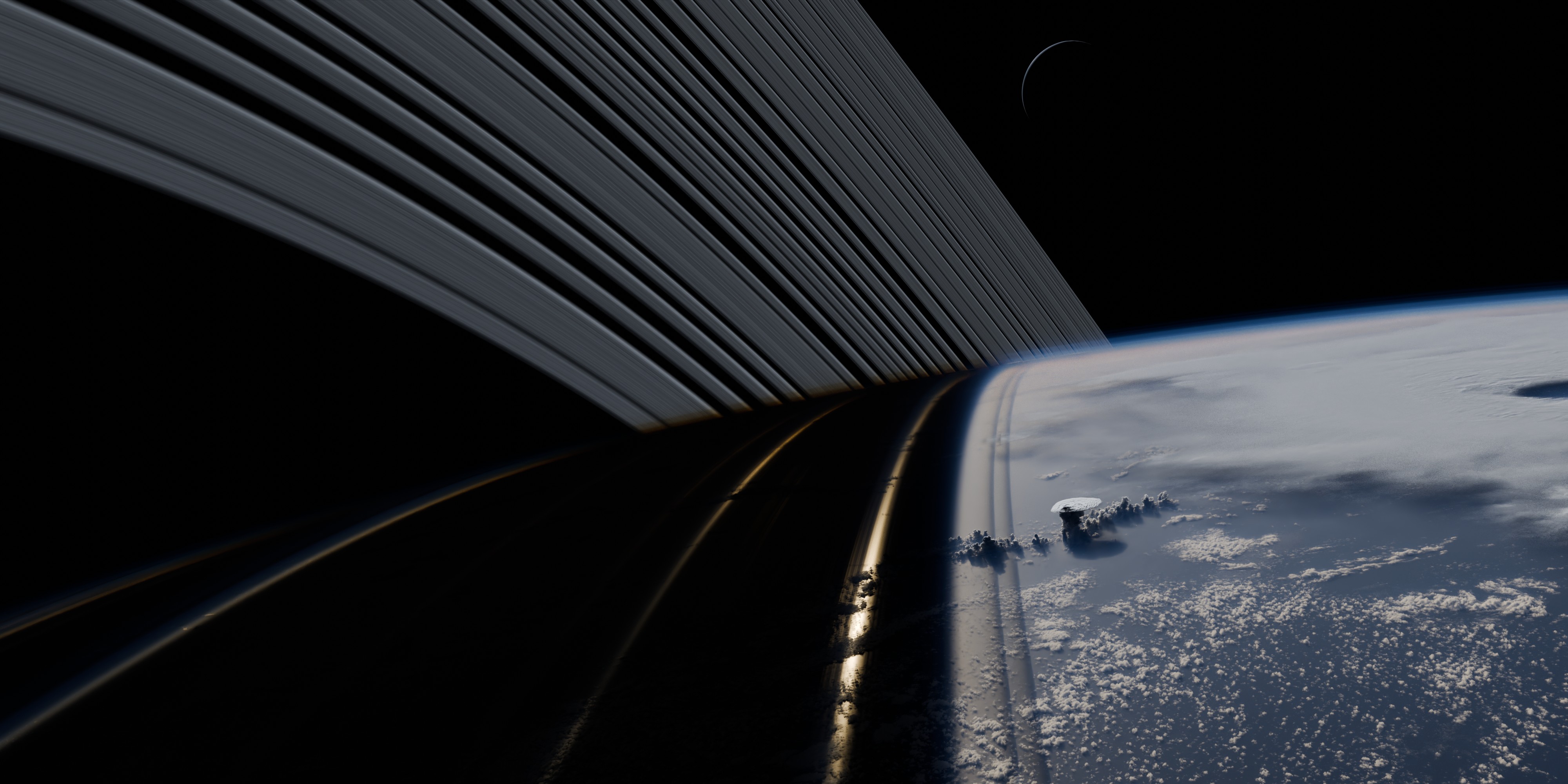
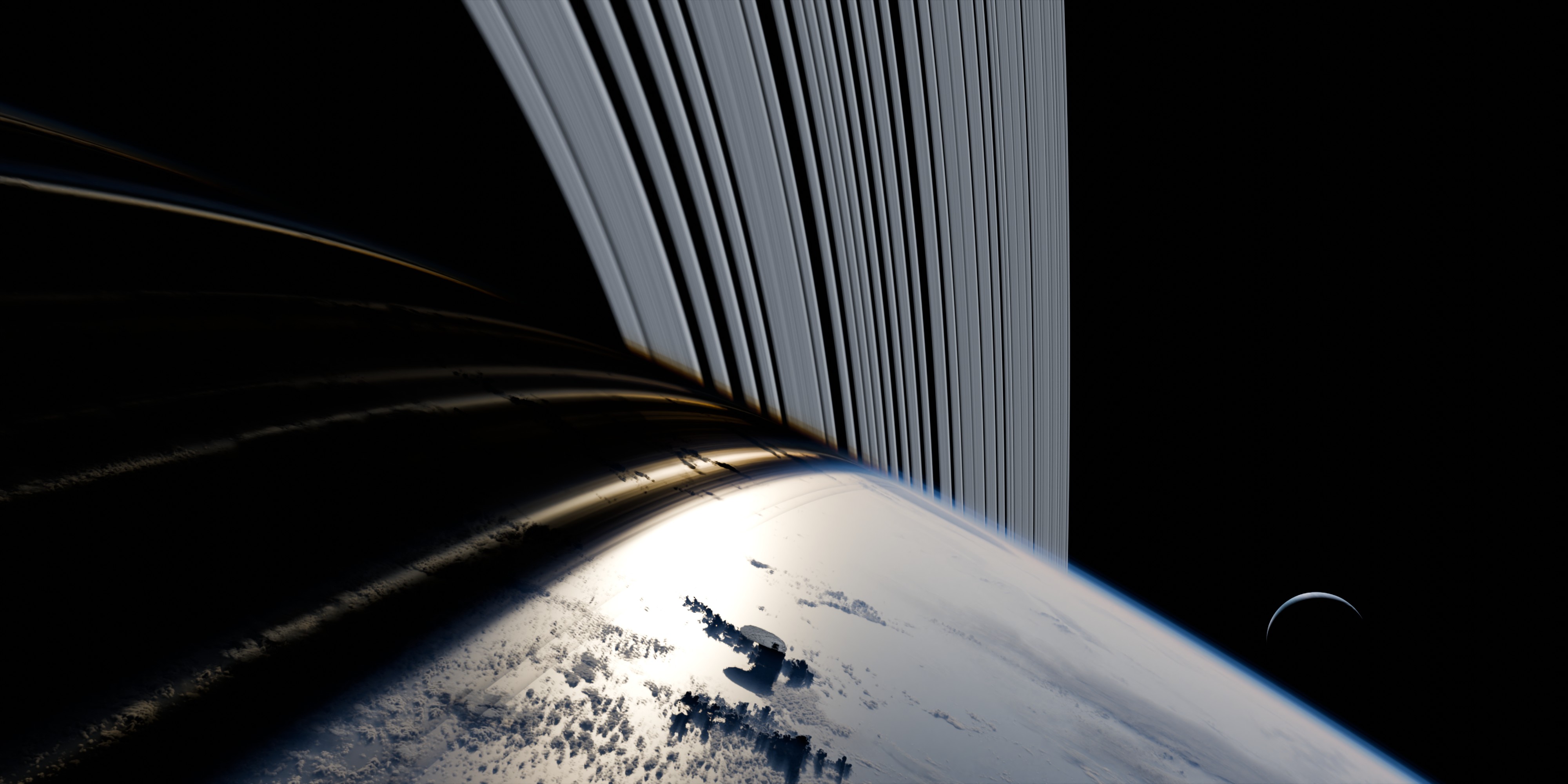
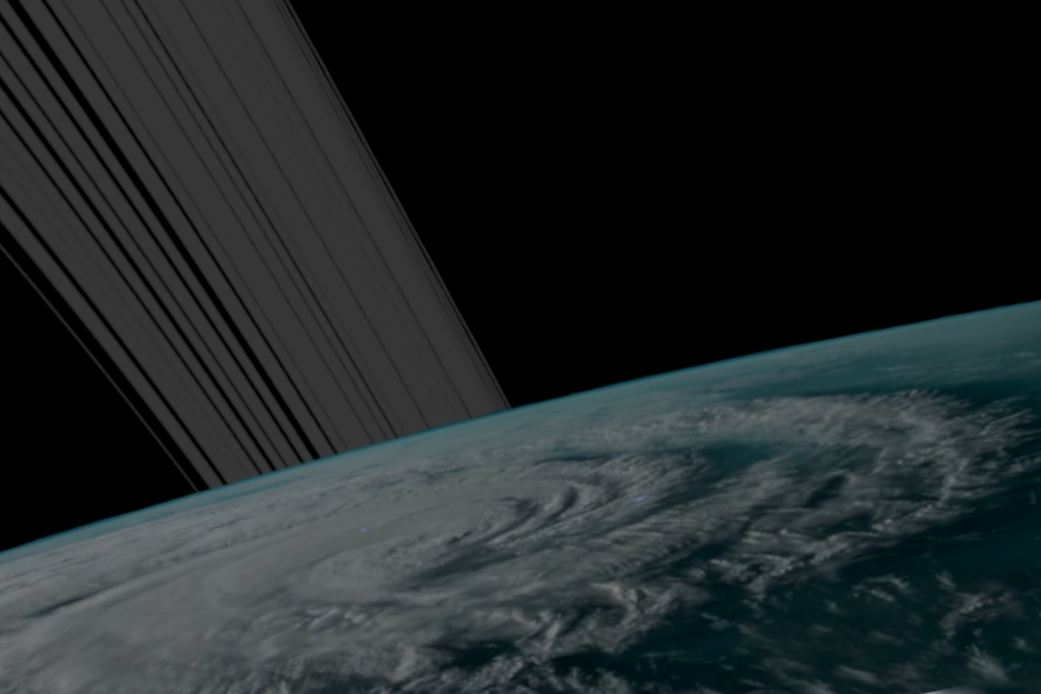
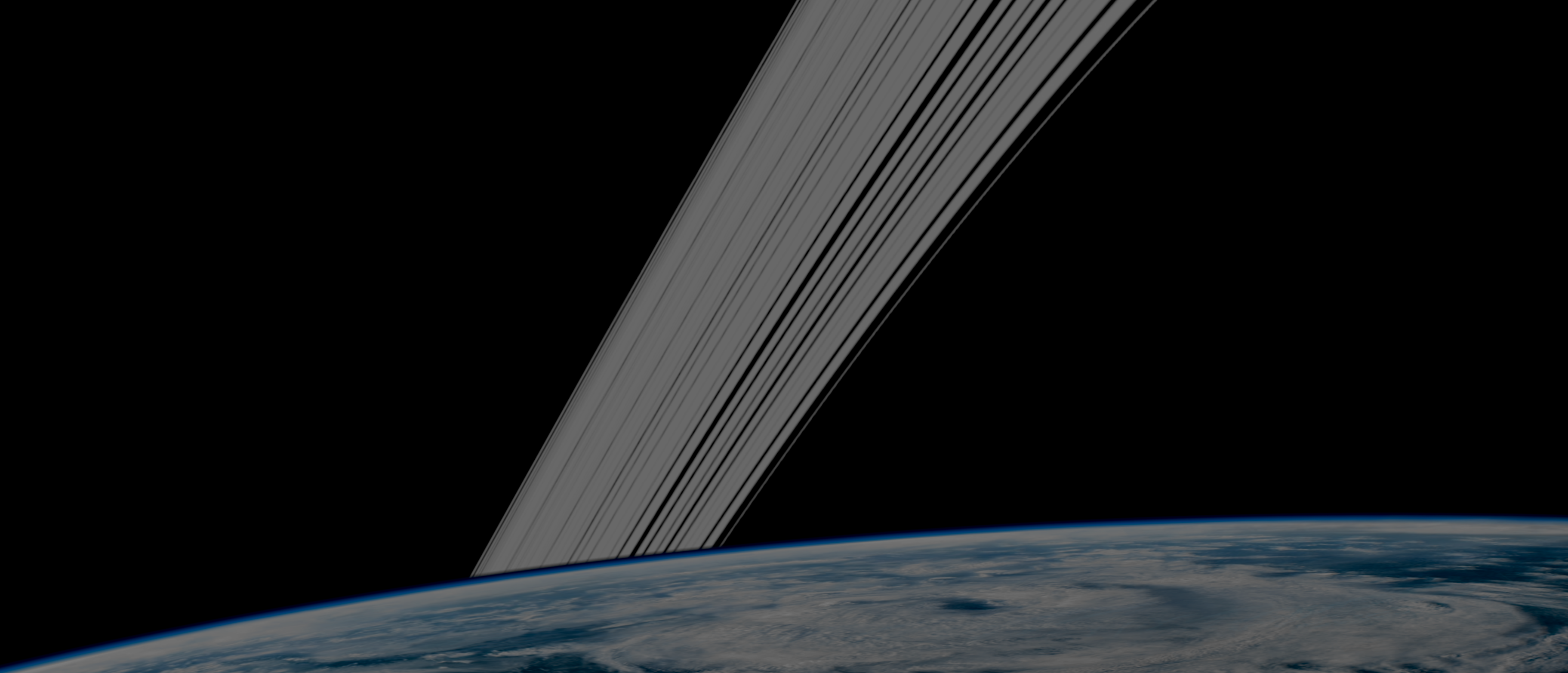
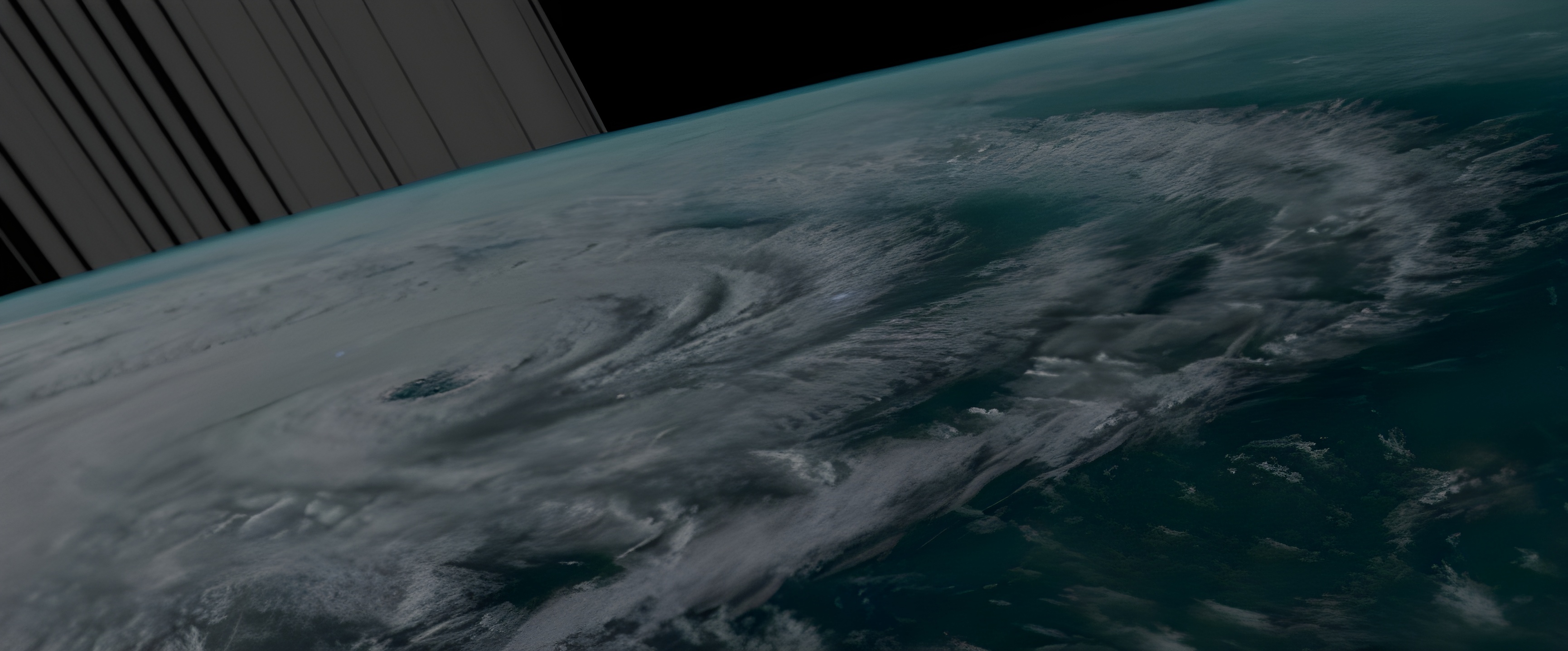
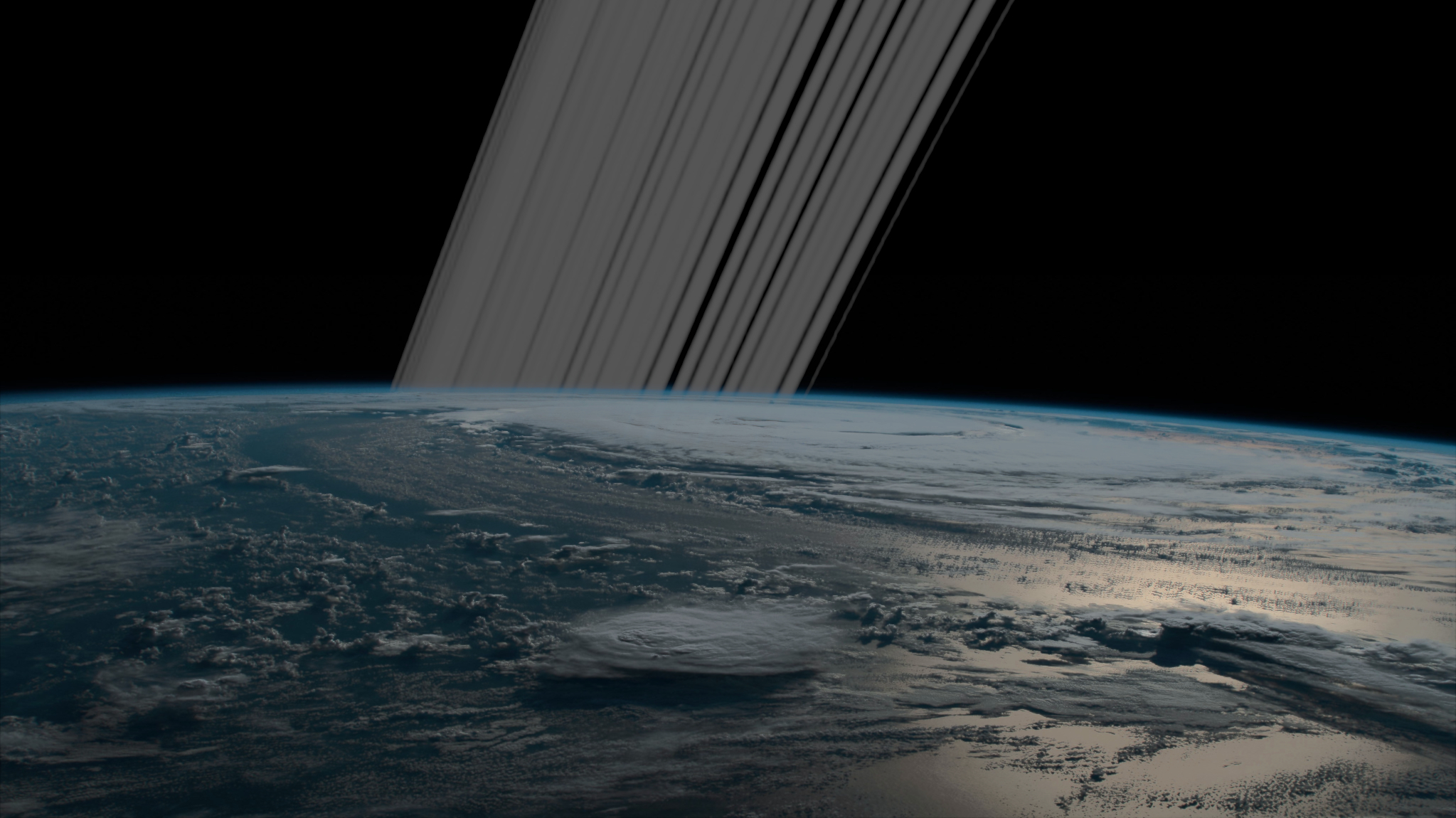
The Rings
Formation of the Rings
When the asteroid struck Lizard-953-E, it would have blasted an immense amount of material into space:
- Ejecta from the Impact Site:
- Trillions of tons of debris, including rock, dust, and vaporized material, would be flung into orbit by the sheer energy of the impact.
- The stronger gravity of Lizard-953-E (1.89 g) would ensure that some debris fell back to the surface, but a significant portion would escape the immediate gravitational pull to form a temporary debris cloud.
- Asteroid Fragments:
- The asteroid itself, if not entirely vaporized, would contribute large chunks of iron, nickel, and rocky material to the debris field.
- Atmospheric Interaction:
- The planet's dense atmosphere would slow and fragment some of the debris, ensuring a mix of fine particles and larger chunks in the newly formed ring system.
Stabilization of the Ring System
Over the following centuries:
- Gravitational Shaping:
- The planet's gravity and interactions with its moons (like Neclite and Theitania) would help shape the debris into well-defined rings.
- Lizard-953-E's 27 moons would act as shepherds, influencing the debris distribution and creating gaps or distinct bands in the rings.
- Differentiation:
- Lighter materials (dust and ice) might spread out into outer rings, while denser materials (metal-rich asteroid fragments) could form inner rings closer to the planet.
- Collisions and Fragmentation:
- Collisions between debris particles would grind larger fragments into smaller pieces, contributing to the thin, flat structure characteristic of planetary rings.
Characteristics of Lizard-953-E's Rings
The rings of Lizard-953-E would likely be:
- Massive and Bright:
- The dense debris field would reflect sunlight, creating brilliant, highly visible rings.
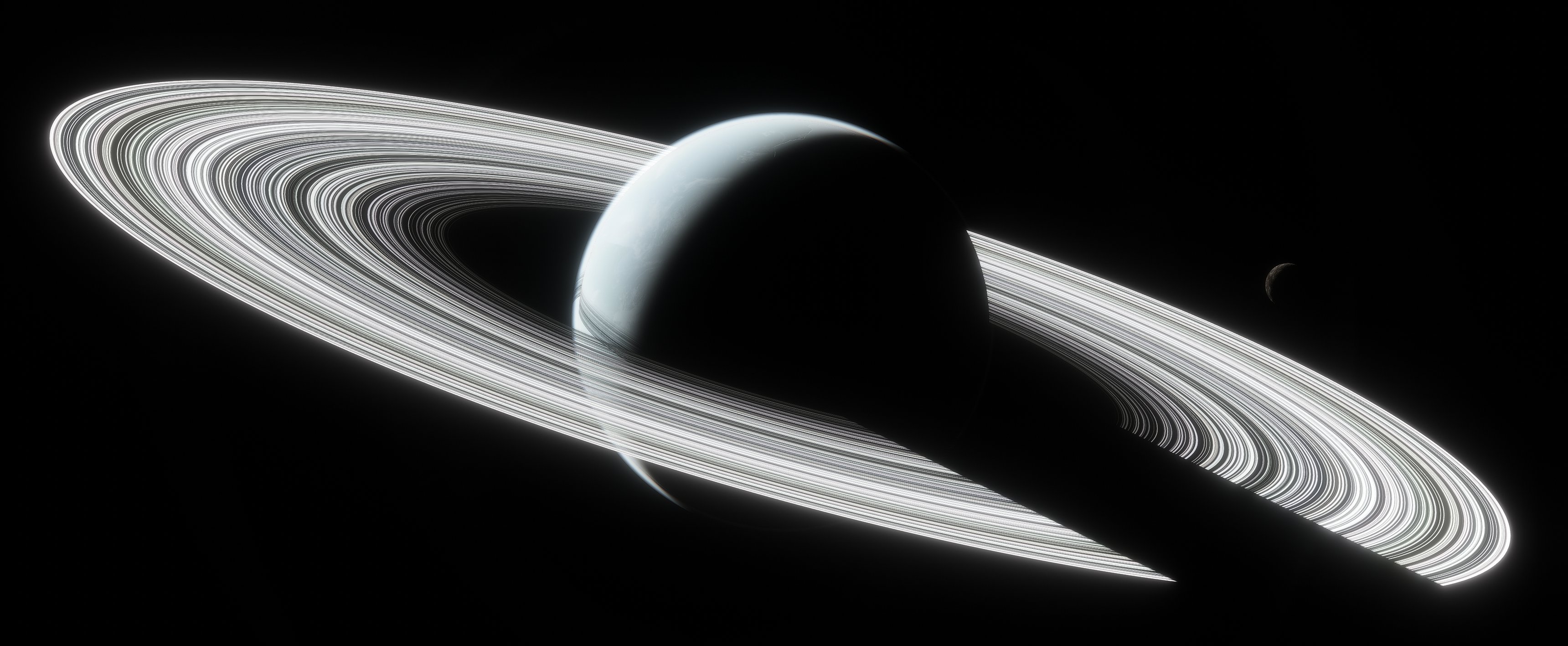
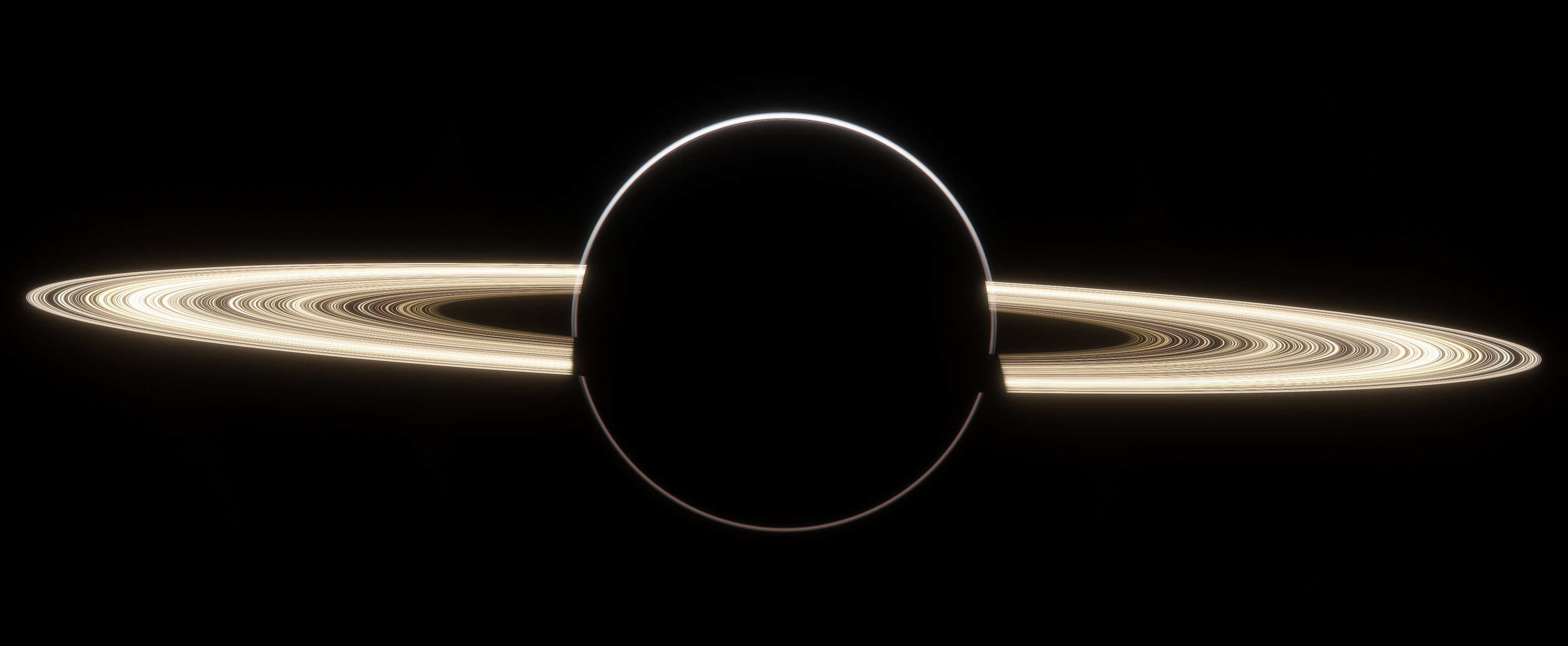
- Metal-rich particles from the asteroid and silicate ejecta could give the rings a unique reddish-gold hue, distinguishing them from the icy rings of Saturn.
- Multi-Banded:
- The presence of multiple moons and the planet's strong gravity could create multiple concentric bands, each with distinct compositions and densities.
- Dynamic:
- Ongoing interactions with the planet's moons and remaining debris might create periodic waves or patterns in the rings, making them appear "alive" from a distance.
Cultural and Historical Significance
For the surviving Lizards, the rings would become a symbol of resilience and remembrance:
- Mythological Role:
- The rings could be seen as a celestial memorial to the fallen civilizations, a visible reminder of the asteroid that nearly ended their existence.
- Scientific Curiosity:
- As the Lizards rebuilt their civilization, they would study the rings, piecing together the history of the catastrophic impact that created them.
- Artistic Inspiration:
- The rings might feature prominently in Lizard art, literature, and religion, embodying both beauty and the destructive power of the cosmos.
Long-Term Evolution of the Rings
- Gradual Thinning:
- Over millions of years, the rings would slowly lose material as debris falls back to the surface or is ejected into space.
- Interaction with Moons:
- The rings might contribute material to existing moons or even form new ones, as particles coalesce under gravitational forces.
- Permanent Feature:
- Despite gradual changes, the rings could persist for billions of years, becoming a defining feature of Lizard-953-E visible from light-years away.
Conclusion
The rings of Lizard-953-E are not just a stunning cosmic feature but a legacy of the 5763 asteroid impact. They serve as both a testament to the planet's turbulent history and a lasting reminder of the resilience of the Lizards, who survived near-extinction and rebuilt their civilization under the shadow of this celestial monument.
Atmosphere
Lizard-953-E's atmosphere is a mixture of helium (60%), oxygen (>30%), argon (>9%), and propane (>1%) and is about 11.2% denser than the atmosphere on Earth primarily due to the high percentage of Argon; a heavy, colourless, odourless, and generally unreactive noble gas. The high concentration of Helium in the Lizard-953-E atmosphere makes it extremely poisonous and unbreathable to a handful of bipedal and quadrupedal species, rendering them unconscious in about 20 seconds and causing death in about 4 minutes when they venture out unprotected by specialized breathing masks. The Propane present is also quite hazardous; concentrations over 2100 ppm (>0.21%) can cause immediate collapse with subsequent loss of breathing, even after inhalation of a single breath.
- Higher terminal velocity. Combined with Lizard-953-E's 89% higher gravity, a freely falling object's maximum speed is significantly more than on earth. A Person or Alien who happens to fall from a sufficient height has a good chance of dying even if they are over a forested area. Even over water, falling spread-eagled can reduce their speed sufficiently to allow an impact with the surface that will knock them unconscious, but not kill them.
- The increased mass of the denser air means that more force is required to accelerate it as it is moved out of the path of a moving object. certain races on Lizard-953-E experience this when they try to run – it feels like there is a wind blowing against them, even though the air is still. They are further hampered by the fact that the increased gravity causes their legs to strain more readily on paved or smooth surfaces, giving them more traction to force their bodies forward.
- Plants are subject to greater wind force, as the greater air density means that the moving air carries more kinetic energy and more momentum, and the plants, leaves, stems, branches, and trunks must all have a greater strength and/or flexibility to resist it.
Lifespan
Lizard-953-E and the Elkska Galaxy will last years or if the Lizard tech gets more advanced Lizard-953-E will last or even (Graham's Number of years! Graham's number, denoted as , is so large that even trying to compare it to the age of the universe is absurdly hard and time consuming. The number of times you would need to "stack" the universe's entire lifespan to reach Graham's number is so large that even writing it in scientific notation is meaningless. It would require something like:
or higher, which is already way beyond the total number of atoms in the observable universe.
Cultural Beliefs and Rituals of Lizard-953-E
The Lizards' Spirituality and Social Life:
The Lizards of Lizard-953-E have a deeply ingrained spiritual connection to their planet and its moons, which are central to their culture, rituals, and daily life. Their beliefs are rooted in the idea that their planet was formed through a divine cosmic process, with Lizard-953-E as the living embodiment of balance between the elements: earth, water, and air. These elements are seen as sacred, and the planet's transformation from a gas microgiant to a temperate super-Earth is viewed as a divine purification, a celestial ritual that reflects their own evolution.
The Lizards' faith is largely focused on reverence for nature and the natural processes that govern their planet. Their belief system is polytheistic, worshiping spirits of the elements and deities of the moons. Each moon of Lizard-953-E is associated with a specific deity that governs different aspects of life and nature. For example, Neclite is believed to be the goddess of the sky and winds, while Ulvarvis represents the god of war and protection. Thietenia is a goddess of healing and growth, Ruvohines is associated with the moon of wisdom, and Zurn is seen as a symbol of transformation and change.
Rituals and Prayer Practices
Rituals are an integral part of the Lizards' culture, with prayer rooms being common features in public spaces, such as marketplaces, city centers, and even residential areas. These rooms, known as "Auranthe", are sacred spaces where Lizards gather to connect with the divine and offer prayers for health, protection, and prosperity. The prayer rooms are often filled with natural elements like water features, stones, and plants, creating a serene environment for contemplation.
Daily Rituals:
- Morning Prayers: Every morning, Lizards engage in a collective prayer session, where they give thanks for the planet's fertility and the blessings of their environment. The morning ritual typically includes offerings of seafood or fresh fish, symbolizing their connection to the oceans and rivers of Lizard-953-E. Fish are believed to carry the essence of the planet's divine waters and are considered sacred offerings during prayers.
- The Full Moon Ceremony: On the night of each full moon, there is a grand ceremony where the Lizards gather to honor the moons that circle their planet. This is a time for offering prayers and performing sacred dances around large pools of water, symbolic of the celestial waters that once enveloped Lizard-953-E. The dance symbolizes the harmony between the Lizards, their gods, and the natural world.
- Festival of the Elements: Every year, during the planet's longest day (around the solstice), the Lizards celebrate the Festival of the Elements, a vibrant celebration that includes feasts, dances, and offerings of fish and fruits. The festival honors the four elements—earth, water, fire, and air—and serves as a reminder of the Lizards' connection to these forces in the natural world.
Markets and Public Life
Lizard-953-E is an exceptionally busy and vibrant planet, particularly in its marketplaces, where commerce and spiritual practice intersect. Public markets are ubiquitous, and their sights, sounds, and smells form the lifeblood of the planet's economy. Fish, the cornerstone of the Lizard economy, are sold in abundance. These markets are not just places to trade; they are communal hubs where social life flourishes.
Fish markets are organized into different sectors based on the types of fish or seafood being sold. Some fish are considered sacred and are sold at premium prices, while others are more common. Live fish tanks line the market stalls, with the most expensive fish swimming in clear, well-maintained aquariums that buyers can select from. The preparation and selling of fish are often ritualized, with some vendors offering a small prayer to the deities before slicing and preparing the fish, ensuring that the act is done with respect and reverence.
- Social Hubs: These bustling markets also serve as social spaces, where Lizards meet to discuss matters of importance, trade news, and celebrate community events. Merchants and artisans selling everyday items such as tools, clothing, and technology can be found mingling with the sellers of sacred goods, offering a diverse mix of the planet's economic and spiritual life.
- Spiritual Markets: In addition to food and goods, there are specialized spiritual markets that sell sacred objects and relics, such as carved stones, talismans, and sacred texts written on bioluminescent leaves. These items are used in personal and public prayers, offerings, and rituals.
Public Spaces and Worship
Prayer rooms and spiritual spaces are strategically placed throughout the cities, with many located near or within the marketplaces. Central prayer areas in large cities feature massive stone altars, adorned with intricate carvings representing the moons of Lizard-953-E and symbols of the elements. Here, groups of Lizards gather to perform collective prayers or engage in meditative reflection. The rhythmic sounds of prayer chants and the whispers of the wind create a peaceful ambiance that blends spiritual life with everyday activities.
In these areas, you will often see Lizards of all walks of life, from traders to scholars, offering respect to the divine or asking for blessings for their day's endeavors. These spaces also host public ceremonies, where the planet's spiritual leaders give speeches or offer guidance to the populace, reminding them of their connection to the greater cosmos.
Cultural Legacy and Evolution
Over the millennia, these practices have evolved, but their foundation remains deeply rooted in respect for the planet's natural resources and cosmic origins. The Lizards view their world as a living entity, and they have learned to balance their technological advancements with a deep spiritual reverence for the natural forces that shape their lives. Their temple rituals and the omnipresent prayer rooms serve as a reminder that, even in a technologically advanced society, their connection to the natural world and its mysteries remains central to their identity.
Holographic Healthcare
On Lizard-953-E, healthcare is as advanced as it is accessible, with a unique system that integrates holographic technology to ensure every citizen has access to medical care anytime, anywhere. This system is a cornerstone of Lizard society, designed not only for convenience but also for the well-being of all, reflecting the planet's commitment to holistic health practices.
How It Works
The Lizards have developed a vast network of holographic medical stations spread throughout their cities and rural areas. These stations are powered by an extensive array of satellites and advanced computational systems, allowing citizens to access medical services regardless of their location.
- Instant Access: Through their personal devices or implants, Lizards can connect to a holographic healthcare system that creates a real-time, interactive projection of a medical professional. This system allows the citizens to consult with doctors, diagnose ailments, and even receive treatment instructions from the comfort of their homes, workplaces, or any other location.
- Virtual Health Assistants: A holographic health assistant, often in the form of a holographic doctor, is available 24/7 to help with non-emergency needs. This assistant can provide advice on medication, mental health, and dietary recommendations or connect the user with a specialized doctor or technician for more advanced issues.
Key Features of the System
- Holographic Diagnosis: With the help of diagnostic tools integrated into the holographic interface, Lizards can receive an accurate assessment of their health in real time. The holographic doctor can request the user to interact with various sensors or use nanotech implants to check vitals, providing a comprehensive health checkup without needing to visit a physical facility.
- Instant Treatment: If the diagnosis involves simple medical procedures such as administering medication, performing basic treatments, or providing health advice, the holographic doctor can guide the Lizard through it. For more complex treatments, the hologram can instruct the Lizard to visit one of the biomedical centers equipped with advanced medical technology, or it will recommend a local specialist.
- Emotional and Mental Health Support: In addition to physical health, the holographic system provides access to mental health services. Lizards who need emotional support or therapy can consult with virtual therapists or counselors via the system, ensuring their mental well-being is prioritized alongside physical care.
- Emergency Response Integration: For emergencies, the holographic system is integrated with local response teams. If a Lizard needs immediate assistance, the system can quickly direct them to nearby emergency services or guide them through first aid until help arrives. This system can even dispatch drones for immediate on-site assistance if necessary.
Public Accessibility
This holographic healthcare system is publicly available to all Lizards, regardless of status or location. Marketplaces and public spaces are equipped with holographic healthcare booths, where individuals can consult a doctor in their lunch break or even during their routine trips to the market. These booths also include specialized prayer rooms for Lizards who seek peace or spiritual counseling during moments of personal health distress.
- Prayers and Healing: For the Lizards, healthcare and spirituality are tightly interwoven. The holographic booths may contain sacred spaces for prayer, where those in need can seek mental peace or spiritual guidance. This combination of healing and spirituality helps create a holistic healing experience, where both the body and soul are nurtured.
Cultural Impact
The availability of holographic healthcare has transformed Lizard society in profound ways. It has made healthcare not only immediate and effective, but also less stigmatized. With services available to everyone, there is no waiting period, and seeking medical help is no longer seen as a burden or a last resort. It has also allowed the Lizards to focus more on preventative care, as they can easily monitor their health and receive guidance on maintaining long-term well-being.
Additionally, this system reflects a deeply ingrained philosophy of accessibility and fairness, where every Lizard—regardless of their position or resources—can access world-class healthcare without discrimination.
Full Moon Ceremony
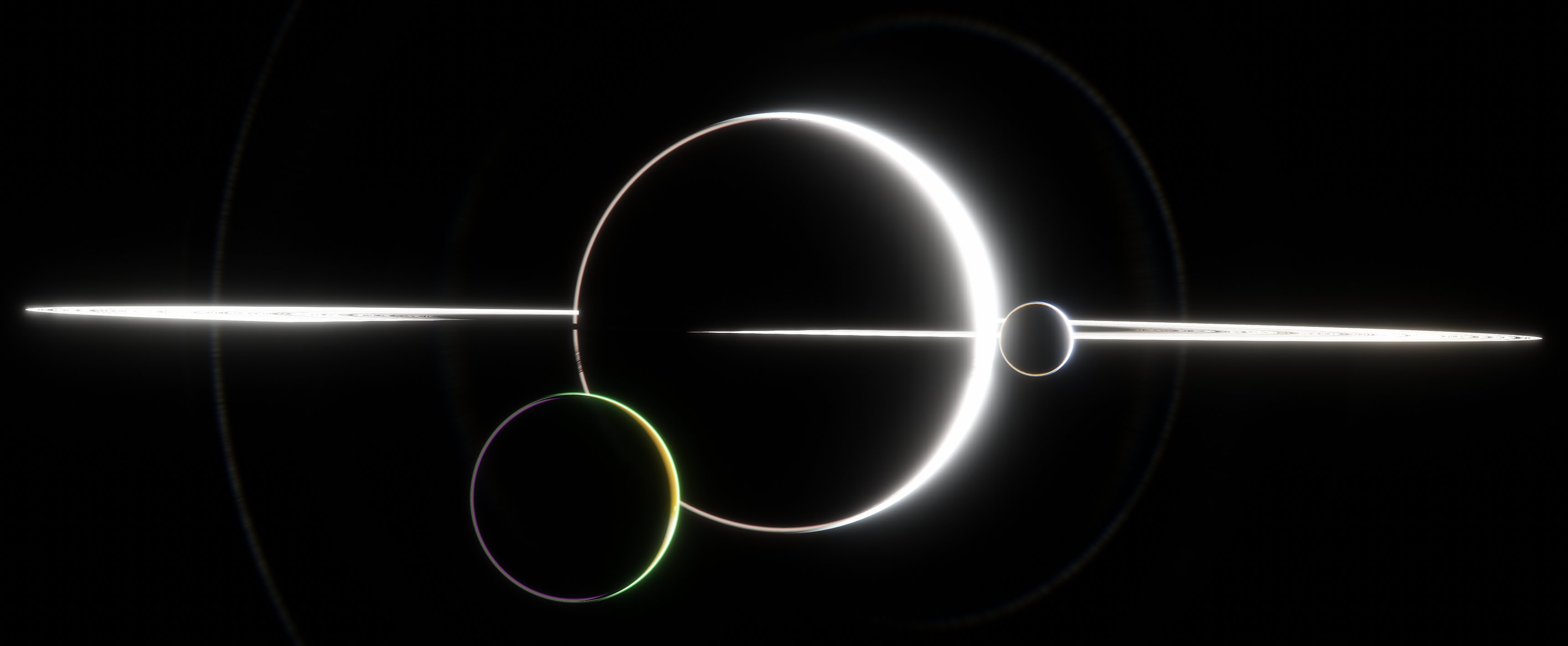
On the night of the full moon, the Lizards gather to honor the celestial events that tie their world to the divine forces. The full moon is considered especially sacred because it coincides with the eclipse of Neclite, the goddess of the sky and winds, by Lizard-953-E itself. During this celestial event, Neclite, one of the largest and most revered moons of Lizard-953-E, passes behind the planet, casting a shadow across its surface. This eclipse is seen as a moment when the goddess of the sky is temporarily veiled, symbolizing a time of reflection, renewal, and cleansing for the Lizards.
The eclipse is viewed as a powerful spiritual event, where the connection between the heavens and the people is momentarily obscured, creating an opportunity for the Lizards to focus on self-improvement and meditative practices. The eclipse itself is treated with great reverence and awe, and it marks a pivotal moment in the spiritual calendar.
Rituals During the Eclipse
During this eclipse, Lizards gather in ceremonial spaces, often near large pools of water that reflect the sky. They partake in silent prayers and ritualistic dances, symbolizing their acknowledgment of the cycles of nature and the eternal flow of cosmic forces. In the shadow of Neclite, offerings of fish, sacred herbs, and bioluminescent flowers are placed upon altars to honor the goddess and the unseen forces that shape the world.
The eclipse itself is celebrated as a temporary, yet powerful, veiling of the divine, where the veil between the physical and spiritual worlds is thinned. For Lizards, it is a time to surrender to the cosmic flow, recognizing that both light and shadow are part of their existence.
Symbolism of the Eclipse
- Neclite's Veiling: Neclite's eclipse is symbolic of the goddess's temporary retreat from the world, allowing the Lizards a chance to refocus on their connection to the divine. As Neclite passes behind Lizard-953-E, the planet casts a shadow, which is seen as a reminder that even the brightest of beings can experience moments of darkness and seclusion, and through that, a chance for renewal.
- The Spiritual Cleansing: The eclipse is also believed to cleanse the spirits of the Lizards. It's a time when they release negative energies or past grievances, making space for new beginnings. Some participate in a purification ritual, involving immersion in sacred pools or baths filled with water from the oceans of Lizard-953-E, to symbolically wash away impurities.
- The Dance of Shadows and Light: As part of the full moon ceremony, a special dance of shadows and light takes place. Lizards use glowing ornaments or bioluminescent garments, which shimmer and pulse with light, to create a beautiful contrast against the shadow of the eclipse. This dance is a celebration of the balance between darkness and light, acknowledging the necessity of both in the cycle of existence.
Laws and Justice on Lizard-953-E
On Lizard-953-E, the laws are designed to maintain fairness, equality, and community harmony. With a deeply ingrained belief in collective well-being, the Lizards follow strict rules that emphasize compassion, respect, and the importance of societal balance. Their legal system reflects a culture built on justice and equality for all, and any actions that threaten the harmony of society are met with severe consequences.
Core Principles of the Legal System
- Equality Before the Law: The Lizards have an uncompromising belief that every individual should be treated equally, regardless of their status, wealth, or background. Discrimination in any form is considered a grave offense. Those who attempt to discriminate against others—whether based on status, species, gender, or belief—are viewed as a threat to societal unity. As a result, execution is the mandatory punishment for anyone found guilty of discrimination, ensuring that all citizens are protected by a system that values and respects their rights.
- Stealing Premium Fish (Jinx Fish): Jinx fish, a highly prized delicacy on Lizard-953-E, are a symbol of prosperity and a staple of trade for the wealthier market. However, these fish are considered sacred, and the theft of premium fish from a seller—especially one who relies on them for their livelihood—is treated as an unforgivable crime. The act of stealing is seen as a violation of fairness and social contract. Anyone caught stealing Jinx fish from a poor salesman faces immediate execution, as it represents a severe exploitation of another's labor and a betrayal of the community.
- Revenge and Bullying: The Lizards place great importance on forgiving past grievances and healing conflicts through understanding, not vengeance. If an individual chooses to bully someone who had previously bullied them, they are violating a central cultural tenet of restorative justice. The cycle of vengeance is seen as destructive to the integrity of the community. Therefore, the punishment for retaliatory bullying is jail time, reflecting the importance of allowing conflicts to heal peacefully rather than escalate.
- Destruction of Property with Antimatter: Antimatter, a highly dangerous and potent substance, is heavily regulated due to its devastating potential. Attempting to blow up someone else's property—whether it's a private home, a market stall, or any other structure—is considered an act of extreme violence and reckless endangerment. If an individual uses antimatter to destroy property that doesn't belong to them, they face severe punishment. Depending on the severity of the crime, the consequence could be execution, though if the crime is considered less intentional or an act of reckless disregard, jail time may be imposed.
- Catching Premium Fish (Jinx Fish): Fishing for Jinx fish is highly regulated due to the species' rarity and value. Unauthorized attempts to catch Jinx fish, whether for personal consumption or illicit trade, are seen as a criminal act. The community holds strict regulations to protect the sanctity of their fishing practices, ensuring that only those with legal rights or permits may partake in the harvest. Catching Jinx fish without permission leads to jail time, as it is seen as a theft of the community's shared resources and a direct threat to the balance of their ecosystem.
Legal Enforcement and Punishments
- Execution: Execution is considered the ultimate punishment on Lizard-953-E and is only carried out in the most severe cases—such as those involving discrimination, stealing Jinx fish, or destroying property with antimatter. The Lizards see execution as a necessary deterrent to actions that threaten the balance and equality of their society. Those who commit these crimes are considered a direct threat to their collective harmony, and execution is a means of ensuring the preservation of justice and order.
- Jail Time: For less severe crimes, such as retaliatory bullying or unauthorized fishing, the offender may face imprisonment. The prison system is designed to serve as a space for reflection and reformation, and inmates are encouraged to participate in educational programs, spiritual healing, and community service to help reintegrate into society. The goal is not simply punishment but also the opportunity for personal growth and rehabilitation.
Cultural Context and the Role of Law:
The Lizards' laws reflect their core beliefs in community unity, compassion, and equality. They are a society that is focused not only on punishing wrongdoing but also on fostering a sense of shared responsibility for the well-being of all individuals. The laws are strict because the Lizards understand that any violation of trust or exploitation has the potential to undermine the social fabric they have worked hard to maintain.
In everyday life, Lizards are encouraged to engage in peaceful resolutions, seek spiritual counsel, and maintain their commitment to mutual respect. While the laws may be harsh, they are seen as a necessary measure to preserve the fragile balance of their society. The Lizards believe that a world governed by fairness and compassion can only function if all its members respect the rights and dignity of others.
Prison System on Lizard-953-E
The prison system on Lizard-953-E is unique in that it balances high security with a focus on rehabilitation and personal comfort. The Lizards believe in offering second chances to offenders rather than subjecting them to harsh, dehumanizing punishments. Their goal is not just to punish, but to reform and reinforce positive behavior within society. The Lizard prison system reflects their cultural values of compassion, community healing, and individual growth, while ensuring that individuals who break the law cannot disrupt societal order.
Design and Comfort
- High Security, Posh Conditions: While the security in Lizard-953-E's prisons is tight—designed to prevent escape and ensure that dangerous offenders are contained—the conditions inside are surprisingly luxurious by typical standards. Prisoners are provided with comfortable beds, private desks, and PCs to allow them to stay connected to the outside world, pursue learning, and even engage in creative pursuits. This setup is part of their rehabilitation philosophy; they believe that providing a comfortable environment helps inmates focus on self-improvement rather than fostering resentment or a desire to escape.
- Freedom of Movement Within Prison: Prisoners are granted freedom to walk around the prison grounds and are encouraged to enjoy a nature walk, taking in the serene surroundings. This is in stark contrast to traditional prisons, where inmates are often confined to small cells. The idea is to keep inmates connected to the natural world, as the Lizards believe that a calm, reflective atmosphere is essential for personal growth and healing.
- Focus on Reform and Reflection: The goal of the prison system is rehabilitation, not retribution. Therefore, even in high-security facilities, the focus is on reflection, education, and psychological well-being. Inmates are given access to educational resources, therapy programs, and even creative outlets such as art or music. They are encouraged to reflect on their actions and how they can better contribute to society once released. The idea is to offer an environment that encourages personal growth rather than simply punishing the offender.
The Cultural Beliefs Behind the Prison System
- Against Harsh Punishments: The Lizards have a firm belief that harsh punishments—such as brutal treatment, solitary confinement, or overly punitive measures—are counterproductive and lead to higher crime rates. They think that when individuals are treated with dignity and respect, even in prison, they are more likely to reform and integrate back into society without repeating their offenses. Harsh punishment, in the eyes of the Lizards, fosters resentment and alienation, which ultimately increases the likelihood of recidivism. As such, any attempts to enforce brutal measures within the prison system are strictly forbidden and will be met with severe consequences.
- Focus on Healing, Not Vengeance: The Lizard culture believes in restorative justice, where offenders are given opportunities for reconciliation, healing, and personal reflection. Their view is that vengeance is an obstacle to healing, and they focus on a positive future for those who have made mistakes. Prisons are designed to help individuals transform for the better, with an emphasis on self-discipline, growth, and contribution to society.
Laws on Speech and Behavior
- No Derogatory Speech: The Lizards place a strong emphasis on respectful speech and community harmony. As part of this, they have a law against derogatory speech, including hate speech, witch hunting, sexism, homophobia, and profanity. These offenses are considered deeply harmful to the unity of their society. To ensure that individuals feel safe and respected, speech that undermines the dignity of others is strictly prohibited. This law aims to maintain a healthy, inclusive environment where every individual can live without fear of verbal abuse or discrimination.
- Protests and Public Behavior: While the Lizards believe in freedom of expression, there are strict rules about how protests and demonstrations can be conducted. Protests without notifying the authorities or without the proper channels being followed are considered disruptive and may lead to jail time. Hate speech or profane language is especially forbidden near sacred spaces like prayer rooms or religious assemblies, as these areas are considered places for peace, reflection, and connection with their spiritual beliefs. Disruptions to these areas are seen as a violation of the sanctity of their faith.
- Respect for Sacred Spaces: Public areas like prayer rooms or religious assemblies are protected by these speech laws. The Lizards have a deep spiritual connection to these spaces, and they believe that disrupting the peaceful atmosphere of these areas is a form of disrespect to both the community and the spiritual beliefs that guide them. As a result, speech that disrupts or challenges the reverence of these areas is heavily policed.
Enforcement of These Laws
- Public Order Units are responsible for monitoring and enforcing the rules regarding speech, protests, and behavior. These units are trained not just to enforce laws, but to also promote community awareness and education on the importance of respect and unity.
- Rehabilitation Programs are in place to help individuals who violate speech laws learn to understand the impact of their words and encourage more empathetic communication.
- Community Mediation is encouraged as an alternative to punitive measures, focusing on dialogue and peaceful resolution.
Missions to Neclite: Studying the Core
The Lizards have always been deeply fascinated by the moons that orbit their home planet, Lizard-953-E, and none more so than Neclite. This gas moon, with its swirling gaseous atmosphere and mysterious characteristics, holds particular intrigue for the Lizard scientists. Over the past few decades, the Lizard government has initiated a series of missions to Neclite to study its core and uncover the secrets buried deep beneath its thick, gas-laden atmosphere.
Scientific Goals and Mission Objectives
- Investigating Neclite's Core: The primary objective of these missions is to understand the composition and behavior of Neclite's core. Scientists believe that Neclite's interior may harbor valuable information about the formation of gas moons and the dynamics of large celestial bodies that support liquid and gaseous layers. Some theories suggest that the core could be rich in rare minerals or unknown energy sources, which could prove invaluable for the Lizards' technology and energy development.
- Core Drilling Projects: These missions involve sophisticated drilling technologies that can penetrate through the dense atmosphere and deep into Neclite's core. The Lizards have designed high-tech probes that are equipped to endure extreme conditions, including the harsh pressures and temperatures found on the moon. These probes are deployed in specific regions that have been identified as having high potential for revealing the internal structure of the moon. Researchers have also developed specialized robotic assistants to assist with data collection and drilling operations, ensuring that the mission runs efficiently.
- Atmospheric Sampling and Heat Transfer Studies: In addition to the core, scientists are also studying the atmosphere of Neclite. Using advanced sampling devices, they gather data on the moon's gases, composition, and temperature variations. The extreme heat transfer dynamics of the atmosphere are of particular interest, as they may offer clues on how Neclite's core generates and maintains such intense thermal activity. The data is essential for understanding the long-term stability of gas moons and how such environments might be adapted for future colonization or resource extraction.
- Collaborative Research with Astrophysical Institutions: These missions are not just a Lizard initiative—the Lizards have opened their research to collaboration with the galactic scientific community. Leading astrophysical institutions from across the galaxy are contributing their expertise, technology, and resources to better understand Neclite's core. This collaboration has made the missions an international effort, bringing together diverse knowledge and perspectives to solve the mysteries of the moon.
- Potential for Discovery of Unknown Resources: One of the driving motivations behind the missions to Neclite is the possibility of discovering valuable resources deep inside the moon's core. The Lizards have long believed that Neclite could contain rare metals or energetic materials that are highly prized in galactic markets. These resources could play a pivotal role in advancing Lizard technology or even in establishing new trade relationships with other civilizations.
Challenges and Technological Innovations:
- Navigating Neclite's Atmosphere: One of the biggest challenges facing the missions is Neclite's dense and turbulent atmosphere. The gas moon is known for its highly erratic weather and unpredictable storm systems, which make travel and communication difficult. The Lizards have designed special atmospheric shuttles and drone fleets capable of withstanding these extreme conditions, including turbulent winds and the low visibility caused by thick gaseous clouds.
- Data Transmission and Communication: The vast distance between Lizard-953-E and Neclite—along with the interference from the moon's atmosphere—poses a significant challenge for data transmission. The Lizards have developed high-frequency communication systems that allow for the continuous transmission of scientific data from the mission sites back to Lizard-953-E. These systems include relay satellites orbiting Neclite to ensure a constant flow of data, even in the event of temporary disruptions caused by atmospheric phenomena.
- Maintaining Long-Term Operations: Given the long duration of the mission (due to Neclite's slow orbit around Lizard-953-E), the Lizards have developed self-sustaining stations on the moon's surface. These stations are powered by renewable energy sources, such as solar panels and geothermal energy, and are equipped to support the research teams who stay on the moon for extended periods. The stations are designed to be fully autonomous, capable of maintaining operations without constant support from Lizard-953-E.
Cultural Significance
The missions to Neclite are not just scientific endeavors but also hold cultural importance for the Lizards. The pursuit of knowledge and discovery is seen as a noble endeavor that aligns with their values of understanding and enlightenment. The moon itself holds a kind of mythical significance in Lizard culture, with many believing that Neclite is a key to unlocking the deeper mysteries of their world and their place in the universe.
Future Goals
Looking ahead, the Lizards plan to continue their efforts on Neclite, possibly sending manned expeditions to explore the core in person once the technology is ready. These explorations could open up new technological innovations, new resources for trade, and perhaps even new insights into the cosmic phenomena that shaped Lizard-953-E and its moons.
In the future, the Lizards foresee colonization projects on Neclite or scientific outposts built on its surface to continue their exploration of the moon's deeper layers.
Through these missions, the Lizards aim not only to enhance their scientific knowledge but to further strengthen their philosophy of discovery, unity, and equality, making Neclite an integral part of their cultural and technological evolution.
Harnessing Black Hole Energy: The Lizard Approach
The Lizards are at the forefront of energy manipulation in the galaxy, pushing the boundaries of scientific discovery and technological innovation. One of their most remarkable achievements is their ability to harness the energy from black holes, a feat that few civilizations have even dared to attempt.
Theoretical Foundations
The Lizards believe in a unified theory of energy, where all forms of cosmic phenomena—from the smallest subatomic particles to the largest galactic structures—are interconnected. Their scientists hypothesize that the infinite energy contained within black holes can be extracted and converted into usable power, providing an almost unlimited supply of energy for their civilization. However, extracting energy from black holes requires an intricate blend of advanced physics and cutting-edge technology.
The Mirror Encapsulation
To harness the energy of black holes, the Lizards employ an ingenious technique involving encasing the black holes in mirrors—a process that involves constructing massive, highly reflective structures around the event horizon of the black hole. These mirrors, known as Event Horizon Reflectors (EHRs), are built from materials stronger than anything found naturally in the universe, often made from a composite of hyper-dense alloys and meta-stable quantum materials.
The reflectors are positioned in such a way that they create a shield around the event horizon, containing the black hole's powerful gravitational pull while still allowing the energy within the black hole to be harnessed. These mirrors are capable of withstanding the intense radiation and gravitational forces surrounding the black hole, without being torn apart by the immense pressure.
Electromagnetic Wave Pulses
Once the black hole is encased, the Lizards utilize electromagnetic waves, which are sent into the black hole at carefully calculated intervals. These waves are a form of electromagnetic pulses (EMPs) that interact with the accretion disk and the event horizon, creating a feedback loop of energy that resonates within the black hole.
The waves bounce off the mirror encasements, sending ripples of high-frequency electromagnetic pulses back toward the Lizard's energy collection systems. This process effectively creates a closed-loop feedback mechanism, where energy continually bounces back and forth, amplifying over time. The energy that is reflected back is then collected using advanced energy collection arrays, which convert the electromagnetic waves into usable power.
The Energy Collection Process
The collected energy is then transmitted to a central power hub on Lizard-953-E or other strategic locations in the Lizard civilization. The conversion system involves a network of energy converters, which efficiently transform the oscillating electromagnetic pulses into clean, stable power. This power can be used for a variety of purposes:
- Planetary power grids, supplying the entire planet with energy.
- Spacecraft propulsion, providing limitless fuel for exploration and colonization.
- Technological advancements, driving the development of cutting-edge tools, machines, and infrastructure.
- Artificial intelligence and military applications, fueling everything from everyday conveniences to high-tech defense systems.
The efficiency of this process is staggering. The Lizards' ability to create an energy loop that continually amplifies and refines electromagnetic pulses is one of the key reasons their civilization is so technologically advanced and self-sufficient.
Cultural Impact and Ethical Concerns
While the ability to harness energy from black holes has revolutionized the Lizard civilization, it has also raised some ethical debates. Some Lizard factions are concerned about the long-term effects of manipulating such powerful forces, especially given the potential to destabilize the surrounding galactic environment. However, the dominant belief among Lizard society is that this form of energy mastery is vital for the survival and progress of their people.
The Lizard government has set strict regulations in place to ensure the responsible use of black hole energy. These regulations prohibit the use of such energy in uncontrolled ways or for the creation of dangerous weapons. The Lizards' legal code includes severe penalties for those who would misuse this power, such as unauthorized attempts to alter black hole structures or tamper with energy extraction devices.
Future Potential
Looking ahead, the Lizards are eager to explore even more ambitious projects in black hole energy manipulation. Their scientists speculate that there may be other forms of energy within black holes that have not yet been discovered, potentially leading to even more efficient methods of power generation. Some even dream of using this energy to fuel intergalactic travel, where ships could be powered by the infinite energy of a black hole itself.
There are also plans to create artificial black holes in controlled environments, allowing the Lizards to directly control the energy they extract, potentially reducing risks associated with using natural black holes. These artificial black holes could be placed strategically throughout the galaxy, providing energy to the Lizards' growing empire.
Technological Innovation and Trade:
The black hole energy system has put the Lizards at the forefront of galactic technological innovation. They have developed advanced technologies related to the collection, storage, and distribution of energy, which are now being sold and traded with other civilizations. This energy mastery has made the Lizards influential on the galactic stage, as they become key partners in intergalactic commerce, energy exchange, and space exploration.
In summary, the Lizard civilization's ability to harness the energy of black holes is a testament to their scientific ingenuity, technological prowess, and cultural commitment to progress. By encasing black holes in mirrors and manipulating electromagnetic pulses, they have unlocked a new frontier in energy production, forever changing the course of their civilization's future.
Biomes
TODO:Insert galleries
Beaches
TODO:Insert galleries
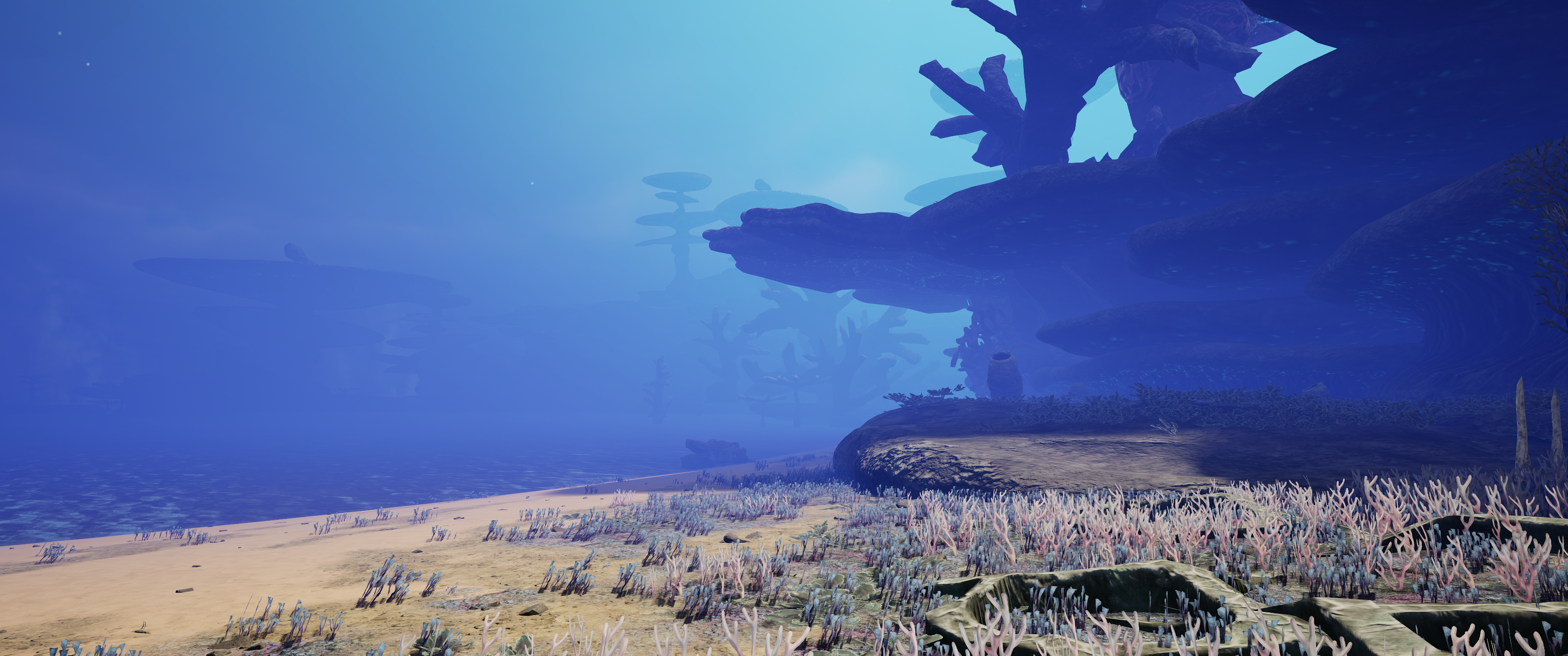
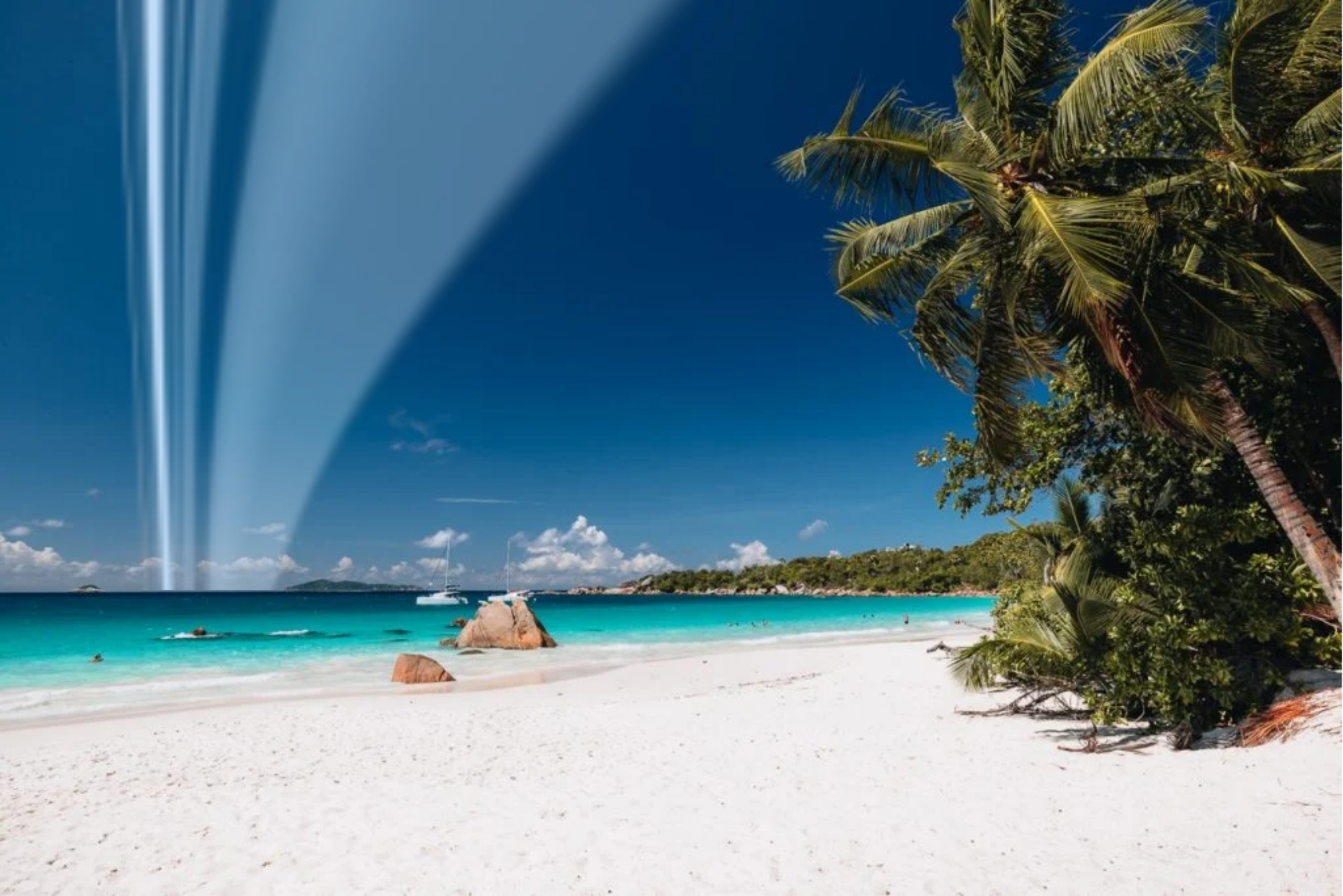
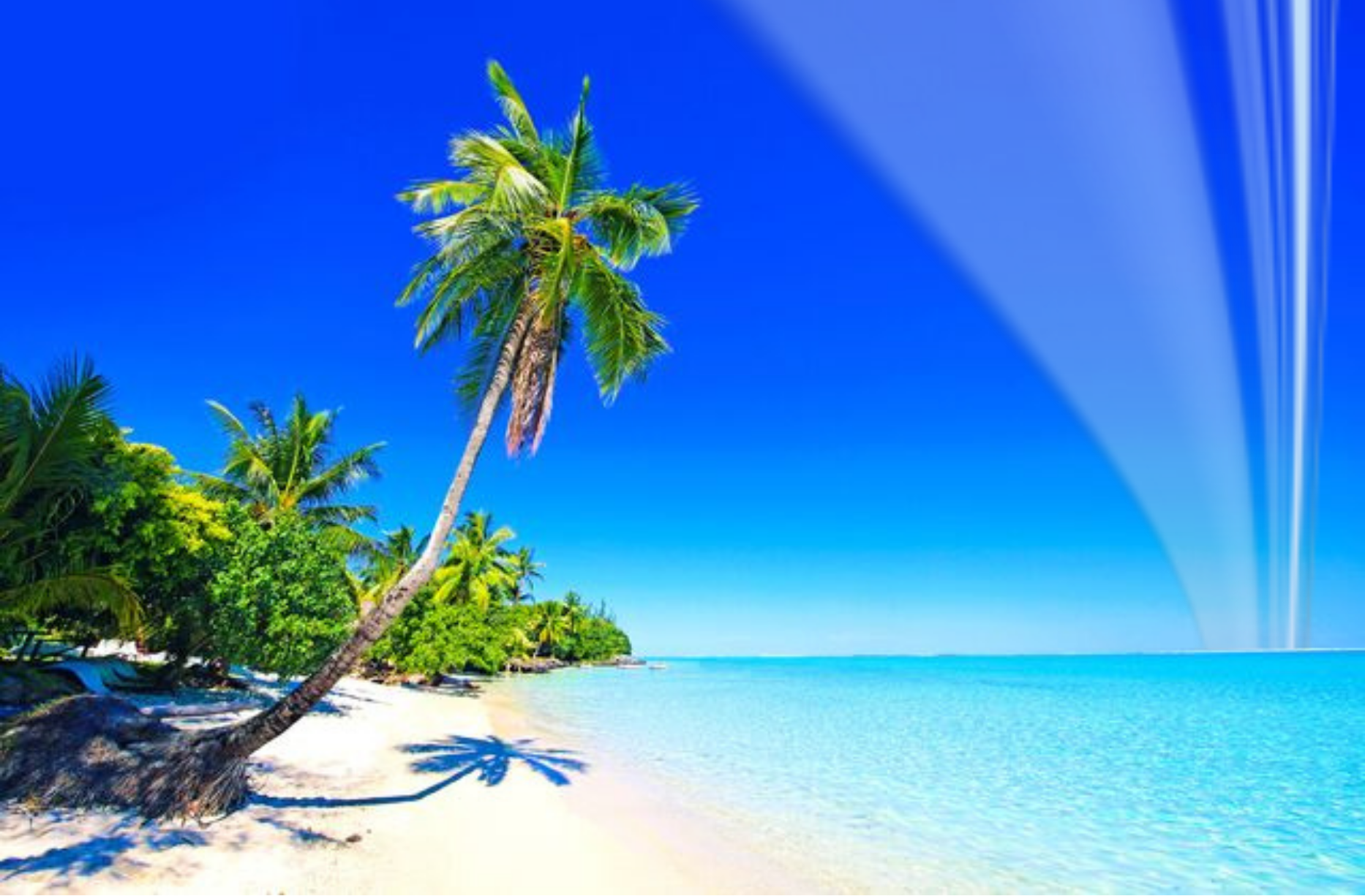
On the tranquil shores of Aeon Cove, the crystal-clear, turquoise waters gently lap against silver sands that reflect the warm glow of Lizard-953-E's sun. Towering stones line the coast, etched with ancient symbols honoring the Lizards' ancestors, imbuing the beach with a timeless mystique. Visitors are drawn to the cove for its quiet beauty, where bioluminescent plankton light up the waves at night, creating a surreal mirror of the stars above. Here, time feels suspended, and those who wander to its shores find a place of deep peace and reflection.
Meanwhile, Theisen's Key is a lush, secluded paradise, popular among interstellar tourists from diverse species (excluding People). Enclosed by high cliffs and vibrant green vegetation, the beach offers both seclusion and an exotic beauty enhanced by its turquoise waters, which remain calm year-round. Colorful alien flora fringe the sandy shore, and gentle waves create a soothing backdrop for those seeking respite. Named after a wise figure in Lizard lore, Theisen's Key has become known for its peaceful, contemplative atmosphere, making it an ideal escape for those who seek solace amidst natural beauty.
Helios Bay pulses with energy and warmth, its iridescent sands and bright turquoise waters inviting visitors to bask in the radiance of Lizard-953-E's sun. As the day progresses, the beach transforms into a gathering place for festivities, with locals and travelers alike coming to witness the legendary sunsets. When the sky turns vibrant shades of orange and pink, Helios Bay becomes a place of celebration and connection, capturing the planet's lively spirit and providing an unforgettable experience of beauty and joy.
For those seeking rejuvenation, Kel'rish Sands is a beach revered for its healing properties and mineral-rich, earthy-red sands. Named after Kel'rish, a legendary healer, the beach's turquoise waters are said to refresh both body and spirit. Small tidal pools dotted along the shore are filled with dazzling marine life and flecks of blue crystal, lending an otherworldly beauty to the scene. Many come here for personal renewal, believing that the waters and sands of Kel'rish hold a restorative power that can restore balance and clarity.
Finally, Vy'taan Cove is a dramatic stretch of black sand bordered by striking rock formations that contrast with the vivid turquoise surf. Known as a place of strength and resilience, this cove is named after the heroic figure Vy'taan, who defended the Lizard people from ancient threats. The powerful waves crash against the rugged shore, filling the air with a salty mist. Visitors are drawn to Vy'taan Cove for its raw, untamed beauty, testing their courage against the elements and honoring the legacy of a beloved warrior.
Together, these beaches showcase the breathtaking diversity of Lizard-953-E's coastlines, offering everything from serenity to adventure, all set against the planet's signature turquoise waters.
Trivia
- The Lizards always terraform ringed planets with many moons to mimic their natural habitat.
- Lizard-953-E is approximately 6.9 billion years old, making it a much older planet than Earth and contributing to its rich geological history.
- As a temperate super-Earth with a diameter of 22,967.96 km, Lizard-953-E is over three times the size of Earth and home to diverse ecosystems and terrain.
- Gravity on Lizard-953-E is nearly double that of Earth, at 1.89 g, which makes movement and construction challenging for non-adapted species.
- Comprising 50% helium, along with oxygen and argon, Lizard-953-E's unique atmosphere allows for a breathable, but distinct, air composition that affects its sky color.
- The planet has at least 27 moons, including notable ones like Neclite, Theitania, Ulvarvis, Ruvohines, and Zurn. These moons affect the planet's tides, tectonics, and are a focus of scientific research.
- A day on Lizard-953-E is only 12 hours and 48 minutes, contributing to dynamic weather patterns and quickly shifting daylight.
- The average temperature hovers around 78 °F (25.5 °C), ideal for sustaining a variety of life forms and compatible with Lizard biology.
- Lizard-953-E's seas are primarily water, but traces of exotic elements from nearby moons give them unique mineral properties.
- With an axial tilt of just over 4 degrees, Lizard-953-E experiences stable seasons, contributing to a predictable climate ideal for Lizard habitats.
- The planet's powerful magnetic field and nearby moons create frequent auroras that light up the sky, providing a natural spectacle across the planet.
Astrophysical Information
1. Surface Gravity
- Formula:
- Where:
- G is the gravitational constant (),
- M is the mass of Lizard-953-E (4.33MEarth, or approximately kg),
- R is the radius of Lizard-953-E ().
- Calculation:
- This matches the earlier approximation of 1.89 times Earth's gravity (1.89 g).
2. Orbital Period (Kepler's Third Law)
- Since Lizard-953-E orbits its star at 1.15 AU, we can calculate its orbital period using Kepler's Third Law:
- Formula:
- Where:
- T is the orbital period in Earth years,
- a is the semi-major axis in AU (1.15 AU).
- Calculation:
- This period translates to about 409 Earth days.
3. Escape Velocity
- Formula:
- Using the same values for G, M, and R as above.
- Calculation:
- This is more than twice Earth's escape velocity (11,186 m/s), due to Lizard-953-E's larger size and mass.
4. Effective Temperature (assuming blackbody equilibrium)
- Formula: Tp=Ts2aRs
- Where:
- Tp is the planet's effective temperature,
- Ts is the star's effective temperature (assume 5778 K if it's similar to the Sun),
- Rs is the radius of the star (assume 6.96×10⁸ m for a Sun-like star),
- a is the semi-major axis (1.15 AU or 1.72×10¹¹m).
- Calculation:
- With its greenhouse effect, the planet's actual surface temperature would be higher than this.
5. Tidal Force from a Major Moon (approximation)
- Formula:
- Where:
- Ft is the tidal force exerted by a moon,
- G is the gravitational constant,
- Mm is the mass of the moon,
- R is the radius of Lizard-953-E,
- d is the distance between the planet and the moon.
- Assuming a moon with mass orbiting at 3.84 x 10⁸ m (similar to Earth's Moon):
- This tidal force could create significant tidal bulges and possibly even geological activity if there are close-orbiting moons.
Planetary Spectrum
Rossby Waves
Rossby waves, also known as planetary waves, are large-scale undulations in the atmosphere of Lizard-953-E that play a crucial role in the planet's weather patterns, climate dynamics, and energy transport. These waves, driven by the Coriolis effect resulting from the planet's rapid rotation (12-hour day), are influenced by the unique atmospheric composition and gravitational forces present on this super-Earth. Below is an in-depth description of how Rossby waves operate on Lizard-953-E.
Mechanics of Rossby Waves
Rossby waves are a direct consequence of the Coriolis effect, which arises due to the rotation of Lizard-953-E. With an axial tilt of 4°19'01.40", the planet has minimal seasonal variations, but the interaction of its rotation with the pressure gradient forces in the atmosphere creates these meandering, wave-like patterns.
- Formation: Rossby waves form as large-scale air masses are displaced from their equilibrium position. For example, a mass of air moving toward the equator experiences an increasing Coriolis force, deflecting it westward, while air moving poleward is deflected eastward. This interplay creates oscillations in the atmosphere, which propagate around the planet.
- Wave Dynamics:
- Zonal Waves: Rossby waves on Lizard-953-E primarily propagate in the zonal direction (west to east) within the mid-latitudes, where the strongest temperature gradients exist due to the planet's high-latitude cold regions and equatorial warmth.
- Vertical Coupling: These waves are not confined to the lower troposphere but extend into the stratosphere, allowing vertical energy transfer. The planet's atmospheric density, which is slightly higher than Earth's due to its gravity (1.8937 g), enhances the vertical coupling of Rossby waves, making them more pronounced and impactful.
- Wavelength and Amplitude:
- The wavelength of Rossby waves on Lizard-953-E varies between 1,500 km and 8,000 km, depending on the latitude and the strength of the jet streams.
- The amplitude (or vertical displacement) is significantly influenced by the planet's strong baroclinic instability—the variation in temperature and density with altitude. The higher atmospheric pressure (16.5 psi) leads to larger amplitudes compared to Earth, resulting in deeper troughs and taller ridges.
Influences on Lizard-953-E's Rossby Waves
The characteristics of Rossby waves on Lizard-953-E are shaped by several unique factors:
- Atmospheric Composition: The planet's atmosphere, composed of 50% helium, 40% oxygen, and 10% argon, has a lower molecular weight compared to Earth's atmosphere. This composition affects the speed of sound and the propagation velocity of waves. The speed of Rossby waves on Lizard-953-E is estimated to be slightly faster than Earth's due to the lower density of helium and the reduced drag from the atmosphere.
- Planetary Gravity: With a gravity of 1.8937 g, the atmosphere is more compact, and the pressure gradient forces are stronger. This increases the Rossby deformation radius, the scale at which Rossby waves interact with smaller-scale weather systems, allowing for longer wavelengths and slower dissipation of the waves.
- Thermal Gradients: The equator-to-pole temperature gradient is steeper than on Earth, due to the planet's high levels of greenhouse heating (32.94 °F contribution) and minimal axial tilt. These thermal contrasts enhance the baroclinic instability, driving more robust Rossby wave activity.
- Jet Streams: Lizard-953-E features multiple jet streams due to its rapid rotation. The primary jet streams occur near 30° latitude in both hemispheres, corresponding to the boundaries of the Hadley and Ferrel cells. Rossby waves often become entrained within these jet streams, amplifying their effects and creating large-scale weather patterns.
Impact on Weather and Climate
Rossby waves are a fundamental driver of Lizard-953-E's weather systems and long-term climate variability:
- Weather Systems: The meandering of Rossby waves causes alternating regions of high and low pressure, leading to large-scale weather phenomena such as:
- Cyclones and Anticyclones: Deep troughs in the Rossby waves spawn cyclonic systems, while ridges give rise to anticyclonic systems.
- Storm Tracks: The oscillations of Rossby waves determine the paths of storm systems, which follow the wave's crests and troughs.
- Heatwaves and Cold Spells: When a ridge remains stationary, it can trap heat in one region, while a trough can bring prolonged cold spells.
- Atmospheric Blocking: Occasionally, Rossby waves can become quasi-stationary, leading to blocking patterns. These blocking events disrupt the normal west-to-east flow of weather systems, causing persistent weather patterns such as extended rainfall or drought.
- Transport of Energy and Momentum: Rossby waves are critical for transporting heat energy from the equator toward the poles and redistributing momentum in the atmosphere. This helps maintain the overall energy balance of the planet and prevents extreme climate imbalances.
- Tropical and Extratropical Interactions: The large-scale Rossby waves can interact with equatorial Kelvin waves, triggering phenomena akin to monsoonal systems or enhancing tropical cyclogenesis in regions of warm water.
Visualizing Rossby Waves on Lizard-953-E
From the surface of Lizard-953-E, Rossby waves manifest in the form of high-altitude cloud bands that shift in position over time. These cloud bands can appear as sweeping arcs across the sky, especially visible at mid-latitudes. Spectacular weather patterns, such as intense cyclones and sprawling anticyclones, would be observable from the surface or orbit, painting the planet with swirling, dynamic systems influenced by the waves.
Scientific Importance
Studying the Rossby waves on Lizard-953-E provides insight into:
- The planet's climate system, including how heat and momentum are distributed.
- The interaction of large-scale planetary waves with localized weather systems.
- The influence of the planet's unique atmospheric composition on wave dynamics.
These waves also offer clues about the underlying atmospheric stability and energy transport mechanisms, critical for understanding the broader system of Lizard-953-E.
Quasi-Biennial Oscillation (QBO) on Lizard-953-E
Mechanism
- Scale and Speed:
- Due to the planet's higher gravity and dense atmosphere, the QBO on Lizard-953-E would likely occur over a much faster timescale than Earth's ~28-month cycle. The dense helium-oxygen mix facilitates rapid propagation of vertical momentum, meaning the oscillation might complete in as little as 10 to 14 months.
- Wave Driving:
- Vertical wave momentum, driven by a mix of gravity waves, Kelvin waves, and possibly Rossby-gravity waves, would generate alternating westerly and easterly wind regimes in the stratosphere. The higher helium concentration lowers molecular weight, enhancing wave-driven momentum transport.
- Altitude Range:
- The QBO would likely dominate at higher altitudes than Earth's, due to the reduced molecular drag from helium. The oscillation could span altitudes from 50 km to 100 km, depending on temperature stratification and atmospheric density at these heights.
- Interaction with Helium-Rich Composition:
- Helium's low density allows for enhanced vertical wave propagation but may reduce turbulent dissipation, leading to more pronounced wind shear zones. These zones would likely interact strongly with argon-based localized cooling layers, adding additional complexity to the oscillation pattern.
Effects on Weather and Climate
- Tropical Amplification:
- Just as Earth's QBO modulates tropical convection, Lizard-953-E's QBO would likely control storm intensity and monsoon-like patterns over equatorial regions. The helium content, combined with strong convective activity, would amplify extreme weather cycles during the shift from westerly to easterly phases.
- Polar Connection:
- The oscillation could exert a stronger influence on polar regions, possibly driving polar vortex stability and wave breaking at mid-latitudes. This might lead to massive regional pressure gradients, fueling intense cyclonic activity.
- Impact on Oxygen Levels:
- The oscillation might periodically redistribute oxygen-rich layers within the atmosphere, causing temporary boosts or reductions in oxygen availability at the surface, influencing both ecosystem stability and human or lizard habitability.
Baroclinic Instabilities on Lizard-953-E
Mechanism
- Temperature Gradients:
- Baroclinic instabilities arise when there is a strong temperature gradient between different latitudes. Lizard-953-E's strong axial tilt of 4°19' and rapid rotation period (12h 49m) create massive equator-to-pole temperature differences due to uneven solar heating.
- Scale:
- Given the planet's size and gravity, baroclinic instabilities would manifest on much larger spatial scales than on Earth. Mid-latitude waves could have wavelengths spanning 5,000 km to 10,000 km, dwarfing Earth's weather systems.
- The interaction between the helium-rich upper atmosphere and denser oxygen layers near the surface would further enhance vertical gradients, amplifying the instability.
- Coriolis Effect:
- Lizard-953-E's rapid rotation enhances the Coriolis force, making baroclinic waves more elongated and reducing their propagation speed. This could lead to long-lasting cyclonic and anticyclonic systems, akin to Jupiter's Great Red Spot, but potentially more transient.
Effects on Weather and Climate
- Superstorms:
- Baroclinic instabilities could generate massive cyclonic superstorms at mid-latitudes. These storms would persist for weeks or months due to the slow energy dissipation in the dense atmosphere and the enhanced Coriolis effect.
- Jet Stream Variability:
- The planet's jet streams would meander significantly due to baroclinic instabilities. These oscillations would likely lead to blocking patterns, causing prolonged heat waves or cold spells in certain regions.
- Cross-Latitude Transport:
- These instabilities might drive efficient mixing of helium, oxygen, and argon across latitudes, affecting global circulation patterns. This would create complex seasonal weather systems and amplify regional contrasts between wet and arid zones.
- Oceanic Coupling:
- If Lizard-953-E has significant oceans, the interaction between baroclinic instabilities in the atmosphere and ocean currents could lead to planet-scale oscillations similar to Earth's ENSO. This coupling would further influence surface conditions, creating dramatic shifts in weather patterns.
Unique Aspects of QBO and Baroclinic Instabilities on Lizard-953-E
- Helium's Role: The helium-dominated atmosphere reduces molecular weight, increasing the efficiency of wave propagation but reducing turbulent drag, leading to more intense and long-lived oscillations.
- Oxygen Layers: The stratification of oxygen near the surface influences convection and thermal gradients, amplifying the effects of both QBO and baroclinic instabilities.
- Rapid Rotation: The short day length enhances Coriolis forces, stretching atmospheric waves and creating large, slow-moving systems.
- High Gravity: Limits vertical atmospheric mixing, confining baroclinic and QBO effects to specific altitude layers.
Conclusion & Overview
1. Orbital Dynamics and Resonances
Lizard-953-E orbits its parent star at a distance of 1.15 AU, exhibiting an orbital period of 1.121 Earth years. The planet's axial tilt of 4°19'01.40" results in minimal seasonal variation, ensuring a relatively stable climate. Its orbit likely exists in a near-circular state due to gravitational interactions with its 27 moons, with the system demonstrating complex orbital resonances. For instance, the major moons Neclite, Theitania, Ulvarvis, and Ruvohines are in Laplace-type resonances, maintaining their stability over geological timescales.
The planet's rotation period of 12 hours 48 minutes induces a rapid day-night cycle, affecting atmospheric circulation patterns, particularly through Rossby waves and baroclinic instabilities.
2. Atmospheric Dynamics and Circulation
Lizard-953-E's atmosphere, with a composition of 50% helium, 40% oxygen, and 10% argon, exhibits baroclinic instabilities driven by temperature gradients between its equator and poles. These instabilities are magnified by the planet's high gravity (1.8937 g), leading to steep pressure gradients. This gravity compresses the atmosphere, resulting in higher atmospheric pressures (16.5 psi) compared to Earth.
The planet's Rossby waves, driven by the Coriolis force, organize the atmosphere into large-scale planetary waves. These waves control jet stream dynamics, leading to zonal wind belts and periodic shifts in weather systems.
- Kelvin Waves: Near-equatorial phenomena that maintain atmospheric symmetry and drive periodic rainfall patterns.
- Quasi-Biennial Oscillation (QBO): Alternating eastward and westward winds in the upper atmosphere influence the planet's stratospheric stability, which, in turn, regulates cloud dynamics and ozone distribution.
The interaction between helium-rich air masses and lower-density oxygen pockets creates barotropic instabilities, producing turbulent vortices in mid-latitudes, akin to Earth's cyclones but on a more intense scale due to higher density contrasts.
3. Surface Features and Climate Stability
The planet's temperate climate is moderated by its proximity to its star, minimal axial tilt, and an extensive ocean system. Oceans cover about 70% of its surface, playing a critical role in distributing heat through thermohaline circulation.
- The oceans are dominated by dense, saline water with unique helium-dissolution chemistry, resulting in exotic underwater ecosystems.
- Tides: The strong gravitational pull of its moons, particularly Neclite and Theitania, generates tidal bulges that circulate heat within the oceans and sustain a dynamic hydrological cycle.
Cloud cover is dominated by helium-oxygen aerosols, creating optically dense clouds that reflect a significant portion of the stellar irradiance. These clouds also act as a greenhouse layer, regulating surface temperatures and contributing to a 32.94°F greenhouse effect, keeping average temperatures at 77.97°F.
4. Magnetic and Magnetohydrodynamic Phenomena
Lizard-953-E generates a strong, complex magnetic field through its partially liquid, metallic core. This field interacts with solar wind to create intense magnetospheric substorms, producing dazzling auroras visible across the planet's surface.
- Magnetohydrodynamic Waves: Propagate through the planet's ionosphere, coupling atmospheric and magnetospheric dynamics.
- Heliospheric Interactions: The planet's magnetosphere protects its atmosphere from stellar wind erosion, preserving its dense helium-rich composition.
5. Geological and Gravitational Features
The planet's gravity, nearly 1.9 times that of Earth, results in a surface landscape dominated by broad, shallow mountain ranges and high-density basaltic plains. These features are indicative of lower crustal buoyancy due to the planet's high internal pressure.
- Plate Tectonics: Tectonic activity is vigorous, with frequent quakes and volcanism driven by a molten mantle. This volcanism releases helium and oxygen isotopes into the atmosphere, maintaining its unique chemical balance.
- Cryovolcanism: At higher latitudes, subsurface pockets of liquid methane and water occasionally erupt, forming cryovolcanic plumes visible from space.
The planet's moons, particularly Neclite and Ruvohines, exert significant tidal forces, driving mantle convection and contributing to geothermal activity.
6. Astrobiological Potential
The combination of abundant oxygen and helium suggests the possibility of helium-based life forms in the oceans or even in the upper atmosphere, adapted to the dense pressure environment.
- Exotic Biochemistry: Organisms may utilize helium in their metabolic pathways, producing compounds previously unknown in Earth's biology.
- Subsurface Oceans: Likely exist beneath icy crusts on the smaller moons, with tidal heating providing energy for microbial ecosystems.
7. Observational Properties
- Apparent Size and Magnitude: From its parent star's vicinity, Lizard-953-E has an apparent magnitude of Om 88 and an apparent size of 0°00'03.51".
- Spectral Signatures: Spectroscopy reveals helium-oxygen bands, with trace signatures of xenon and propane. These compounds contribute to the planet's distinct bluish hue when viewed from space.
8. Gravitational Influence and Long-Term Evolution
Lizard-953-E's massive size and intricate moon system suggest a long-term orbital evolution governed by gravitational interactions. Over billions of years, these interactions will likely stabilize the orbits of its moons while gradually slowing the planet's rotation through tidal locking.
Conclusion
Lizard-953-E represents an extraordinary world where advanced astronomical principles converge, from fluid dynamics and magnetohydrodynamics to gravitational and quantum effects. Its atmosphere, surface features, and moon system create a dynamic environment ripe for future exploration and potentially rich in novel forms of life and physics.
A Short Story
Y (looking out the window)
What the hell is that?
D (grinning)
Welcome to Lizard-953-E! I've heard it's a real shitshow.
Y (shakes head)
What do you mean?
D (typing on the console)
Just look at the atmosphere. It's thick as molasses and smells like a goddamn swamp.
Y (leans closer)
You're kidding, right?
D (pointing at the screen)
Nope! The air's filled with toxic gases and giant lizards. And they're not the cute kind.
EXT. LIZARD-953-E – DAY
They land, and the door opens. They step out onto a vibrant, colorful landscape filled with enormous, bizarre plants and distant roars.
Y (coughing)
Ugh! This air smells like a mix of rotten eggs and... is that sulfur?
D (laughs)
Welcome to paradise! Now, let's find some of those giant lizards. I want to see how many we can piss off.
They venture further into the wild, dodging bizarre creatures and thick vegetation.
Y (warily)
You really think this is a good idea?
D (grinning)
Oh, come on! What's the worst that could happen? We get eaten?
Suddenly, a massive LIZARD with vibrant scales appears, glaring at them.
Y (freezes)
Speak of the devil...
D (whispers)
Shit, act natural!
They both stand still, sweat dripping down their faces.
LIZARD (tilting its head)
Rrrrr…
D (smirking)
Nice to meet you, buddy! We come in peace.
Y (panicking)
What the fuck are you doing?!
D (grinning wider)
Just making friends!
The lizard lunges, and they both scream and run back toward the ship.
INT. SPACESHIP – DAY
They slam the door shut, panting.
Y (shouting)
You said we'd make friends, not become lunch!
D (laughing)
Okay, okay! Next time, no fucking around with giant lizards!
JAX (smirking)
Right. Now let's get the hell out of here before they come back with their friends.
The ship lifts off, and they zoom away from Lizard-953-E, both laughing and catching their breath.
D (grinning)
Well, at least it was memorable!
Y (sighs)
Yeah, memorable as a nightmare!
The ship disappears into the stars.
Gallery