Nezaif 9
Nezaif 9
Astrographical Info
| Age | 11.43x10⁹ |
|---|---|
| Axial Tilt | 57° |
| Class | Terrestrial Exoplanet |
| Diameter | 9,732 Km |
| Gravity | 0.8 G (7.84532 m/s²) |
| Mass | 0.72⨁ |
| Suns | 3 |
Orbital
| Orbital Period | 1.23 Year(s) |
|---|---|
| Rotation Period | 16.4 Hr |
| Semimajor Axis | 1.23 AU |
| Solar Day | 17.43 Hr |
| System | Ciyllech System |
Atmosphere
| Atmospheric Color | Red |
|---|---|
| Atmospheric Composition | N₂, O₂, CO₂ |
| Atmospheric Toxicity | Unconscious in 20 seconds Death in 4 minutes |
| Atmospheric Pressure | 1.2 atm |
| Greenhouse Eff | {UNKNOWN} |
| Temperature | 14℃ |
Surface
| Moons | 0 |
|---|---|
| Terrain | Plains |
| Water State | Liquid (Not Present) |
Other
| Affiliations | |
|---|---|
| Anomaly Strength | 34.5 I/u |
| Aphelion | 1.233 AU |
| Climate | Temperate |
| Galactic Address | ⋮⋱⋰⋯⋰⋱⋮⋱⋰⋯⋰⋱⋮ |
| Government | Not Present |
| Languages Spoken |
|
| Other Notes | Does not have Oceans |
| Perihelion | 1.223 AU |
| Phase | 0.765 |
| Primary Core Element | Iron |
Atmosphereic Composition and Characteristics
- 56% Nitrogen (N₂)
- 15% Oxygen (O₂)
- 29% Carbon Dioxide (CO₂)
- Atmospheric Pressure: 1.2 atm (due to the elevated CO₂ levels)
- The higher-than-Earth atmospheric pressure results from the dense presence of CO₂, contributing to the planet's mild greenhouse effect. This effect helps maintain a temperate surface temperature, ensuring the planet's habitability despite its advanced age. The thicker atmosphere also leads to slightly higher air density, which combined with the lower gravity (0.8 g), creates an environment where flight and aerial creatures can thrive.
Nezaif 9's atmosphere, rich in carbon dioxide, has fostered the development of unique ecosystems adapted to this composition. With high levels of CO₂, life on the planet has evolved to thrive in a gaseous environment that would be inhospitable on Earth. The lush forests, towering flora, and sprawling grasslands benefit from the increased CO₂, allowing for rapid plant growth and an abundance of energy in the form of photosynthesis.
Planetary Features
The Rings of Nezaif 9
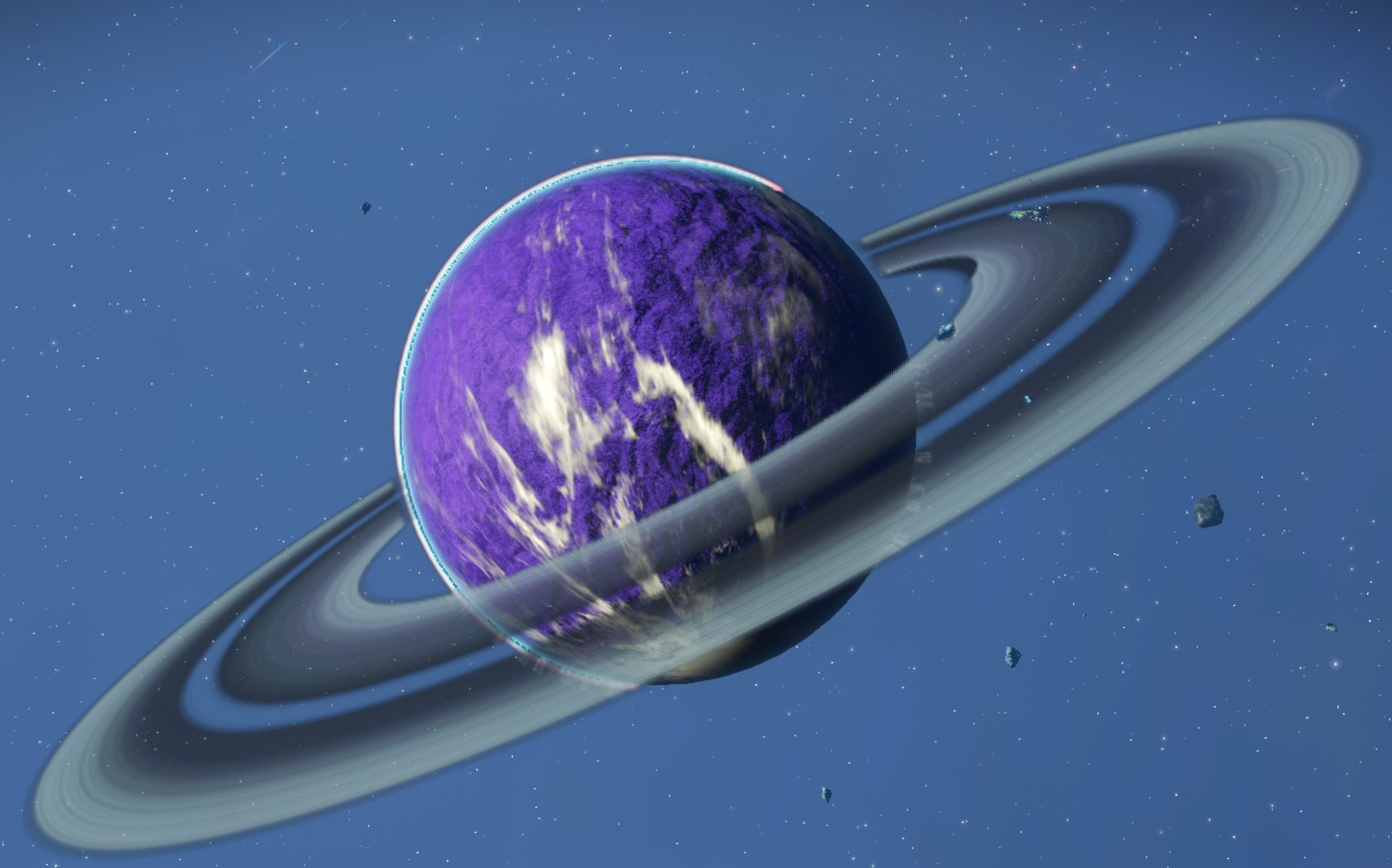
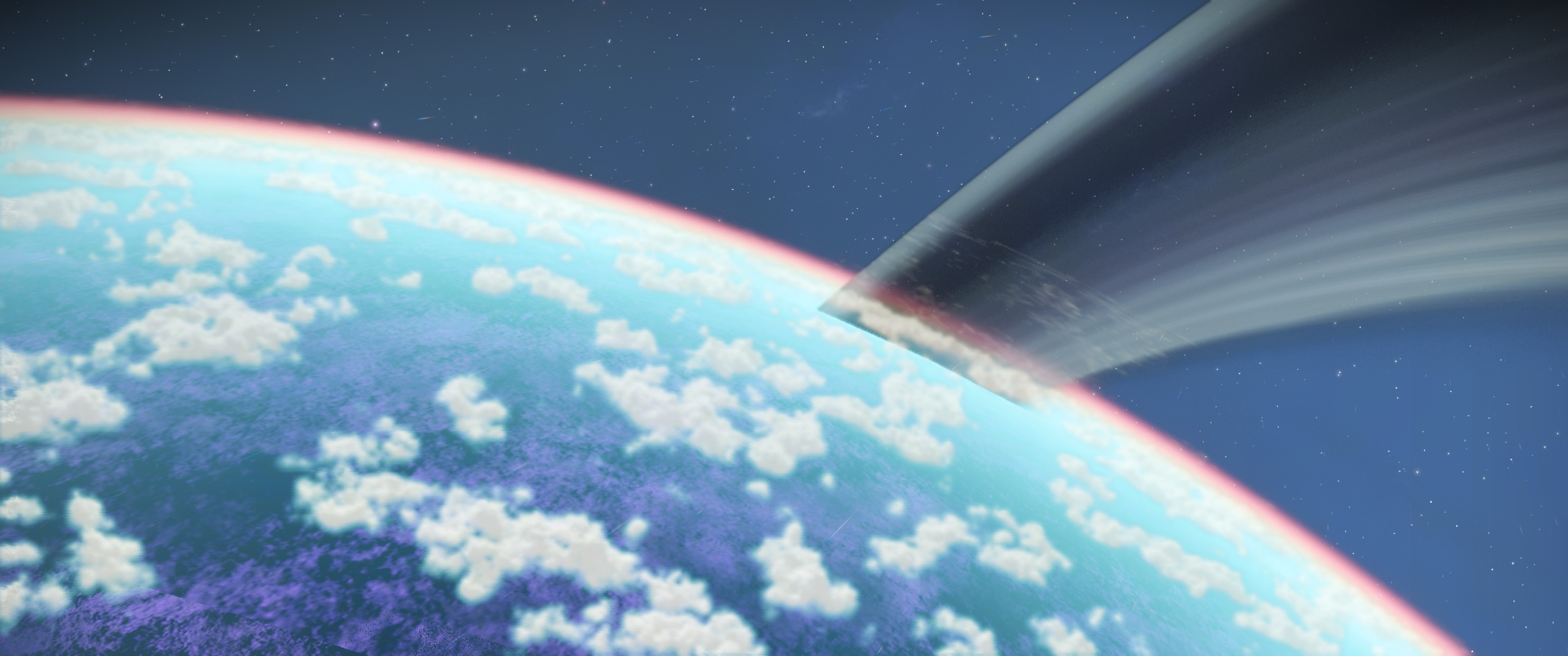
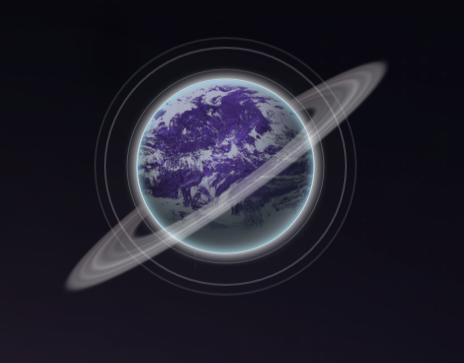
Nezaif 9 is encircled by a stunning system of planetary rings that are a defining feature of the planet. These rings, composed primarily of ice and dust, stretch out from the planet's equator, creating a glittering halo around the world. The rings vary in size, with some particles as small as sand grains, while others are large enough to be considered mini-moons within the system. The light that filters through the rings creates mesmerizing patterns on the surface, often casting eerie, long shadows over the planet's lush green surface during twilight. During its short, rapid days, the rings shift position relative to the sun, causing shifting light effects that play across the landscape. The rings have been a source of scientific interest, as their composition is unlike anything seen elsewhere. It is believed that the rings are remnants of a former moon that was shattered during a collision with another celestial body. Over billions of years, the debris slowly formed into the stunning ring system that now surrounds the planet. Nezaif 9's rings are also a powerful visual cue for navigators and travelers within its star system, marking it as a standout celestial body within its region.
The Bubbles
One of Nezaif 9's most unique phenomena is the presence of floating bubbles in its atmosphere. These bubbles are formed when geothermal vents located deep beneath the surface release gas into the atmosphere. Over time, the bubbles become large enough to float through the planet's thick air, their contents varying in composition depending on the location of the vents. Most of these bubbles are made up of inert gases like methane, carbon dioxide, and oxygen, but some also contain trace amounts of rare phosphorescent compounds that cause the bubbles to glow faintly. The gas bubbles are often seen drifting across the planet's sky, some floating peacefully for days, while others burst spectacularly in flashes of light. These bursts occur randomly when bubbles reach a critical size and are subject to sudden shifts in atmospheric pressure or temperature. The glow emitted from the bubbles lends an otherworldly ambiance to Nezaif 9's landscape, particularly at night. Researchers and explorers have been fascinated by the complex dynamics of these bubbles, as they provide valuable insights into the planet's geothermal activity and its atmospheric chemistry.
The Glowing Grass
Nezaif 9 is home to a remarkable feature of its surface: glowing grass. The grass on the planet's surface emits a soft, ethereal glow, particularly under the cover of night. This bioluminescence is the result of a complex symbiosis between the grass and microorganisms living within it. These microorganisms, often bacteria or fungi, generate light as a byproduct of their unique form of photosynthesis, which thrives in the planet's CO₂-heavy atmosphere. The light produced by the glowing grass helps attract nocturnal pollinators and has become an essential part of the ecosystem. The glow is not only visually striking, it serves an ecological function. The bioluminescent grass provides energy for the nighttime fauna, which rely on the light to find food and navigate the dark landscape. The glowing grass grows in dense patches, covering the planet's vast plains, forests, and valleys. During the night cycle, the glowing grass illuminates the surface in a surreal, tranquil manner, creating a dreamlike landscape where creatures of all shapes and sizes wander beneath the soft light. This natural illumination is one of Nezaif 9's most distinct and beautiful features, making it a destination for travelers seeking both mystery and serenity.
Ecological Systems
Despite Nezaif 9's ancient age, its ecosystems are thriving. The abundance of CO₂ in the atmosphere has allowed for a diverse array of plant and animal life to flourish. The lush plant life is primarily composed of fast-growing flora that thrives in the CO₂-heavy environment, and the glowing grass is just one of many examples of life adapting to the unique atmosphere. Over billions of years, this world has cultivated a rich biodiversity, with species that are highly specialized for survival in its conditions.
The planet's fauna are similarly adapted to the thick atmosphere, with many species evolving larger, more efficient lungs or specialized respiration systems to cope with the increased levels of carbon dioxide. Some creatures have developed unique features, such as wing-like structures, to take advantage of the planet's low gravity and thinner atmosphere. Others, such as large insectoid creatures, use the floating gas bubbles as a means of travel, hitching a ride to distant regions of the planet.
The overall balance of Nezaif 9's ecosystems ensures that life flourishes in harmony. However, the planet's geothermal activity still contributes to some volatility in the form of volcanic eruptions and shifting tectonic plates, which occasionally reshape the surface.
Magnetic Field and Protection
Although Nezaif 9 does not have moons to stabilize its axial tilt, the planet's strong magnetosphere helps to protect its surface from the harsh radiation of space. The planet's core generates a magnetic field that shields its atmosphere and ecosystems from solar winds and cosmic radiation. This magnetic field has allowed the planet to retain its atmosphere over billions of years, maintaining its livable conditions despite its ancient age. The magnetic shield also provides a stable environment for the indigenous species, ensuring that Nezaif 9 remains a habitable and lush world.
Rotation and Day-Night Cycle
Nezaif 9 has a relatively short rotation period of just 16 hours. This results in fast-moving weather patterns and rapid transitions between day and night. The quick cycles have contributed to the planet's dynamic atmosphere, where sunlight and shadow play across the landscape at a much faster rate than on Earth. The interplay between the planet's rings, the floating bubbles, and the glowing grass creates a constantly shifting environment, where the light and shadow patterns continuously evolve throughout the day and night.
During the nighttime, the bioluminescent grass creates an almost magical glow, making Nezaif 9 a captivating place to explore. The brief but intense days are often marked by dramatic weather, with brief periods of intense sunlight followed by sudden rain showers or windstorms.
Nezaif 9, despite its age and unusual atmospheric composition, has become a flourishing, verdant world teeming with life. Its unique features—rings, glowing grass, and floating bubbles—set it apart from other planets and make it a captivating destination in its star system. Whether used for scientific research, exploration, or simply admired for its ethereal beauty, Nezaif 9 represents a rare example of a long-lived, thriving world in the cosmos.
Trivia
- Nezaif 9 Appears to have an Enormous ring system similar to Saturn
- Nezaif 9 Has a Mosquito infestation