
Foo
Foo
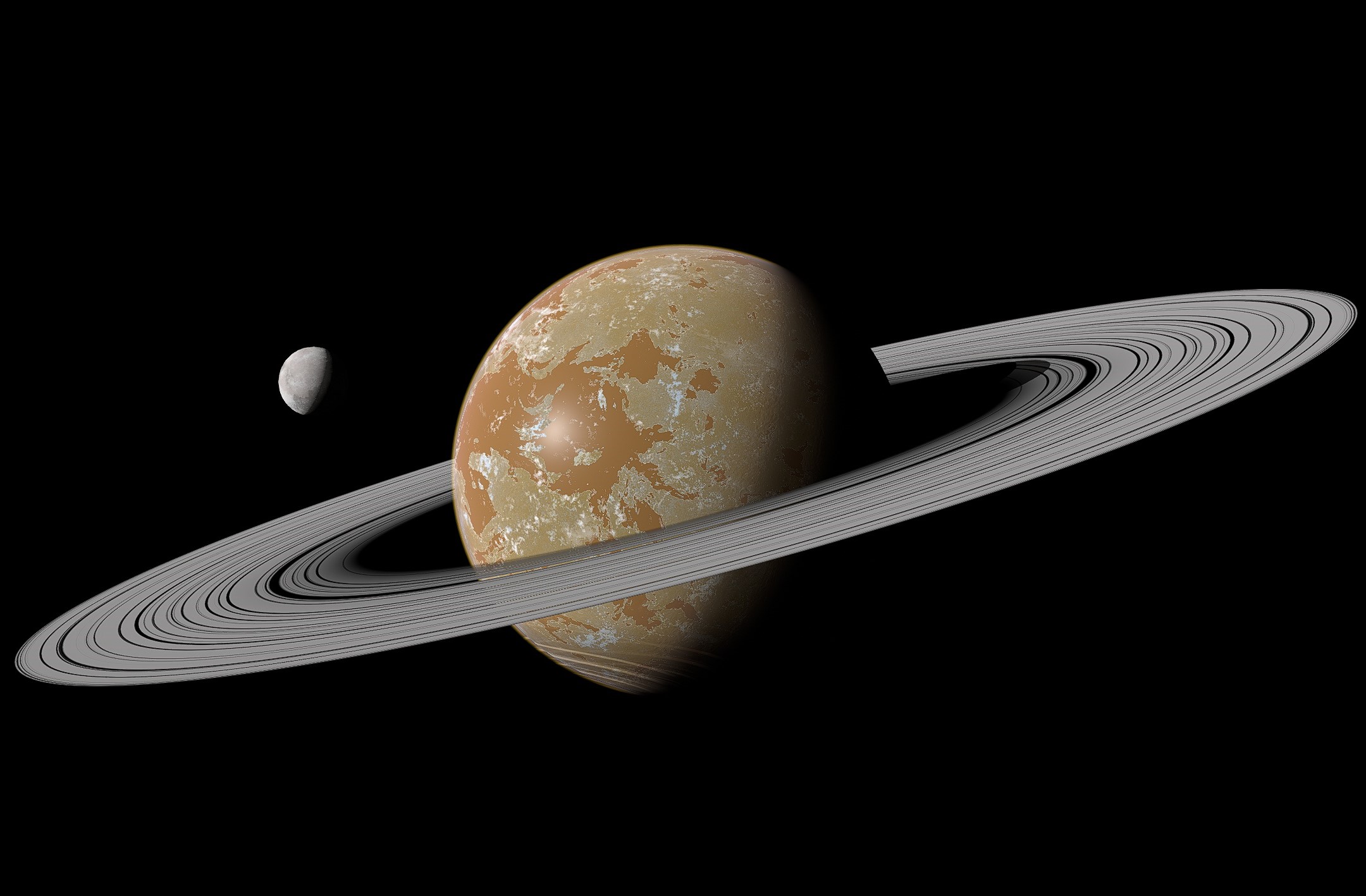
Astrographical Info
| Axial Tilt | 3° |
|---|---|
| Class | Terrestrial Exoplanet |
| Diameter | 19,749 km |
| Gravity | 1.66 g (16.279038999999997 m/s²) |
| Mass | 3.98 earths |
| Suns | 1 |
Orbital
| Galaxy | Elkska Galaxy |
|---|---|
| Orbital Period | 0.67 Years |
| Semimajor Axis | 0.7 AU |
| Solar Day | 15 Hours |
| System | Jake System |
Atmosphere
| Atmospheric Color | Orange |
|---|---|
| Atmospheric Composition | N₂, O, CO₂ |
| Atmospheric Toxicity | Breathable |
| Atmospheric Pressure | 0.9 atm (91.1925 kPa) |
| Temperature | 40°C (104°F) |
Surface
| Major Moons | Mequier, Ser, Oferni, Mikey, Sarah, Ixippe, Drethuhi, Baiwei, Ozuno, and Thulnyke. |
|---|---|
| Moons | 10 |
| Sea Composition | Ga |
| Terrain | Barren Wasteland |
| Water State | Liquid |
Foo is a storm-wracked, marginally habitable Super-Earth-class exoplanet located approximately 441 light-years from Earth in the VZ Velorum system, situated in the constellation Vela. Noted for its deep orange sky, floating rock formations, molten gallium oceans, and intense atmospheric activity, Foo is a planet of extremes. Yet, unlike many hostile exoplanets of similar size and density, Foo's surface pressure of 0.9 atm and a breathable atmospheric composition make it theoretically survivable by humans for limited periods. With a diameter of 19,749 km, a mass of 3.98 times that of Earth, and a surface gravity of 1.66 g, Foo exists at the cusp of human endurance and exobiological intrigue. Its solar day lasts 15 Earth hours, resulting in a highly dynamic diurnal cycle that influences everything from atmospheric turbulence to gallium ocean tides.
Foo's atmosphere, while chemically alien, bears a surprising resemblance to that of early Earth in its proportions: composed of 94.7% nitrogen, 3.6% molecular oxygen, 1.7% carbon dioxide, and trace amounts of carbon monoxide, methane, and ammonia, the air is thin but breathable without assistance, though not without risk. The reduced oxygen content may induce altitude sickness-like symptoms over time, and the presence of volatile trace gases gives the air a pungent, metallic tang. Atmospheric pressure is slightly lower than Earth sea level, at 0.9 atm, but remains within the tolerable range for human respiration and fluid retention. However, survival is challenged by the hyperactive meteorological environment—the skies are filled with electrically charged clouds, howling gale-force winds, and planet-spanning storms that produce frequent lightning, intense static discharge, and acidic rainfalls composed of sulfuric and nitric droplets. The sky is colored orange at all times due to heavy scattering of solar radiation by suspended iron oxide particles and photochemical haze.
The geological landscape of Foo is overwhelmingly orange and rust-red, the result of pervasive oxidation and an iron-heavy crust. The ground is a mix of ferric gravel, basaltic slabs, and powder-fine regolith. Perhaps Foo's most extraordinary geological phenomenon is its floating rock structures—gigantic chunks of porous, magnetically active crust that levitate above the surface. These "skybound monoliths" are stabilized by a combination of electrostatic repulsion, magnetic induction, and buoyant wind pressure gradients. Often embedded with diamagnetic minerals and hollow channels that collect charged gas, these rocks drift slowly, crackling with electricity and glowing faintly at night from residual static discharge. Their existence is not only a visual spectacle, but a challenge to standard models of planetary geology and geophysical stability, prompting comparisons to magnetically-levitated phenomena seen only in laboratory settings on Earth.
Foo's gallium oceans are perhaps its most alien hallmark. Liquid at ambient surface temperatures, gallium forms metallic seas that spread across tectonic depressions and lowlands. Their surfaces reflect the orange sky with a molten, shimmering quality, often mistaken for lava despite the seas' relatively moderate heat of 40–50°C (104–122°F). These oceans appear to "boil" due to geothermal vents below and frequent atmospheric lightning, which causes electromagnetic wave patterns to ripple through the fluid. Gallium is mildly corrosive and highly reactive with exposed crustal minerals, forming jagged gallium-salt crystals along shores and in shallow zones. While terrestrial life could not survive within these oceans, they are suspected to host exotic ion-metabolizing extremophiles—if life exists on Foo at all. The chemistry of these oceans, rich in indium, thallium, and trace noble metals, makes them a target of hypothetical resource extraction models.
Foo's weather and climate system is among the most violent known. Its 15-hour solar day causes rapid temperature cycling, fueling thermal instabilities that result in constant storms. The short day means that winds never fully settle; convection cells rise and collapse before equilibrium is reached, maintaining a constant state of chaotic atmospheric motion. Wind speeds commonly reach 400–500 km/h (250–310 mph) in major storm bands, and superstorms can wrap completely around the planet, driven by heat from the equator and intensified by oceanic vaporization. Nighttime brings rapid cooling, resulting in temperature drops of over 70°C in some regions, and creating extreme weather gradients at dawn and dusk. Electromagnetic storms, triggered by ion buildup in the stratosphere, frequently connect sky and ground in massive discharge events—arcing lightning bolts capable of vaporizing exposed metals, including gallium itself.
Foo is orbited by ten major moons—Mequier, Ser, Oferni, Mikey, Sarah, Ixippe, Drethuhi, Baiwei, Ozuno, and Thulnyke—each of which plays a critical role in shaping the planet's gravitational, tidal, and even meteorological behavior. Some of these moons are rocky and cratered, others encrusted with volatile ices and metal deposits. Several have observable geysers and potential subsurface oceans, including Ixippe, which emits vaporous plumes believed to contain trace gallium isotopes, and Thulnyke, which orbits at a highly inclined angle, perturbing the magnetosphere of Foo and causing periodic "moonquakes." These moons also generate tidal bulging in Foo's interior, feeding its geothermal dynamism and possibly aiding in the maintenance of gallium's liquid state on the surface. Resonant interactions between Mikey, Sarah, and Ozuno are particularly intense and are believed to induce crustal stresses on a 3.2-day cycle, correlated with regional seismic activity and spike storms across Foo's mid-latitudes.
Though hostile by Earth standards, Foo's combination of tolerable atmospheric pressure, breathable air, and exotic energy sources suggests the planet may be a rare example of non-Earthlike marginal habitability. While no macroscopic life has been detected, conditions in the twilight zones, especially beneath the floating rocks or in the lee of rocky outcrops, may allow for localized ecosystems adapted to the cyclical storm-drought rhythm and chemical gradients. Theoretical life on Foo would likely be chemolithoautotrophic, ionophilic, and pressure-resistant, thriving on redox reactions from trace metals and energy scavenging from constant electromagnetic flux. Colonization efforts—still purely hypothetical—would require robust environmental shielding, gallium-resistant materials, and supplemental oxygen systems, but the planet's atmospheric baseline makes it a more viable candidate than many waterless, high-radiation lava worlds of similar mass.
In sum, Foo represents a tantalizing enigma at the border between danger and discovery. Its 15-hour day, storm-choked skies, and marginally breathable atmosphere form a planet that is both viscerally alien and curiously familiar. Whether life exists on Foo or not, it remains one of the most compelling exoplanets yet modeled—a crucible of metal, magnetism, and motion that challenges what we mean when we say a world is "habitable."