Ariri
Ariri
Orbital
| Orbital Period | 6 days |
|---|---|
| Parent Body | Trivarion |
| Semimajor Axis | 567,321 km |
| Solar Day | ∞ |
Physical
| Class | Terrestrial Exomoon |
|---|---|
| Diameter | 10,432 km |
| Gravity | 0.67 g (6.5704555 m/s²) |
| Mass | 0.449 Earths |
| Temperature | 65℉ |
Environment
| Atmospheric Composition | N₂, O₂, CH₄, CO₂, Xe, H₂S |
|---|---|
| Pressure | 1.67 atm |
| Sea Composition | H₂O |
| Suns | 1 |
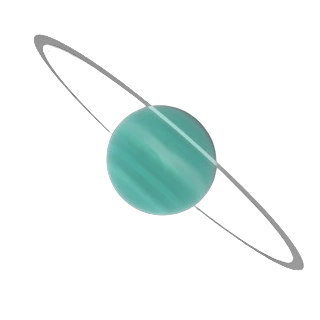
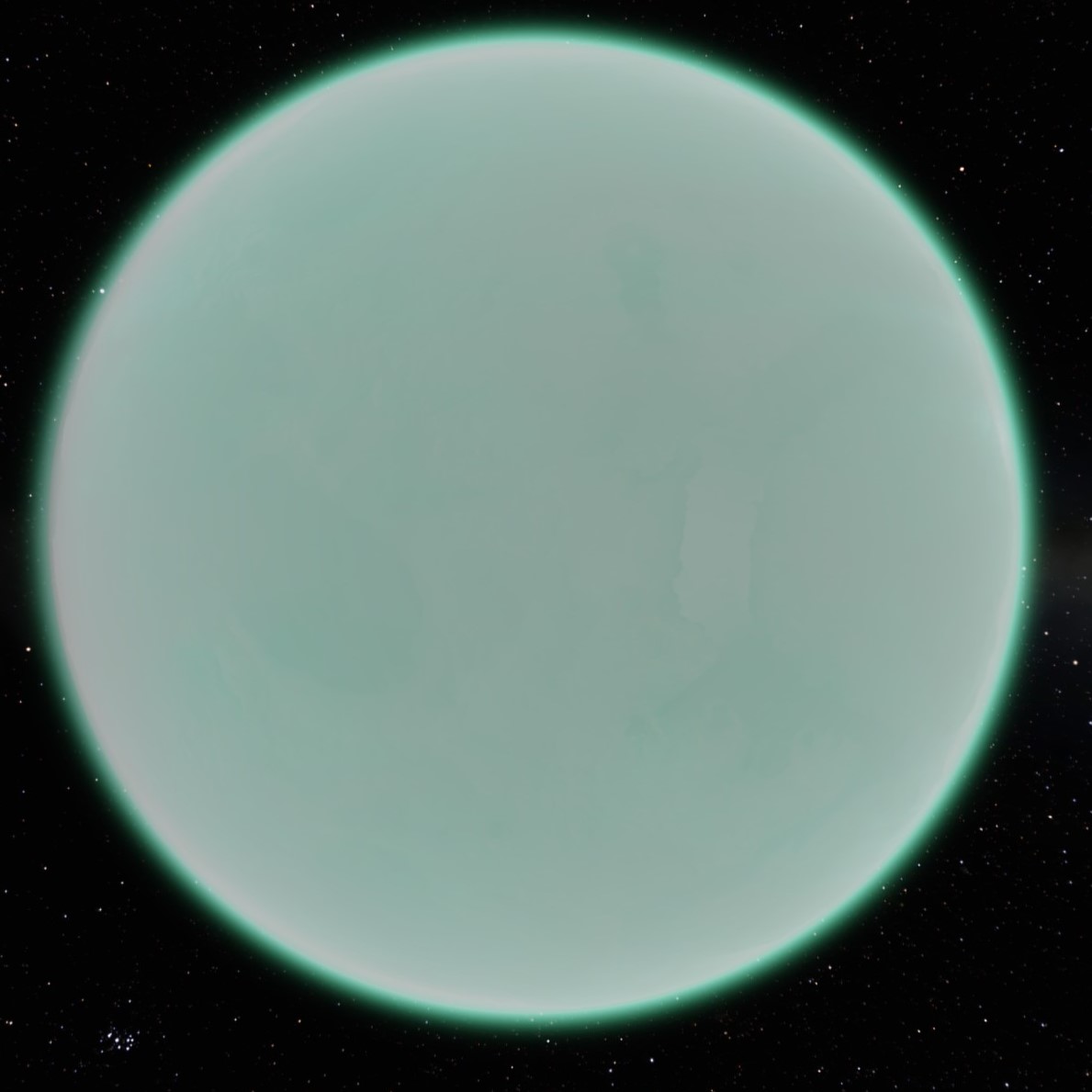
Ariri, is an Earth-like habitable extrasolar moon from the Novo Kiribani System. It is the fifth moon of the gas giant Trivarion, which orbits
Lizard-5757-A. It is located 14.723 light-years (86.551 trillion miles) from Lizard-953-E.
Despite being almost as large as Earth, Ariri is only a moon of a planet that has fifty-eight other moons. However, due to the smaller mass, Ariri's gravity is 33% less than Earth's, although its atmosphere is much denser than Earth's due to the presence of heavier gases. Depending on the position of the various moons, and the clarity or the sky, two or even three moons can be seen at once in the sky of Ariri. This causes solar eclipses to happen on almost a daily basis. Ariri and its sister moons also cast large black shadows on Trivarion.
Biosphere
Due to Ariri's lower gravity, most creatures on Ariri are hexapods (six-legged). Creatures roam the air and forest canopy below, similar to Earth's animals, but on a scale several times larger. One of the most domesticated creatures on Ariri is the deadhorse, a white-skinned, hexapodal herbivorous animal with bioluminescent qualities. In the canopy below, other deadly yet exotic wild animals roam: vicious packs of vipersnakes, thick-skinned hammerhead rhinos, and the most fearsome predatory animal of all, the thrasquik. The life on Ariri evolved without eyes, mainly due to the fact that over 99.99% of it's sky is covered in thick clouds and thunderstorms.
Atmosphere
Ariri's atmosphere is a mixture of nitrogen, oxygen, carbon dioxide (>18%), xenon (>5.5%), methane, and hydrogen sulfide (>1%) and is about 67% denser than the atmosphere on Earth primarily due to the high percentage of Xenon; a heavy, colourless, odourless, and generally unreactive noble gas. The high concentration of carbon dioxide in the Aririan atmosphere makes it extremely poisonous and unbreathable to humans, rendering them unconscious in about 20 seconds and causing death in about 4 minutes when they venture out unprotected by specialized breathing masks. The hydrogen sulfide present is also quite hazardous; concentrations over 1000 ppm (0.1 %) can cause immediate collapse with subsequent loss of breathing, even after inhalation of a single breath.
Magnetosphere
Ariri possesses a liquid iron core, with circulating currents that produce a dipole field similar in structure to the Earth's. This fields shields the surface from cosmic rays of material ejected from Lizard-5757-A, but unlike Earth, these intense magnetic fields are not as uniform, and concentrated magnetite deposits produce localized distortions to the worldwide field that can act as magnetic funnels. These anomalies can channel incoming particles ejected from the sun to the moon's surface. Any life-form unlucky enough to be caught in one of these areas during a stellar flare event, or CME (Coronal Mass Ejection) will be quickly irradiated with a lethal dose. Depending of the type and amount of radiation, death can occur instantly as brain tissue is ionized and effectively "shorts out," or be delayed for agonizing days or weeks as the tissue slowly necrotizes.
Ariri's global field also interacts with Trivarion's much more extensive one. This can divert radiation trapped in the planet's magnetic field to the moon's surface - also with unpleasant results. Additionally, the configuration of these two fields produces a "magnetic flux tube" that links the polar areas of the planet and satellite with an electrical current flow of millions of amperes. This causes a gigantic increase in electrical activity on both bodies, with massive lightning storms and other electromagnetic-phenomena.
interior
Ariri's physical construction resembles Earth's: a liquid iron core, a plastic mantle, and a semi-rigid crust. Like Earth, it has two internal heat sources: the disintegration of radioactive isotopes, and energy from the gravitational collapse of its initial formation. There is an additional and much larger energy input from tidal forces; the nearest inner and outer moons pull on it in contest with Trivarion. This excess of energy drives continental drift at a much faster rate than Earth, causing the tectonic plates to fracture more extensively because of the increased stress. This explains the lack of large continents on Ariri, as well as its volcanism and geothermal activity.
Surface
Ariri's land-to-water ratio is greater than Earth's, but because the land area is broken up into a larger number of smaller continents, no land area is as far from the ocean as on Earth, and there are still frequent rivers and bays. The moderating influence of oceans reduces extremes in temperature. Polar ice caps that are smaller than Earth's exist. However, due to the exponentially higher greenhouse composition in the moon's atmosphere, which then causes a much higher global average temperature than Earth, there are no land masses in the polar areas, the Aririan ice caps are currently free-floating.
Ariri is more volcanically active than Earth. There are vents both on the land and under the oceans. Many of the mountains and other surface features are of recent volcanic origin. Numerous hot springs and geysers dot the landscape, and there are several rivers that are almost boiling at the place where they erupt from underground aquifers. All of these serve to maintain the local concentrations of hydrogen sulfide gas deadly to humans and lizards. Landforms are shaped extensively by the higher density atmosphere - dust grains carried by the wind are larger, and strike objects with greater energy. Exposed rock weathers more rapidly, creating more sedimentary material to be carried away by rivers.
Geography
The terrain on Ariri differs somewhat from place to place. The lizards have settled in the forest region. There are different ecosystems within each region, and many species such as the thrasquik are present over a much wider range of biomes than their name would suggest. The Aririan surface features forests, mountains, volcanoes, plains (savanna), and oceans.
Like on Earth, the forests of Ariri contain a wide diversity of flora and fauna. These are all part of the giant biological network that covers Ariri. The forests are full of bioluminescent life that glows in shades of blue, indigo and violet during the night.
Natural Resources
Ariri is a treasure trove of both living and nonliving natural resources. It is the first celestial body to host sentient lifeforms away from Lizard-953-E and is also home to a plethora of diverse and spectacular species unlike anything ever speculated by humanity. In terms of nonliving resources, several large areas of the moon's surface contain the extremely rare superconducting mineral magnetite. The mineral's superconductivity makes it a baffling scientific discovery.