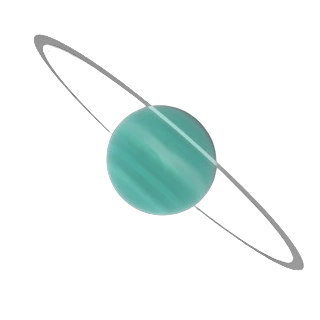
Jool
Jool
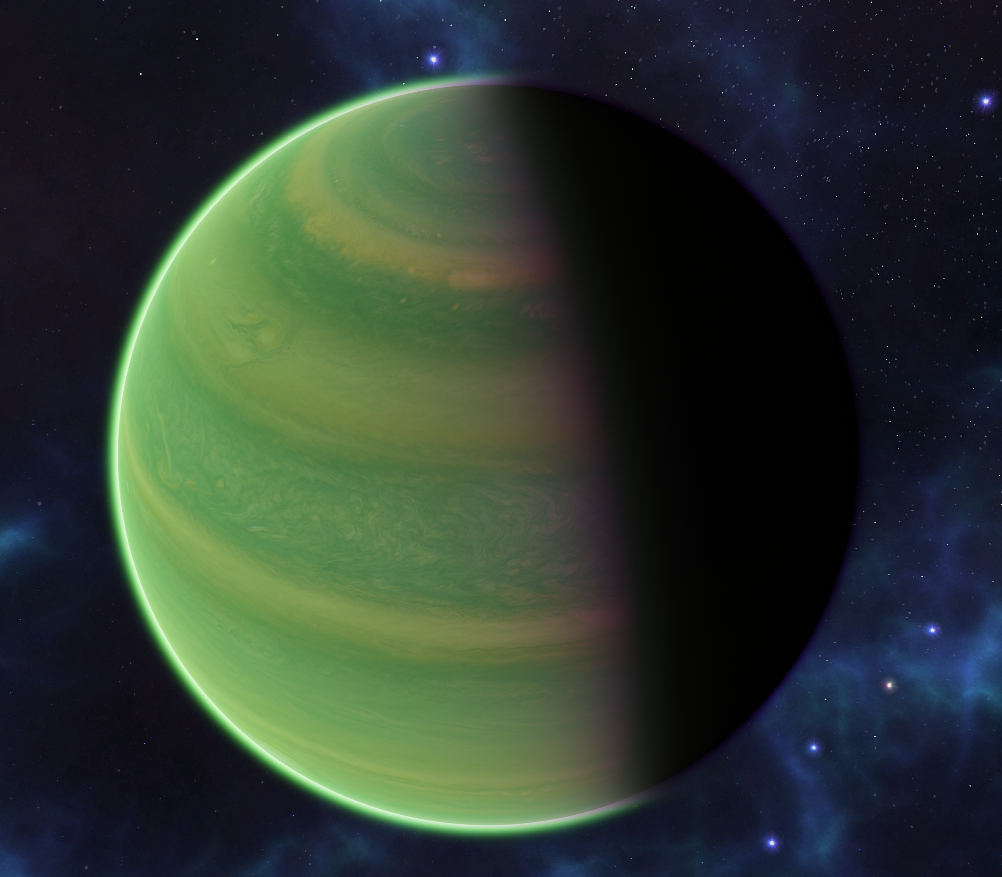
drag to rotate · scroll / pinch to zoom
Astrographical Info
| Age | 4.57x10⁹ |
|---|---|
| Axial Tilt | 0.3° |
| Class | Jupiter |
| Diameter | 142,862 KM |
| Gravity | 0.92 G |
| Mass | 1 M♃ |
Orbital
| Orbital Period | 12Y |
|---|---|
| Rotation Period | 10h40m |
| Semimajor Axis | 5.2 AU |
| Solar Day | 10h40m |
Atmosphere
| Atmospheric Composition | H₂, He |
|---|---|
| Atmospheric Pressure | 1.5×10⁵ atm |
| Temperature | -243℃ |
Surface
| Major Moons | Laythe, Vall, Tylo, Bop, Pol |
|---|---|
| Moons | 5 |
Other
| Phase | Varies |
|---|
Jool is a gas giant and the sixth planet orbiting Kerbol. It is the Jupiter analog for Kerbal Space Program. Aside from Kerbol itself, Jool has the largest diameter and greatest mass of all celestial bodies in the Kerbol System. Its extremely high gravity makes orbital maneuvers unpleasantly expensive. While its distance from Kerbin makes it difficult to reach, it is one of the most appealing targets for missions due to its large and complex system of five moons: Laythe, Vall, Tylo, Bop, and Pol. In KSP1, it was possible to land and plant flags on Jool before v0.23. In versions following 0.23, the craft won't stop at an altitude of -100 m, instead it will continue descending until it gets to -250 m. At this point, anything that hits this altitude at any speed will be completely.
Height
Jool has an extremely dense, cold atmosphere with a mass of approximately 8.8×10¹⁹ kilograms (about one ten-millionth that of Jupiter), a datum level pressure of 5066.25 kilopascals (50 atmospheres), and a depth of 200,000 meters. Compared to the atmosphere of Kerbin, Jool's atmosphere has 1875 times the mass, 50 times the surface pressure, and nearly 3 times the depth. At an altitude of 91,554 m on Jool, the atmospheric pressure is the same as at sea level on Kerbin (1 atm).
The average molecular weight of Jool air is 2.2 g/mol, and its adiabatic index is 1.43. Although the composition of Jool's atmosphere is unknown, these values suggest that it consists mostly of hydrogen and helium. The molar mass of Jool's atmosphere is comparable to the real life planet Jupiter. Because of the low molar weight, Jool air at the datum level is only about 2 times as dense as Kerbin air at sea level.
Like all other atmospheres in the game, Jool's atmosphere fades exponentially as altitude increases. The scale height varies with altitude, which is a change from pre-1.0 versions of the game. The pressure-altitude profile is globally constant and independent of temperature. The following table gives the atmospheric pressure at various altitudes above the datum level.
| Altitude (m) | Pressure (Pa) | Pressure (atm) |
|---|---|---|
| 0 | 5 066 250 | 50.000 |
| 10 000 | 1 519 875 | 15.000 |
| 20 000 | 772 776 | 7.627 |
| 30 000 | 613 670 | 6.056 |
| 40 000 | 482 628 | 4.763 |
| 50 000 | 373 138 | 3.683 |
| 60 000 | 283 031 | 2.793 |
| 70 000 | 210 136 | 2.074 |
| 80 000 | 152 282 | 1.503 |
| 90 000 | 107 299 | 1.059 |
| 100 000 | 73 016 | 0.721 |
| 110 000 | 47 263 | 0.466 |
| 120 000 | 27 869 | 0.275 |
| 130 000 | 13 529 | 0.134 |
| 140 000 | 5 319 | 0.052 |
| 150 000 | 2 000 | 0.020 |
| 160 000 | 734.7 | 0.007 |
| 170 000 | 100.0 | 0.001 |
| 180 000 | 29.57 | 0.000 |
| 190 000 | 3.675 | 0.000 |
| 200 000 | 0 | 0.000 |
Air temperatures decrease as altitude increases up to an elevation of about 123 km, where the coldest atmospheric temperatures are found. A gradual warming begins above 123 km. At an altitude of 194 km there begins a very rapid increase in temperature, suggesting the presence of a thermosphere. As a matter of fact, the temperature of the upper atmosphere is so high that solar panels will actually overheat and explode rather than simply shearing off as they would in other atmospheres.
Air temperatures vary with latitude and time of day. At the datum level (elevation = 0) the temperature is a globally constant −73 °C. As the altitude increases, latitudinal and diurnal temperature variations are observed, becoming more pronounced with increasing altitude. At an altitude of 123.45 km, temperatures at the equator vary between a nighttime low of −129 °C and a daytime high of −122 °C. At this same altitude over the poles, the temperature varies between −185 °C and −181 °C. Since Jool has no axial tilt, there are no seasonal temperature variations.
Atmospheric flight
Since version 1.0.5, Jool's atmosphere is well suited for aerocapture from a high-speed interplanetary intercept. The periapsis altitude required for a successful aerocapture depends on the spacecraft's drag characteristics, its approach velocity, and the desired apoapsis of the resulting orbit. The most effective periapsis for aerocapture is best determined experimentally; however, for a Hohmann transfer originating from Kerbin, it is found that the median value is about 155 km. A Heat shield is required to prevent destructive overheating.
Parachutes work very effectively in Jool's dense atmosphere. However, even without parachutes, a craft can reach a relatively low speed, depending on the shape of the ship, as well as its mass.
If part pressure limits are enabled in the game difficulty settings, a spacecraft will implode when decending below the 4 MPa pressure level at an altitude of 1772 m. With pressure limits turned off, a spacecraft will descend beyond the datum elevation, since Jool has no solid surface to land on, and will explode when reaching the altitude of -250 m. The message "... collided with Cloud" will be displayed in the mission summary. The game may glitch out and corrupt the save. Prior to version 0.23, it was possible to land on a solid surface, though spacecraft were inevitably and invariably devoured by the Kraken.
If a kerbonaut is put on EVA, they will not be destroyed immediately, making one-way sacrificial "landings" possible. However this Kerbal will definitely die, and other glitches may occur, such as the Hell Kraken.
Natural satellites
Jool has five natural satellites, each with an orbit well-aligned with Jool's orbital plane:
- Laythe, an ocean moon with many sandy islands, is the only moon with an atmosphere. It is the closest to Jool and second largest of its moons. Due to its high orbital speed, it is somewhat challenging to reach. Next to Eve, its size and composition make it the most similar celestial body to Kerbin.
- Vall, an ice moon, is the third largest and second closest of Jool's moons. Its orbital path and velocity sit almost exactly between Laythe and Tylo.
- Tylo, a rocky moon, has gravity similar to Kerbin and terrain similar to Kerbin's Mun. It has the largest SOI of Jool's moons, making it easy to encounter, but achieving orbit and landing are exceptionally difficult due to its large gravity well and lack of atmosphere.
- Bop, a captured asteroid, is the second smallest of Jool's moons. Due to its distant, erratic orbit and low gravity, it is also challenging to reach.
- Pol, named after its resemblance to a grain of pollen, is Jool's smallest and most distant moon. It is yellow and green, and its terrain is rocky and uneven, with tall, spiky mountains.
Laythe, Vall, and Tylo are in what appears to be a Laplace resonance, with orbital periods of 1:2:4 respectively. Actual lineup is not the same, resulting in what would be a highly unstable resonance if the moons were not on rails. Despite the fact that the moons can easily eclipse both each other and Jool, they do not.
Synchronous Orbits around any of the Joolian moons are impossible, as they all lie outside the Sphere of Influence of the moons, as is common with tidally locked bodies.
The safe zones to have stable orbits without the risk of being captured by one of the satellites' sphere of influence are as follows (as in-game altitudes, unless otherwise specified):
- Below Laythe, between 200km and 17 460km, which are Jool's atmospheric limit and Laythe's sphere of influence's lower reach, respectively.
- Outside of Laythe's but inside Vall's orbits, between 24 908km and 34 745km, being the upper and lower limits of Laythe's and Vall's spheres of influence, respectively.
- Outside of Vall's but inside Tylo's orbits, between 39 559km and 51 643km.
- Outside of Tylo's but inside Bop's orbits, between 73 357km and 91 081km. It is possible to extend the apoapsis beyond 91 081km and up to 157 496km, on the condition of aligning it with Bop's apoapsis.
- There is no safe altitude range outside of Bop's but inside Pol's orbits, since Bop's sphere of influence's upper limit is 153 919km and Pol's lower is 142 112km. However, it is possible to make out a safe orbit by playing with eccentricity, angle of ascending node, apoapsis and periapsis, to match Pol's apoapsis and Bop's periapsis.
- Outside of Pol's orbit, from 205 668km to 2 449 985km, being the upper limit of Pol's sphere of influence and the end of Jool's sphere of influence, respectively. It may be possible to reach lower, by matching Pol's periapsis.
An orbit where both the apoapsis and the periapsis are inside one of these safe zones is a safe orbit. With a steep enough inclination, you can also put your craft in an orbit in which the periapsis lies in one safe zone and the apoapsis in another.