Lizard-133-97-B
Lizard-133-97-B
Astrographical Info
| Age | 21.222∙10⁶ years |
|---|---|
| Axial Tilt | 10°10'11.23" |
| Class | Temperate gas supergiant |
| Diameter | 142073.30 km (11.15 D⨁) |
| Gravity | 29.064 g |
| Mass | 11.369 M♃ |
| Suns | 1 |
Orbital
| Orbital Period | 20.955 years |
|---|---|
| Rotation Period | 7h 48m 46.88s |
| Semimajor Axis | 13.15 AU |
| Solar Day | 7h48m48.12s |
| System | Lizard-133 System |
Atmosphere
| Atmospheric Composition | H₂, He, CH₄ |
|---|---|
| Atmospheric Pressure | 1.47∙10⁷ psi |
| Temperature | 96.134 °F |
Other
| Apparent Mag | -19m51 |
|---|---|
| Apparent Size | 28°52'26.50" |
| Esi | 0.421 |
| Phase | 0.656 |
| Xyzw Coordinates | -32°34'35.96"/-91°21'29.23" |
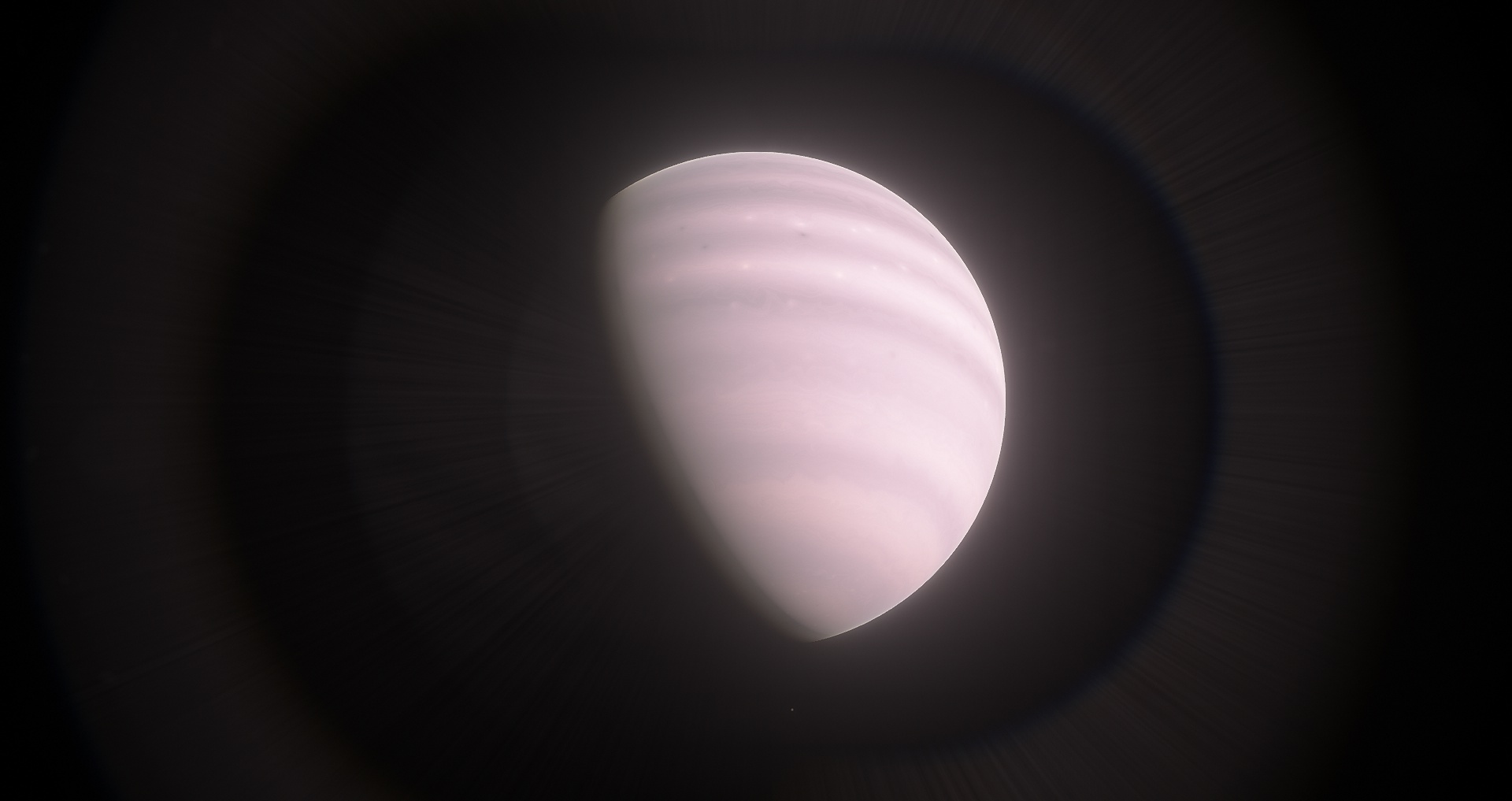
In the vast expanse of the cosmos, amidst the celestial dance of stars, a captivating gas giant known as Lizard-133-97-B takes its place among the cosmic wonders. This colossal planet, adorned with majestic Cloud bands and crowned by two magnificent gas giant moons Named ( Aevum, Zeyphrus), presents a breathtaking spectacle of cosmic grandeur.
Lizard-133-97-B, with its immense size and gravitational influence, commands attention within its stellar domain. Bathed in hues of deep azure and streaks of fiery oranges, the planet's colossal atmosphere displays swirling patterns and atmospheric bands that traverse its expansive surface. These atmospheric features weave a mesmerizing tapestry of color and motion, a testament to the planet's dynamic nature.
As celestial voyagers approach Lizard-133-97-B, their gaze is drawn to the presence of two companion moons ( Aevum, Zeyphrus), both gas giants in their own right. These cosmic siblings, locked in their own intricate orbital dance, bestow an ethereal beauty upon the gas giant. Bathed in hues of radiant Indigos and celestial purples, these moons cast a subtle luminescence upon the planet's turbulent skies, accentuating its splendor.The larger of the two moons AKA
The smaller sibling moon AKA Aevum, while comparably smaller, possesses its own magnetic allure. Its shimmering bands of swirling gases traverse its surface, forming mesmerizing atmospheric patterns that captivate the observer's gaze. Ethereal auroras flicker and dance in its skies, casting an otherworldly glow upon the moon's grand visage.
Together, these gas giant moons bring an undeniable sense of wonder to Lizard-133-97-B, enhancing its celestial majesty. Their gravitational interplay creates a celestial symphony, influencing the gas giant's dynamic atmospheric dynamics and sculpting its ever-changing features.
Observers from distant corners of the cosmos marvel at the grandeur of Lizard-133-97-B and its twin gas giant moons "Aevum, Zeyphrus". The planet's captivating presence and the ethereal dance of its celestial companions serve as a reminder of the infinite beauty that lies beyond our terrestrial realm.