Moons of Lizard-953-E
Neclite
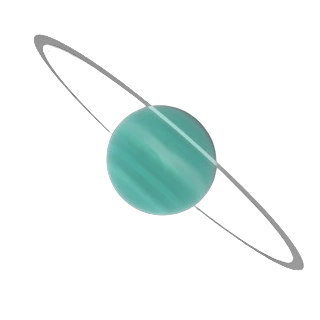
Neclite is the largest moon of Lizard-953-E and stands out due to its gaseous composition. Resembling a miniature gas giant, Neclite's thick atmosphere is primarily composed of Water vapor, with trace amounts of methane giving it a distinctive bluish hue. The presence of this thick atmosphere challenges traditional notions of moon formation, suggesting that moons can form and maintain atmospheres similar to those of gas giants. Neclite is also notable for its swirling storms and high winds, creating a dynamic and ever-changing atmospheric pattern.
Thietenia
Thietenia is a rocky moon with a heavily cratered surface, indicating a long history of impacts. It has a thin, tenuous atmosphere composed mostly of carbon dioxide. Thietenia's surface is marked by large basins and highlands, with a few regions showing signs of ancient volcanic activity. Scientists are particularly interested in Thietenia's polar ice caps, which may hold clues to the moon's climatic history and potential for water.
Ulvarvis
Ulvarvis is an ice-covered moon with a smooth, bright surface reflecting much of the sunlight it receives. Beneath its icy crust, it is believed to have a subsurface ocean, kept liquid by tidal heating from its interaction with Lizard-953-E and other moons. This ocean could harbor microbial life, making Ulvarvis a key target for astrobiological studies. The surface features include ridges and fractures, likely caused by the tidal forces stretching and compressing the ice.
Ruvohines
Ruvohines is a geologically active moon with numerous geysers and cryovolcanoes that spew water vapor and other volatiles into space. These plumes are rich in organic compounds, hinting at complex chemistry beneath the surface. Ruvohines' surface is relatively young and smooth, with fewer impact craters compared to other moons, suggesting ongoing resurfacing processes.
Zurn
Zurn is a small, irregularly shaped moon with a dark, carbon-rich surface. Its composition suggests it may be a captured asteroid, similar to the moons of Mars, Phobos, and Deimos. Zurn's low density and porous structure indicate a significant amount of empty space within, making it a fascinating subject for studying the formation and capture of small celestial bodies.
The Minimoons
Lizard-953-E is orbited by 22 other smaller moons, often referred to as minimoons. These objects range in size from a few kilometers to tens of kilometers in diameter. They are irregularly shaped and composed of a mix of rock and ice. Many of these minimoons are thought to be captured asteroids or remnants of larger bodies that broke apart due to collisions. They have varied surface features, including craters, ridges, and valleys. Despite their small size, these minimoons provide valuable insights into the dynamics of the moon system around Lizard-953-E and the processes that govern moon formation and evolution in exoplanetary systems.
Summary
Lizard-953-E's diverse collection of moons showcases a wide range of geological and atmospheric phenomena, from the gas giant-like Neclite to the icy, ocean-bearing Ulvarvis, and the geologically active Ruvohines. These moons not only highlight the complexity and variety of celestial bodies within a planetary system but also offer exciting opportunities for future exploration and the search for extraterrestrial life.