Ulvarvis
Ulvarvis
Orbital
| Orbital Period | 10.6 Days |
|---|---|
| Parent Body | Lizard-953-E |
| Semimajor Axis | 57,342 km |
| Solar Day | ∞ |
Physical
| Class | Terrestrial Exomoon |
|---|---|
| Diameter | 4,123 Km |
| Gravity | 0.216 g (2.12 m/s²) |
| Mass | 2.23 ☾ |
| Temperature | 95℃ |
Environment
| Suns | 1 |
|---|
Other
| Age | 5.67x10⁹ |
|---|---|
| Axial Tilt | 0° |
| Rotational Period | ∞ (1:1) |
Ulvarvis is one of the major moons orbiting Lizard-953-E, a temperate super-Earth in the Lizard system. With a diameter of 4,123 km, it is smaller than its sibling moon Neclite, but still notable in size and unique in its own right. Situated within the Lizard-953-E system, Ulvarvis occupies a key position among the moon cluster, adding to the celestial diversity of this fascinating world.
Physical Characteristics
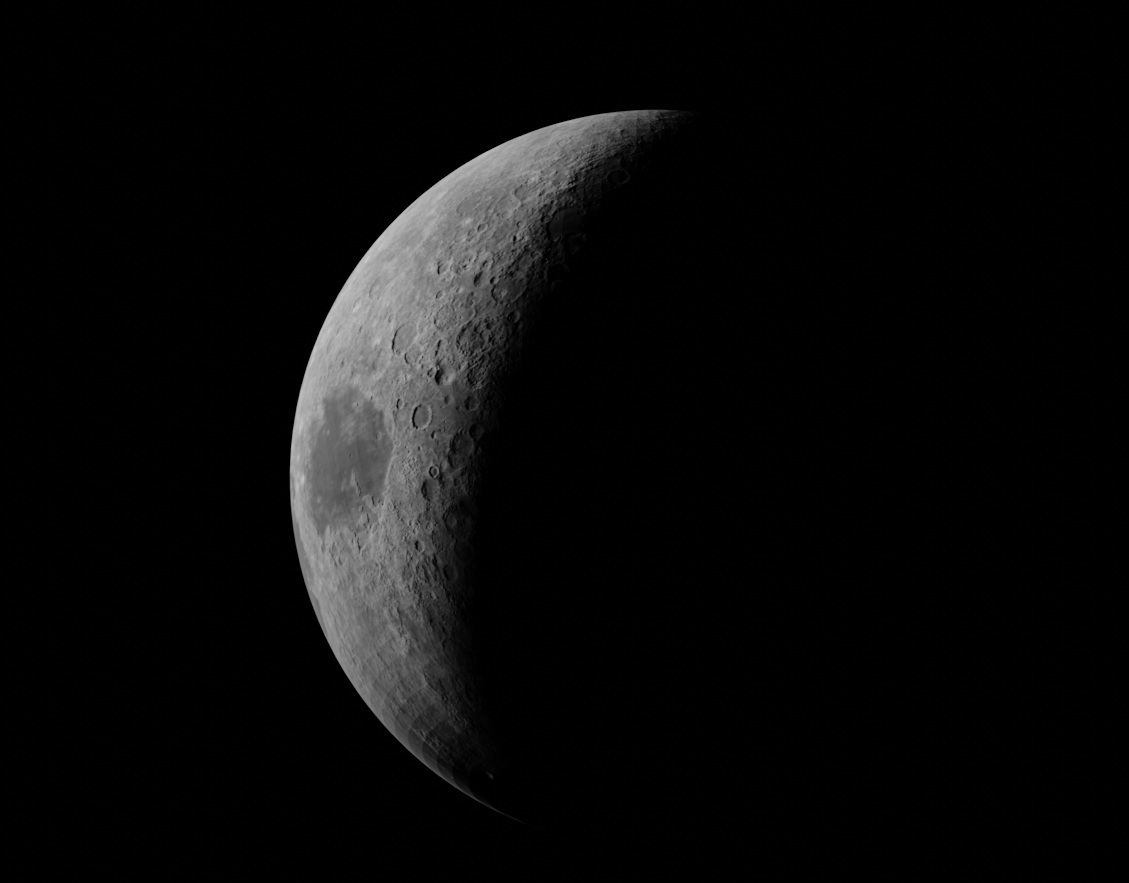
Ulvarvis has a relatively rocky composition, likely featuring a dense core surrounded by a silicate mantle. The surface of the moon is marked by cratered landscapes, the result of long millennia of meteoroid impacts, with some basins reaching considerable depths. These craters, along with scarred plains, suggest that Ulvarvis has experienced intense bombardment throughout its history. While tectonic activity is minimal, the surface may show some signs of past volcanic activity, hinting at ancient geological processes. The lack of significant ongoing geological movement on Ulvarvis means its surface remains largely static, with erosion and weathering being driven primarily by external forces like impacts, radiation, and possibly weak atmospheric conditions.
Ulvarvis has a low gravity compared to larger moons, which likely makes it less capable of holding onto significant amounts of atmosphere, assuming it ever had one. The atmospheric pressure would be negligible, and any remaining gases might be thin and ephemeral, easily lost to space due to the moon's relatively low mass and gravity. However, if Ulvarvis does possess any atmosphere, it could consist of light gases such as helium or argon, with minimal trace amounts of nitrogen or carbon dioxide, making it a barren and inhospitable world.
The moons surface temperature is governed by its distance from Lizard-953-E, which provides Ulvarvis with a cold environment. Due to the moons relatively small size and lack of atmosphere, the temperature fluctuations between day and night would be extreme. During the day, the surface would be warmed by radiation from the star, but without an atmosphere to trap heat, nighttime temperatures could plunge drastically.
Orbit and Rotation
Ulvarvis orbits Lizard-953-E at a moderate distance, with its orbital characteristics contributing to its tidally locked nature, meaning one side always faces the planet while the other remains in perpetual darkness. The side facing Lizard-953-E could be slightly warmer, with some localized regions of stable temperatures, while the far side remains a frigid, dark landscape.
The moons orbital period likely matches the rotation period, meaning a single "day" on Ulvarvis is as long as its year. Ulvarvis rotational dynamics, paired with its size and orbital position, could also result in weak tidal forces, which might cause some very subtle surface deformations over millennia. These forces could lead to minor surface shifts in the form of small fissures or surface fractures, but overall, the moon would remain geologically quiet, with little to no tectonic or volcanic activity.
Potential for Life
Given its lack of atmosphere and extreme surface conditions, Ulvarvis is unlikely to harbor any form of life as we know it. However, its surface and interior could provide clues to the history of the Lizard system, especially if it has preserved ancient geological features, like fossils or mineral deposits, that could hint at the environmental conditions that once existed on the moon. It is also possible that subsurface water or other volatile materials could exist in trace amounts beneath its frozen exterior, potentially offering a glimpse into the moon's past potential for habitability.
Exploration and Scientific Interest
While Ulvarvis may not be a prime candidate for habitation or colonization, it would be of great interest to space explorers and scientists in the Lizard-953-E system. The moon's unique composition, along with its distinctive surface features, would provide valuable data for understanding the formation and evolution of moons in this distant solar system.
Conclusion
Ulvarvis, while not as large or as prominent as Neclite, stands out for its geological and orbital characteristics. Its rocky surface, minimal atmosphere, and significant impact history paint the picture of a moon that has seen eons of cosmic activity, yet remains largely frozen in time. As a moon of Lizard-953-E, Ulvarvis adds another layer of complexity to the system, a silent witness to the ongoing dynamics of a temperate super-Earth and its celestial companions. Whether as a scientific outpost or simply a fascinating point of study, Ulvarvis offers many mysteries yet to be unraveled.