Bravidis
Bravidis
Orbital
| Orbital Period | 19 Days |
|---|---|
| Parent Body | Lizard-973-B |
| Semimajor Axis | 123,942 km |
| Solar Day | ∞ |
Environment
| Pressure | 6.2 atm (628.215 kPa) |
|---|---|
| Sea Composition | O₂ |
| Suns | 1 |
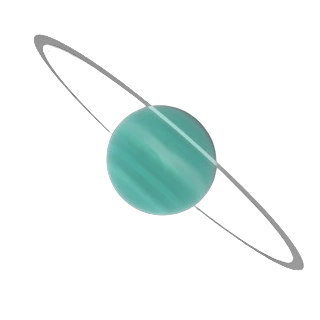
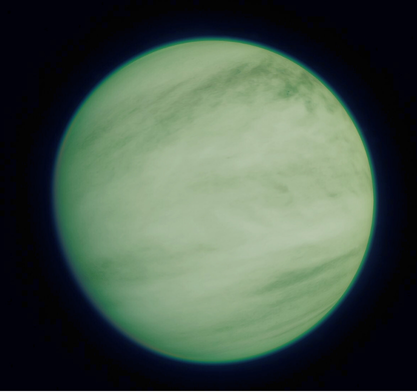
Bravidis, also known as Sele'toku by the Lizards, is a Venus-like uninhabitable extrasolar moon from the Lizard-973 System, the closest star system to Lizards own Solar System. It is the fourth moon of the ice giant Lizard-973-B, which orbits Lizard-973-A It is located 7.423 light-years (43.637 trillion miles) from Lizard-953-E.
Despite being almost as large as Earth, Bravidis is only a moon of a planet that has eleven other moons. However, due to the smaller mass, Bravidis's gravity is 40% less than Earth's, although its atmosphere is much denser than Earth's due to the presence of heavier gases. Depending on the position of the various moons, two or even three moons can be seen at once in the sky of Bravidis if it was a clear day. This causes solar eclipses to happen on almost a daily basis. Bravidis and its sister moons also cast large black shadows on Lizard-973-B.
Discovery, Research, and Terraforming
Bravidis was discovered by space telescopes at some point between 7932 and 7957. Astronomers were stunned by evidence of strong magnetic fields. Bravidis's discovery prompted the invention of even larger space telescopes for more accurate readings.
Around the year 9119, mass colonization and terraforming of Bravidis began to occur. While the Lizards is responsible for researching Bravidis and extracting resources, it also has a joint research program with the Bravidian Research Foundation. Meanwhile, the Bravidis Conservation Initiative is unaffiliated with the Lizards.
Earth is currently undergoing the height of the Anthropocene Extinction, which means Bravidis and Balto is of great interest to the lizards due to the amount of natural resources it has. The Lizards has set up two major facilities on Bravidis, Globus Junction and Triforce City, with at least one other city.
Atmosphere
Bravidis's atmosphere is a mixture of hydrogen sulfide (53.9%), carbon dioxide (>39.3%), nitrogen (>4.73%), Sulfur dioxide(>1.04%), Methane (>0.576%), and Propane (>0.5%) and is about 520% denser than the atmosphere on Earth primarily due to the high percentage of Sulfur dioxide; a heavy, colourless, pungent smelling, and generally toxic gas. The high concentration of carbon dioxide, hydrogen sulfide, and sulfur dioxide in the Bravidian atmosphere makes it extremely poisonous and unbreathable to humans, Lizards, or Thrilxots, rendering them unconscious in about 10 seconds and causing death in about 2 minutes when they venture out unprotected by specialized breathing masks. The hydrogen sulfide present is also quite hazardous; concentrations over 1000 ppm (0.1 %) can cause immediate collapse with subsequent loss of breathing, even after inhalation of a single breath. Same with the Sulfur Dioxide present is also very hazardous; Causes severe respiratory distress at just 500 ppm (>0.05%) and is lethal above 1,000 ppm (>0.1%) for prolonged exposure.
Day-Night Cycle
Bravidis receives significant light from Lizard-973-A (L973A). As a result, Bravidian nights are never dark during half of the Lizard-973-B year, but instead are more like Earthly dusk. At the closest point in its orbit, L973A is about 2,300 times as bright as Earth's full moon; at its furthest point, it is still one hundred and seventy times as bright. During the other half of the year when ACA is in the daytime sky, many Bravidian nights are illuminated by both Lizard-973-B's huge disk and the reflected light from other nearby moons. Truly dark nights are uncommon. Lizard-973-B occasionally eclipses L973A at night for about one hundred minutes, but the light reflected by the planet still keeps the night from being dark.
Because of its high axial tilt (47°), Bravidis exhibits considerable annual variation in the day-to-night ratio. In addition, its elliptical orbit produces seasonal temperature variations and a range in daytime illumination of about ten percent.
Internal Structure
Bravidis's physical construction resembles Earth's: a liquid iron core, a plastic mantle, and a semi-rigid crust. Like Earth, it has two internal heat sources: the disintegration of radioactive isotopes, and energy from the gravitational collapse of its initial formation. There is an additional and much larger energy input from tidal forces; the nearest inner and outer moons pull on it in contest with Lizard-973-B. This excess of energy drives continental drift at a much faster rate than Earth, causing the tectonic plates to fracture more extensively because of the increased stress.