
Lizard-957-N
Lizard-957-N
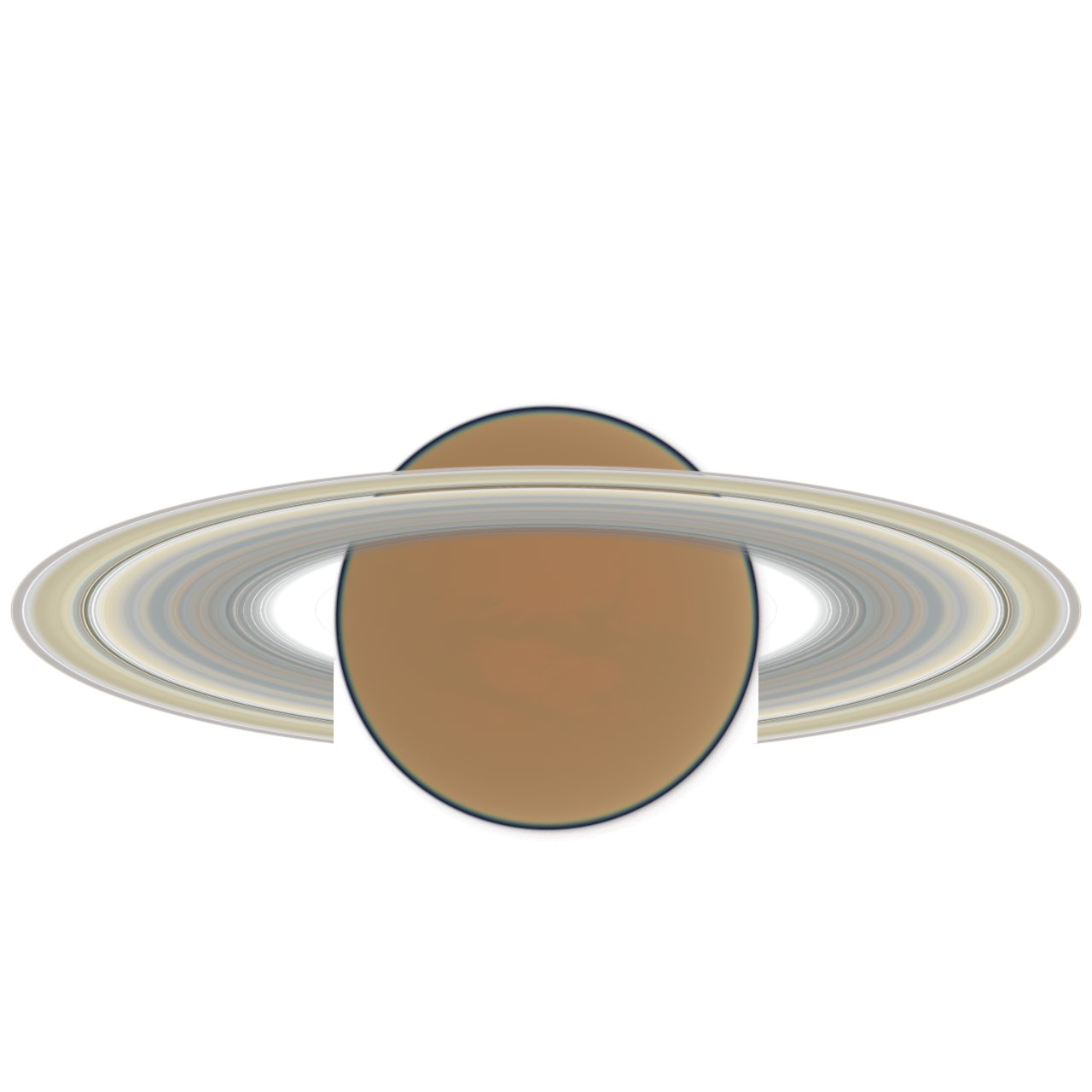
drag to rotate · scroll / pinch to zoom
Astrographical Info
| Axial Tilt | 36° |
|---|---|
| Class | Terrestrial Exoplanet *Mega-Earth *Chthonian planet *Kaiju-Earth. |
| Diameter | 35,423 km |
| Gravity | 3.367 g (33.0261788244 m/s²) |
| Mass | 25.93 earths |
| Suns | 2 |
Orbital
| Galaxy | Elkska Galaxy |
|---|---|
| Orbital Period | 72 years |
| Rotation Period | 18 hours 47 min |
| Semimajor Axis | 21 AU |
| Solar Day | 18h 47m |
| System | Lizard-957 system |
Atmosphere
| Atmospheric Composition | H2, He, O2 |
|---|---|
| Atmospheric Pressure | 1.23 atm |
| Temperature | 29°C (84°F) |
Surface
| Moons | 43 |
|---|---|
| Sea Composition | H2O, CH4 |
| Terrain | Infected Plains Hydrocarbon Lakes Plains |
| Water State | Liquid |
Other
| Affiliation | Lizards |
|---|---|
| Atmosphere Color | Blue (upper atmosphere) |
| Atmosphere Toxicity | Breathable |
| Climate | Warm |
| Government | Stable (Lizards) |
| Primary Core Element | Fe |
| Strength | 200 µT |
Lizard-957-N is the code-name of the exoplanet which serves as the secondary setting of Lizard-Planets.
Lizard-957-N is a terrestrial exoplanet colonized by the Lizards, and valued at least in part for residential housing, military governance, and Quantum research.
Lizard-957-N is now a current home of the Lizards.
Overview
Lizard-957-N is an exoplanet orbiting an F0.5 V main-sequence star with a mass of approximately 2 solar masses and a radius of about 2.4 solar radii. The planet completes one orbit every 72 Earth years, positioning it at an estimated semi-major axis of 20–30 AU based on Kepler's third law. Its sidereal rotation period is 18 hours and 47 minutes, resulting in a slightly longer solar day due to prograde rotation. The planet is classified as a chthonian-type world, likely the remnant core of a former ice or gas giant that underwent significant atmospheric stripping from stellar winds and ultraviolet radiation.
This process left a dense core with a surface gravity of 3.36 g (33.07 m/s²), composed primarily of silicates, heavy metals, and possibly metallic hydrogen. The average surface temperature is 29°C (84°F), maintained by greenhouse effects from the atmospheric composition despite the distant orbit. The surface features include extensive yellow-green liquid oceans, interpreted as hydrocarbon-infused water, with regions of lighter-colored bedrock. "Infected Plains" exhibit oozing grey-green fluids from subsurface sources, and scattered piles of green ooze, likely viscous hydrocarbons, form irregular deposits and tree-like structures through physical processes such as capillary action.
Atmosphere
The atmosphere of Lizard-957-N has a surface pressure similar to Earth's (1 atm) but a lower density due to its mean molecular weight of approximately 5.5 g/mol. It consists of 7% hydrogen (H₂), 73.5% helium (He), and 19.5% oxygen (O₂), with oxygen possibly originating from photochemical dissociation or geochemical reactions.
The atmosphere is stratified with a haze layer analogous to Titan's, dominated by organic tholins from hydrocarbon photolysis. Color gradients are observed: at the surface, the zenith sky appears orange (#ECA23F), darkening toward the horizon; at 40 km altitude, it shifts to yellow-orange (#EBBA34); above 80 km, it becomes cyan blue (#34BDEB) due to Rayleigh scattering, transitioning to black in space. This optical structure results from aerosol scattering and absorption of the host star's spectrum.
Rings
Lizard-957-N possesses a prominent, dusty ring system, consisting of two major rings composed of icy and rocky particles. These rings are remnants from the atmospheric stripping event or disrupted satellites, extending outward for tens of thousands of kilometers. Gaps within the rings are likely maintained by resonances with orbiting moons or moonlets, similar to mechanisms observed in Saturn's ring system.
Moons
The planet hosts seven large major moons, and 43 moons in total, three of them exceeding Mars in diameter (>6,792 km). These satellites are hypothesized to have formed from debris during the envelope loss or been captured gravitationally. Their substantial masses, stabilized by the planet's high gravity, may induce tidal interactions, potentially contributing to subsurface geological activity such as fluid extrusion in the "Infected Plains."
Climate
The climate is characterized by stable temperatures averaging 29°C, with variations driven by the planet's elliptical orbit and long orbital period. Precipitation occurs exclusively as hail, nucleated on atmospheric aerosols, with typical sizes ranging from 4 cm (golf ball) to 7 cm (baseball). Larger hailstones, up to 22 cm in diameter and 5–7 kg in mass, have been recorded, achieving high terminal velocities under 3.36 g gravity and causing structural damage.
Engineering adaptations include pyramidal roofs of steel or tungsten composites and vehicles with reinforced suspensions and high-output engines. Lightning occurs from triboelectric charging in high winds, and updrafts can loft surface particles, forming visible atmospheric bands.
Smog
The persistent smog layer, composed of complex organic aerosols, replaces traditional clouds and influences all atmospheric dynamics. It forms cyclones through baroclinic instabilities, generating winds exceeding 100 km/h that can destabilize surface objects.
During such events, the sky takes on a more pronounced yellow hue from increased aerosol suspension. The smog's frictional interactions produce static electricity, enabling lightning discharges despite the low-density atmosphere. No water-based clouds form, and the smog contributes to the planet's greenhouse warming by trapping infrared radiation.
Formation
Lizard-957-N originated as an unusually low-density, inflated gas giant with a total mass of approximately thirty Earth masses and a diameter of about eighty-six thousand kilometers. Despite its large size, most of its mass was concentrated in an exceptionally massive solid core, while its hydrogen–helium envelope remained weakly bound. This internal structure allowed the planet to behave gravitationally like a much denser object, a property that would later prove essential to its survival. During this early phase, the planet developed a substantial circumplanetary disk, from which an extraordinary system of massive moons formed. Several of these satellites reached sub-terrestrial masses, a configuration normally associated only with gas giants rather than rocky planets.
The planet orbited far from its original host star, a massive star that ultimately ended its life in a supernova. When the explosion occurred, the intense radiation and shock wave efficiently stripped away the planet's extended gaseous envelope but failed to disrupt the dense core. Because the majority of the planet's mass was retained, the loss of the envelope resulted in a dramatic reduction in radius rather than a catastrophic loss of gravity. In fact, the collapse of the planet into a compact chthonian world increased its escape velocity, allowing its extensive moon system to remain gravitationally bound instead of dispersing into interstellar space. Although the moons experienced temporary increases in orbital eccentricity and inclination, they remained intact as a coherent system.
The destruction of the host star destabilized the planetary system and ultimately ejected Lizard-957-N into interstellar space, where it entered a prolonged rogue phase. During this period, internal heat and strong tidal interactions with its moons prevented the planet from becoming geologically inert. Volcanic outgassing and the gradual capture of light gases from the surrounding interstellar medium allowed a new atmosphere to form. At the same time, exposure to supernova ejecta and high-energy radiation left the planet's upper mantle and crust in a highly oxidized state. Iron migrated toward the surface and reacted with abundant oxygen, producing thick iron-oxide-rich layers that give the planet its characteristic tan coloration and serve as a long-term source of atmospheric oxygen.
Approximately two billion years ago, Lizard-957-N was gravitationally captured by a young A7.8 V main-sequence star, likely during the dispersal of a stellar cluster. The initial orbit was highly eccentric, reflecting the chaotic nature of the capture. Over millions of years, tidal dissipation within the planet and its massive moons gradually reduced orbital eccentricity, smoothing the planet's trajectory into a near-circular orbit at a distance comparable to that of Uranus in the Solar System. The planet now completes one orbit every seventy-two Earth years. The present structure of Lizard-957-N, combining a dense chthonian core, an anomalous atmosphere, and a retained gas-giant-style moon system, preserves a continuous physical record of its formation, destruction, and eventual rebirth around a second star.

.](/images/lizard-957-n-2.png)