Terra
Terra
Astrographical Info
| Class | Terrestrial Exoplanet |
|---|---|
| Diameter | 11,356 km (0.8902 earth's) |
| Gravity | 0.925 g (9.07466927604 m/s²) |
| Mass | 0.734 earths |
| Suns | 1 |
Orbital
| Galaxy | Elkska Galaxy |
|---|
Atmosphere
| Atmospheric Composition | N2, O2 |
|---|---|
| Atmospheric Pressure | 1 atm |
Surface
| Moons | 2 |
|---|---|
| Sea Composition | H2O |
| Water State | Liquid |
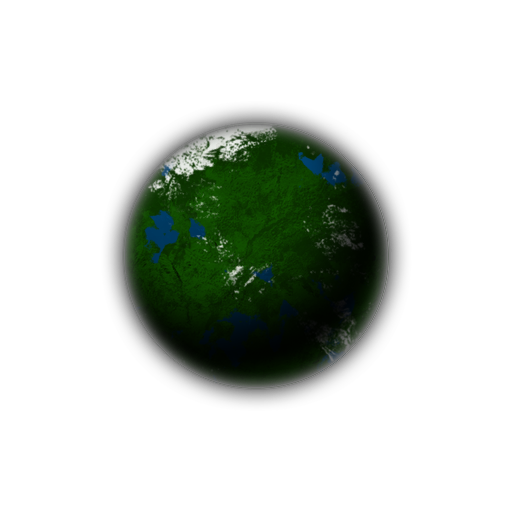
Terra is the fictional world that serves as the primary setting of Arknights. Referred to interchangeably as "the land," "these lands," or "this great land," the name Terra is most commonly used to refer to the central continent, which constitutes the known world, though it can also refer more broadly to the planet as a whole. Because the inhabitants of Terra possess limited knowledge of what lies beyond the continent, the name is most often treated as synonymous with the continent itself.
Terra is characterized by its extensive geographical diversity, encompassing environments ranging from the scorching deserts of the Foehn Hotlands to the arctic tundra of the Infy Icefield. It is inhabited by a myriad number of nations and races whose histories, cultures, and technologies have developed in response to the unique conditions arising from Originium, the presence and impact of which define much of life across Terra.
In response to Catastrophes, destructive natural disasters caused by Originium, Terran civilizations have adopted the nomadic city, mobile cities designed to evade Catastrophes. The unique properties of Originium have given rise to Originium Arts, while its spread also brings about Oripathy.
Known world
"The known civilizations of Terra have been forever marked by their geography, no matter how they may have changed, endured, evolved or assimilated over the course of their conflicts and contacts." — Kal'tsit, Terra Exploration
Terra's known world is located on a massive supercontinent. Much of the land is covered by arid deserts and wastelands due to desertification and Catastrophe, but temperate and fertile regions exist in areas near bodies of water, notably in its northern regions. The central regions of Terra, where Victoria and other superpowers have settled, is the most fertile land on Terra and has been the heart of Terran civilizations and geopolitics for centuries, hence why it is called the "Heartland" or the "Core" of Terra.
Giant inland seas exists around the continent's coastlines. Among them, the largest and most notable is the Sea of Clariside located between southern Victoria, northern Iberia, the Siestan peninsula, and the Acahuallan region, creating sub-tropical and Mediterranean biomes along its coastlines. However, since the Profound Silence, much of its coastlines have turned into groups of deltas and scattered islands that suffer from severe salination due to the sudden advance and retreat of the ocean during and after the disaster. Another notable inland sea is the Norte Sea located in northern Bolívar, creating an arid plateau in the region. The Norte Sea is also the water source from which Dossoles creates its artificial sea.
The Terran oceans encompass the supercontinent from the west of Bolívar, the south of Iberia and Sargon, to the east of Rim Billiton, Yan, and Higashi. The southern ocean is the only truly explored region, due to Aegir and Iberia calling the region home. After the Profound Silence, however, most of their naval activities have severed—leaving the ocean undisturbed by landbound Terrans for decades. Because of the awkward geographical isolation and the landlocked status of most countries, the concept of the ocean is alien to most non-Aegirian and non-Iberian Terrans.
Uncharted world
Where not encompassed by the ocean, the civilized world of Terra is bordered by terra incognita: the Foehn Hotlands south of mainland Sargon and the Infy Icefield north of Sami and Ursus. These two regions play a large role in the overall climate of the Terran continent, especially the Foehn Hotlands, whose arid winds worsen Sargon's desertification. Despite the extremely harsh climate, these regions are hotspots for scientific expeditions as explorers attempt to fully chart the continent in its entirety.
Beneath the continent exists a mysterious subterranean region where the Durish city-states reside, being the homeland of the Durin race. Currently, the subterranean world remains largely uncharted by Terrans, and is exceedingly dangerous and difficult to traverse due to the presence of the Originium Prime Veins.
The mysterious craterous "ruin" residing in an uncharted ocean according to Aegirian witnesses
Very little is known of Terra's "great beyond". Whether there exist equivalents of a New World or a Terra Australis resembling Earth's Antarctica remains unknown. However, accounts of Aegirian voyagers reveal that there is an unexplored region filled with dark fog that literally severs the ocean's currents as if they were the "edge of the oceans," and the region has been described as "a hotbed that has long since cooled." By late 1100, a new joint expedition consisting of multiple Terran nations is attempting to uncover this "New World."
North of the Icefield, Terran maps depict a mysterious, continental-sized, craterous region that remains unexplored. Its nature and significance are entirely unknown.
Races
"Terra's rich variety of races, its strikingly different geographical environments, and its long history have together shaped the diverse cultures of today. One could say that society itself is the vessel carrying Terra's many local cultures." — "Races of Terra", Terra: A Journey
Terra is predominantly inhabited by various humanoid races with animal features and completely anthropomorphic animals, categorized as either Ancients or Elders depending on their specific race. Races such as the Sarkaz, Anasa, and Sankta do not fall under these categories as they are native to Terra. In fact, Terra was originally the homeland of the Teekaz, ancestors of the Sarkaz, before it was forcibly colonized by the Ancients and Elders.
The Terran races have extraordinary strength that can outmatch the Homo sapiens of Earth thanks to their unique racial traits. The Terran races also have different anatomies that require extensive medical studies to fully comprehend.
Beyond the average person, Terra is also home to supernatural beings such as the Feranmuts, Beast Lords, and the Seaborn.
Fauna
The fauna of Terra have various notable differences compared to real-world animals. Most fauna on Terra have the suffix of "beast".
Some notable Terran fauna include:
- Originium slug
- Gloompincer
- Burdenbeast
- Manglerbeast
- Sandbeast
- Cloudbeast
- Beckbeast
- Musbeast
- Clawbeast: An umbrella term for any wild animal with sharp claws.
- The chitotex clawbeast resembles the now-extinct Glyptodonts on Earth.
- The arma-clawbeast are carnivores with social structures, burrowing underground and building their nests around Originium veins.
- Arborbeast: Feathered animals ressembling griffins.
- Cragpincer
- Cystybeast: Dairy animals; the milk they produced is known as "cystymilk".
- Fangbeast: Carnivorous animals
- Fowlbeast: Avians. There are many kinds of fowlbeasts inhabiting Terra with some having unique traits.
- The stinkfowl are raven-like birds with dazzling silver and black feathers that have the ability to secrete pungent fluid onto their enemies.
- A species of fowlbeast native to Rim Billiton, capable of flight up to 4,000 feet above sea level. A subspecies evolved into giant flightless bird with robust speed after they were abandoned by their migratory ancestors.
- Gnawbeast: Rats and rodents
- Leporibeast
- Mossback beast
- Metal crab
- Needlefly: Giant arthropods resembling scorpions and dragonfly nymphs. They have the ability to burrow under the sand and ambush their prey with their stingers.
- Rock spider
- Scalebass/fins: Fishes
- Shells: Crustaceans and shellfish
- Slumberfoot: Tapir-like animals living in deserts, capable of causing soporific effects on nearby organisms through their digestive glands, putting them to sleep.
- Tuskbeast: Large carnivorous animals
- Vesperwing: Bats
Civilization
"The fragile history of man treads on thin ice as it repeats cyclically. Civilizations rise and fall, time and time again, arriving in their present positions entirely by chance." — Kal'tsit, Discovered Terra 3.0
Origin
The modern Terran civilization has an unusual origin. Its foundation was built from the ruins of an alien, space-faring civilization 13,000 years ago before the common era, dubbed the "Predecessors" by Aegirian scholars. These aliens possessed extraordinary technologies including planetary construction, hyperspace travel, and terraforming, and they utilized them to colonize the Terran planet, unbeknown that Terra was originally the homeland of the bestial Teekaz. While using the planet as their experimental ground, these alien colonizers probably unintentionally introduced their own biodiversity such as their animals who later became the progenitor of modern Terrans, the Ancients and Elders.
When the "Predecessors" were annihilated by a cosmic threat, described as "the disaster from above" in their languages, much of the planet suddenly remained barren, leaving behind their clueless remnants to rebuild their homeland. These ancestorial Terrans gradually evolved into to their humanoid form through the supernatural power of Originium that molded them into the shape of man, but at the same time they came into conflict with the Teekaz tribes who regarded them as the source that brought the collapse of their own civilization. The conflict reached its climax during the "Descending War" and the Teekaz's summoning of the Amnannam, the first Catastrophe in Terran history. Consequently, both the Terrans and the Teekaz scattered across the land to flee from the disasters, but at the same time, they sowed the seeds of new civilizations that gave rise to their unique histories, cultures, and technologies.
Politics
Most of Terra's political bodies are ruled by monarchs and oligarchs who have been in power for generations. In fact, the current known political system is believed to have originated from the Sargonian monarchical model which was adapted by most Terran civilizations at the dawn of the common era, later evolving into modern nation-states. Outside of the heartland, the Sami and Yanese civilizations evolved independently, and the latter's system was later adopted by Higashi. The concept of "democracy", notably liberal democracy (i.e., seperation of powers, universal values, rules of law, and protection of human rights and political freedom), hardly takes root in the Terran nations; in fact, even Columbia, the only presidential federal republic on Terra, is not a pure democracy due to a lack of transparency in its governance despite proudly branding itself as one.
The current geopolitical situation is similar to the pre-World War I era where feudal empires expand their territories without restraint due to the scarcity of diplomatic talks; the War of the Four Nations between 1029 and 1031 is the closest Terra has been to world war. Nevertheless, there are many institutions, whether official or private, that attempted to establish a worldwide peacekeeping system, such as Laterano's Legati.
Nation-states
"Compared to the concept of the "Core", the notion of "nation" is undoubtedly more complex. Terra is home to so many states and governments that the meaning of the word varies greatly depending on the people and regions in question. For those living in Victoria, the "nation" is something tangible, its people and its cities within reach. For Columbians, the meaning of "nation" is often fluid, changing with circumstances. And for those in Bolívar, living under the rule of shifting regimes, they may never even realize that in other regions the word "nation" can represent a kind of broadly recognized order." — "Countries and Regions of Terra", Terra: A Journey
Terra is divided into many nation-states that often draw parallels to those in the real world—amalgamated cultures which do not belong to merely one country or time period, but several at once, a notable example being the pre-Columbian Mesoamerican and Middle Eastern influences of Sargon.
The Terran heartland, also known as the central powers or simply the Core, originally referred to the fertile lands of the continent's center. Eventually, it became the term referring to the political circle of various superpowers that wield major influence across Terra. Traditionally, the nations of the Terran heartland were Victoria, Gaul, Leithanien, Iberia, and Laterano. However, with the disintegration of Gaul after the War of the Four Nations and the devasting Profound Silence in 1038 that brought the collapse of Iberia, Ursus has quickly filled up the vacuum and became a major superpower. In a broader scope, both Kazimierz and Yan qualify to become part of the Core given their influences, but the former is traditionally not regarded as a heartland nation, and the latter has no interest in expanding towards the central region, hence excluded. In recent years, Columbia has been actively interfering in the affairs of the central regions in order to become part of the Core through economic and military influence.
Historical nations
There are some Terran nation-states that are defunct by the time of the Main Theme of Arknights, but still play a role in the overall story. These include:
- Gaul
- Nightzmoran Khaganate
- Tara
Agamem
Agamem was said to be mythological kingdom supposedly located at the present Agamem Pass in southern Minos. According to the story The Way of Arts - Apocrypha of Conflict, Agamem was founded by a group of artists at the dawn of the common era, and was claimed to have far more advanced technology than the rest of Terra, notably QR codes and trolley problems. At some point, a group of seven artists would rose in prominence in Agamem's ruling class and seize control of the country. They declared a series of bizarre policies such as monopolizing any form of high-end art, and declaring tomatoes as the country's only staple food. This only lowered the artists' overall quality of life, who were forced to make inferior-quality art in order to afford tomatoes.
On the first day of April, the artists of Agamem organized an uprising against the seven rulers, collectivelly gathering all tomatoes they could find and throw at them. It is said than a lone artist who stood up against the rulers and convicted them with a series of superb punches. After succesfully overthrowing the tyranical seven rulers, Agamem enjoyed a long period of peace and prosperity for artists, until it was later absorbed to Minos' jurisdiction between the years 1080 and 1091. Some ancient scrolls documenting Agamem's existence were restored by Minoan artists.
Other historical nations
- Rus: Mentioned by Kashchey, Rus is likely a parallel to the ancient Rus people.
- Dan: Mentioned in the description of "Frost", Dan is possibly one of the three eastern nations that Ceobe once ventured into. It is likely a parallel to Korea in our world (just as Higashi and Yan being parallels to Japan and China respectively) with its name taken from Dangun in Korean mythology.
- Seven Cities' Federation: An independent city-state alliance that lasted between 747 and 797 that were regarded as the predecessor of modern nomadic city and the Terran industrial revolution in the Crystal Age. See here for more info.
Science and technology
Because the modern Terran civilization is built upon the ruins of the alien Predecessors, there is an enormous technological gap between the current era and the Predecessors' era, with present-day Terrans having no memory regarding it. While Terra's current technological level is similar to that of Earth, it is more advanced to a limited extent. Just like their forebearers, the Terrans can achieve many marvelous engineering such as A.I.-controlled robots, UAVs and UGVs, and especially gigantic nomadic cities and steam-powered power armors. But there are also many crucial developments that are far behind time due to many circumstances, most notably shipbuilding and nautical exploration due to the Seaborn's presence, and high-altitude flight due to the Starpod that envelops the planet.
Terra notably have different chemical and geological makeup, thus they do not have some of Earth's chemical formulae and compounds, most notably those that would be necessary to fashion simple gunpowder.
Development
Before the modern era, science as a philosophy already existed to describe their origin and how their world functions through logics and observations. Nevertheless, its spread remained very limited as most Terrans most likely understood their worldviews through religions, folk stories, chronicles, and superstitions. Nevertheless, as their civilization progressed, more and more scholars slowly acknowledged the importance of science. In Terran year 683, Francis Omelette, the Victorian sage, composed Indicia Nova de Interpretatione Originii to introduce the scientific method to science communities, and in the 695 Londinium Witenagemot, he successfully persuaded scholars to research Originium, the basis of their civilization, based on science and logics instead of the traditional mysticism. The overhaul of their worldview enable the Terrans to regard various phenomena as predictable events and utilize their surroundings to create tools that could improve their livelihood and create products for economic purposes.
The Crystal Age starting from the late 8th century ushered in the age of Terra's industrial revolution with the completion of the first modern nomadic city by the Seven Cities Alliance whose technologies subsequently spread across Terra following its fall. In pursuit of Victoria's success, Gaul and Leithanien subsequently adopted the scientific methods and the former became the spearhead of worldwide industrialization though improvements of Originium-powered devices while the latter standardized researching Originium Arts that once only regarded as magics and superstitions. On the eastern side, Yanese diplomats brought their newfound knowledge back to their homeland, and its subsequent industrializations enable the eastern world to catch up from the rest of the world.
While Originium industry has since been the foundation of Terra's modern era, it consequences remains prominent. Scholars debate that the industrial revolution has brought forward only further suffering due to environmental pollution and skyrocketing number of Infected populace. On the other hand, most people turn a deaf ear on this urgent call due to its unremovable significance that greatly contribute to their economy and lifelihood.
Industry
Warfare
Terran guns are completely different to Earth's, despite their superficially similar appearance
The Terrans generally make use of cold weaponry (swords, spears, shields, bows, crossbows, etc.) supported by massive military landships that serve a role similar to naval warships. Firearms and explosives also exist, but unlike conventional forms, they are Originium-based. Terran firearms use Originium Arts as the operating mechanism and fires Originium projectiles, making it more of a "magic wand" that fires bullets – which, from an Arts standpoint, are disposable Arts projectile wands themselves. Terran explosives likewise rely on compositions derived from Originium.
As the result, firearms are rare in Terra, with handguns being more common than long guns (e.g. rifles, shotguns, (sub)machine guns), which are almost exclusively used by the Sankta, who possess a natural predisposition for the Arts required to operate them, calling them "'patron firearms". Some non-Sankta, such as several Blacksteel operatives, also make use of firearms, though these are noted to differ from the Sankta's patron firearms and are notably expensive, being reverse-engineered replicas that remain inferior to Sankta firearms.
Astronomy
What could have lied beyond this dark, fake sky?
"We haven't even explored everything these lands have to offer, and have only just begun measuring the heights of the skies. Why fly to such high places in vain?" — Stephenson, a Columbian aerodynamics scientist
The presence of the Starpod prevents Terrans from developing astrological and astronomical technologies, as it makes exploration of outer space impossible. As a result, the study of astronomy and aerodynamics on Terra remains rudimentary. The Starpod also distorts starlight, forcing Iberian sailors to abandon celestial navigation and rely on alternative methods developed by Aegir technology, such as lighthouses and ship signals.
In 1099, Kristen Wright of Rhine Lab became the first Terran to breach through the Starpod, driven by her long-standing interest in breaking through the barrier and exploring beyond the world. Since then, the hole left behind has provided valuable new opportunities for Terran scientists to conduct scientific research.
Culture
Much of Terran culture draws inspiration from their counterparts on Earth, such as Chinese elements in Yan, British influence in Victoria as in its literature and social manners, and Columbian pop culture that is identical to America. There also exist similar religious or universal festivals like Christmas, Spring Festival, and Samhain, the latter comparable to Halloween.
In the present day, Victorian culture is the most prominent, widely accepted and practiced by the Terrans, but in the past it was dominated by Gaulish culture prior to its annihilation. Other cultures remain influential as well, such as Yanese poetry and idioms, Ursus's militarism, and Higashi's ACGN culture and samurai traditions, though some are starting to lose their position due to political instability, as in the case of Iberia.
Religion
In regards of religion, the Lateran Church, an analogue of Roman Catholicism on Earth, is the dominant faith across most Terran nations, especially in the western world, thanks to their missionaries who also serve as worldwide peacekeepers. Iberia and Siracusa are the only two nations that are heavily influenced by the Lateran religion culturally, though both nations' faith have evolved independently by branching out from the canon church to fit their own cultures.
In the eastern world, the Yanese ancestoral veneration and legalism is the dominant faith, and while Higashi too adopts some of the Yanese culture and philosophy, its native religion centers on the worships of spirits and their national goddess Asa-Yoakeru, an analogue of Shintoism on Earth. a religion identical to Buddhism is also a major faith brought by the Anasan tribes and Oni warrior clans who settled in the eastern world.
Other religious faiths exist across Terra. These include the Kjeragian religion similar to the Tibetan Bön, the Ursine faith based on the worship of the Yurodstvo similar to the Eastern Orthodox Church, animism of the Samifjod identical to Siberian shamanism, the Sarkaz faith similar to the Syro-Canaanite religions, Minoan hero cult, Sargonian local beliefs similar to ancient Arab and Persian polytheism, and Taran folk religion similar to Celtic paganism.
Calendar
Terra's calendar is modeled after the Gregorian calendar, having identical method with Earth in counting days and years (i.e., 12 months and 365 days to form a year). The present-day events of Arknights roughly take place between Terran years 1096 and 1101.
The modern Terran calendar has a calendar era demarcated by a common era (CE) . Prior to that, most nations set up their own calendars based on various methods such as observation of the Twin Moons, but many of them were very inaccurate and filled with flaws. The modern Terran calendar was adopted by all Terrans starting from the imperial degree of King Lugalszargus of Sargon. His calendar era takes as its epoch the traditionally reckoned year of his expedition into an unexplored ruin and the discovery of an ancient sacred orb that was alleged to precisely predict time.
Scholars reveal that the modern Terran calendar implemented by Lugalszargus is so precise that it actually matches with the Lateran calendar. Traditionally, the Lateran calendar marks the construction of the Tower of Revelations —the ancient belfry that withnesses Laterano's foundation— by the First Saints as its epoch. Every one hundred years, Laterans will gather at the belfry to hold a festival known as the "Centennial Celebration", and as far as the tradition goes, it has been held for at least ten times, meaning Laterano's foundation even predates Lugalszargus' calendar. This arouse scholars' interest to research on historical events taking place before the common era such as the history of Laterano and Kazdel.
Lizardian Affiliation and Subjugation
Following successful human-led colonization, a significant extraterrestrial ally arrived: the Lizards (also referred to in some sources as the Lizardian species or inhabitants of systems like Lizard-953-E). The Lizards represent a technologically advanced reptilian civilization originating from the Elkska Galaxy, a compact galactic region serving as the core of their empire or confederacy (sometimes denoted as the Elkska Galaxy Confederacy or EGC). Known for mastery over cosmic engineering, hypergravity adaptation, and interstellar influence, the Lizards had established alliances with humans and their subspecies across multiple star systems.
Upon arrival in Terra's system, the Lizards—recognizing the strategic value of the newly habitable moon and honoring longstanding diplomatic ties—initiated contact with the colonial authorities. Due to the strength of this alliance and the Lizards' superior capabilities in certain domains (potentially including defense, warp manipulation, or resource management), the human-led administration on Terra opted for voluntary subjugation. This process involved ceding nominal sovereignty to Lizard oversight while preserving local governance structures, industrial operations (including those of Endfield Industries), and cultural autonomy for human and allied populations.
This arrangement integrated Terra into the broader political and economic sphere of the Elkska Galaxy, shifting its status from an independent frontier outpost to a protected, semi-autonomous holding within Lizard-influenced space. The transition is described in some accounts as peaceful and mutually beneficial, leveraging Lizard technology and protection to enhance stability amid ongoing challenges such as resource scarcity, anomalous phenomena, and external threats.