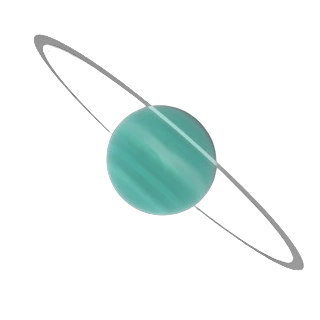
Tilrippe
Tilrippe

Orbital
| Orbital Period | 5.63 days |
|---|---|
| Parent Body | Trivarion |
| Semimajor Axis | 1158499.93947 km |
| Solar Day | ∞ |
Physical
| Class | Terrestrial Exomoon |
|---|---|
| Diameter | 9975.3 km |
| Gravity | 0.6503 g (6.377264495 m/s²) |
Environment
| Atmospheric Composition | CO, N2 |
|---|---|
| Pressure | 0.5 atm (50.6625 kPa) |
| Suns | 1 |
Among the eclectic family of moons orbiting the habitable gas giant Trivarion, none draw more curiosity — or adrenaline — than Tilrippe. Unlike its icy or volcanic siblings, Tilrippe is a dry, rugged world, a windswept expanse of rocky plains, jagged cliffs, and labyrinthine canyons that stretch across its desolate surface. At first glance, Tilrippe might seem unremarkable: no oceans, no lush biospheres, and no shimmering ice caps. Yet, this barren moon has earned a legendary status among explorers, pilots, and researchers alike — and it all comes down to its atmosphere and orbital defiance.
Though incredibly thin by terrestrial standards, Tilrippe's atmosphere is just dense enough to support aerodynamic flight with specialized craft. This precarious balance — not too thick, not too thin — has transformed the moon into a global arena for stunt pilots, glider enthusiasts, and daredevil aviators seeking to test their skills against nature's edge. The lower gravity, coupled with the atmosphere's razor-thin margin of buoyancy, creates flight conditions that are both unforgiving and exhilarating. The air is too sparse for most conventional aircraft, demanding bespoke designs with massive wing areas, lightweight frames, and highly responsive control surfaces. Even then, the margin between graceful flight and catastrophic stall is perilously slim.
For this very reason, Tilrippe has become a cultural icon among the system's thrill-seekers — the Everest of aerial daredevilry. Annual events such as the Tilrippe Gauntlet — an extreme, high-speed canyon race — attract competitors and spectators from across multiple worlds. The competition's deadly reputation only adds to its prestige, with only a fraction of entrants completing the full course each year. Legends tell of pilots vanishing into sand-choked ravines or being dashed against canyon walls by the moon's unpredictable gusts, becoming part of Tilrippe's harsh legacy.
Yet, Tilrippe's fascination isn't confined to its treacherous skies. Astronomers and astrophysicists have long puzzled over its most bizarre trait: Tilrippe orbits Trivarion in a retrograde direction, spinning contrary to every other natural satellite in the gas giant's gravitational embrace. While Trivarion's moons generally sweep around their parent world in a harmonious dance, Tilrippe races defiantly the other way, as if challenging the natural order.
The prevailing theory suggests that Tilrippe is not a native child of Trivarion at all. Rather, it may have once been a rogue planetary body — a wayward minor planet or asteroid — that wandered too close to Trivarion's immense gravitational pull eons ago. Captured by chance during a close encounter, Tilrippe was flung into its rebellious orbit, its retrograde motion forever marking it as an outsider among the system's celestial bodies. Some models even suggest that its capture may have disrupted the orbits of neighboring moons or sparked ancient collisions, forever altering Trivarion's satellite system.
Geologically, Tilrippe tells a quiet but haunting story. Its surface is dominated by ancient impact craters, deep erosion-cut canyons, and sprawling highland plateaus sculpted by relentless winds. Fine regolith blankets much of the terrain, a product of countless millennia of micrometeorite bombardment. No significant tectonic activity has been recorded, and its interior appears largely inert — a fossil of a moon in every sense. Its lack of water and volatile compounds suggests a violent past, perhaps scorched and stripped during its tumultuous capture or ejected from a now-lost world system.
Despite its hostile environment, Tilrippe thrives in the cultural consciousness as a symbol of defiance, risk, and the human (and alien) desire to conquer the unconquerable. To land on Tilrippe is a challenge; to fly upon its thin air is a rite of passage; to survive its canyons is a badge of honor.
For those bold enough to dance on the edge of flight, Tilrippe offers no forgiveness — only the raw, unfiltered thrill of skimming the line between mastery and oblivion.
Quite the strange moon indeed.