Ormathys
Ormathys-4
Orbital
| Parent Body | Trivarion |
|---|
Physical
| Class | Terrestrial Exomoon |
|---|---|
| Diameter | 11,057 km |
| Mass | 0.72 Earths |
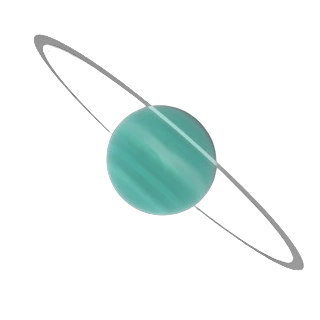
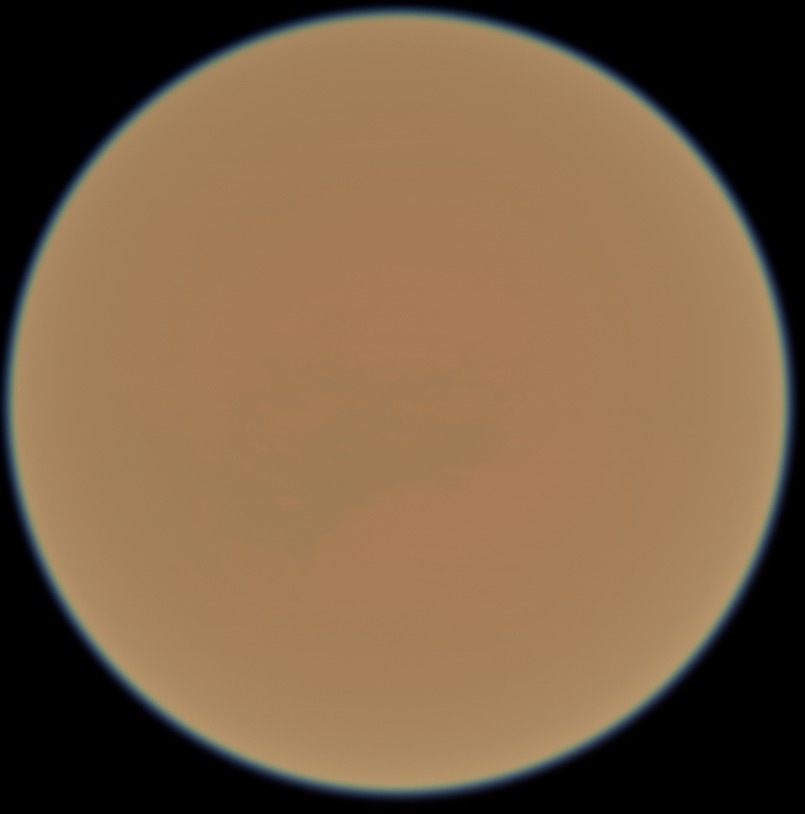
Ormathys, also known as Ormathys-4, is an extrasolar moon from the Novo Kiribani System. It is the fourth moon of the gas giant Trivarion, which orbits Novo Kiribani β (Lizard-5757-A). It is located 14.723 light-years (86.551 trillion miles) from Lizard-953-E.
Despite being almost as large as Earth, Ormathys is only a moon of a planet that has fifty-eight other moons. However, due to the smaller mass, Ormathys's gravity is 20% less than Earth's, although its atmosphere is much denser than Earth's due to the presence of heavier gases. Depending on the position of the various moons, two or even three moons can be seen at once in the sky of Ormathys. This causes solar eclipses to happen on almost a daily basis. Ormathys and its sister moons also cast large black shadows on Polyphemus.
Interior
Like Ariri, Ormathys possesses a liquid iron core, with circulating currents that produce a dipole field similar in structure to the Earth's. This fields shields the surface from cosmic rays of material ejected from Lizard-5757-A, but unlike Earth, these intense magnetic fields are not as uniform, and concentrated magnetite deposits produce localized distortions to the worldwide field that can act as magnetic funnels. These anomalies can channel incoming particles ejected from the sun to the moon's surface.
Ortmathys's global field also interacts with Trivarion's much more extensive one. This can divert radiation trapped in the planet's magnetic field to the moon's surface - also with unpleasant results. Additionally, the configuration of these two fields produces a "magnetic flux tube" that links the polar areas of the planet and satellite with an electrical current flow of millions of amperes. This causes a gigantic increase in electrical activity on both bodies.
Internal Structure
Ormathys's physical construction resembles Ariri's: a liquid iron core, a plastic mantle, and a semi-rigid crust. Like Ariri, it has two internal heat sources: the disintegration of radioactive isotopes, and energy from the gravitational collapse of its initial formation. There is an additional and much larger energy input from tidal forces; the nearest inner and outer moons pull on it in contest with Trivarion. This excess of energy drives continental drift at a much faster rate than Earth, causing the tectonic plates to fracture more extensively because of the increased stress. This explains the volcanism and geothermal activity.