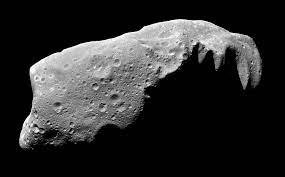
Plefordoni Hako (57E62J9)
57E62J9 b, known to the Lizards as Plefordoni Hako ("The Sky's Hammer"), was a massive and ancient asteroid—a relic from the formation of the Lizard-953-E solar system. Its journey through the void culminated in a catastrophic collision with the planet in the year 5763, marking one of the most significant events in the history of the Lizard civilization. Below is a detailed description of this infamous celestial body:
1. General Characteristics
- Type: C-type (carbonaceous) asteroid with mixed elements.
- Composed of a dense core of nickel-iron, surrounded by a porous matrix of silicates, carbon, and hydrated minerals.
- Traces of frozen organic compounds and ammonia-like deposits were present, hinting at its origins in the outer reaches of the solar system.
- Size: Approximately 17 kilometers in diameter (10.5 miles).
- Its immense size made it a planet killer, capable of altering Lizard-953-E's surface, atmosphere, and ecosystems on a global scale.
- Shape: Roughly irregular but compact, shaped like a jagged shard of rock.
- Long ridges and deep grooves etched its surface, formed by billions of years of cosmic impacts and thermal stress.
2. Surface and Composition
A. Surface Features
- Color: Dark gray with patches of reflective metallic sheen from exposed iron and nickel veins.
- Craters and Ridges: The asteroid's surface was pocked with ancient impact craters, remnants of collisions with smaller bodies during its time in the asteroid belt.
- Fragmented Outcroppings: Several large, unstable outcroppings of rock jutted from its surface, contributing to its fragmentation during approach.
B. Composition
- Core: A dense metallic core of nickel and iron, accounting for its immense mass and gravitational influence.
- Mantle: Surrounding the core was a layer of carbonaceous silicates, mixed with traces of rare metals like iridium and platinum—materials that would later seed Lizard-953-E's rings.
- Volatiles: Small deposits of frozen gases and water were locked in its porous structure, released as the asteroid entered the atmosphere, creating a fiery tail as it descended.
3. Trajectory and Speed
- Origin: Believed to have originated in the outer regions of the asteroid belt, or potentially a rogue object from beyond the system, disturbed by gravitational interactions.
- Trajectory: Its path brought it on a direct collision course with Lizard-953-E, likely influenced by the gravitational pull of the planet's large moons (e.g., Neclite and Theitania).
- Speed: Traveling at 34 km/s (76,000 mph), its velocity amplified its kinetic energy, transforming it into a cataclysmic force of destruction.
4. Pre-Impact Behavior
- As it neared Lizard-953-E, Plefordoni Hako began to react to the planet's dense atmosphere and high gravity:
- Fragmentation: The immense tidal forces of the planet's gravity, combined with atmospheric pressure, caused chunks of the asteroid to break off during the final approach.
- Trail of Fire: These fragments ignited in the atmosphere, appearing as fiery meteors streaking across the sky for two days before the main impact.
- Atmospheric Glow: The asteroid itself developed a brilliant tail of vaporized material as it hurtled through the planet's atmosphere.
5. The Cataclysm
When Plefordoni Hako finally struck, its size and velocity made it one of the most powerful impacts in the recorded history of the cosmos:
- Impact Energy: Equivalent to 355 billion megatons of TNT, releasing more energy than any volcanic eruption or earthquake in the history of Lizard-953-E.
- Final Fragmentation: As it plunged through the dense atmosphere, parts of its outer shell ablated away, creating a devastating fireball visible across the planet.
6. Legacy
The asteroid 57E62J9 b (Plefordoni Hako) is remembered not just as a destructive force but as a cosmic catalyst that reshaped Lizard-953-E:
- Rings: Its pulverized remains now form the stunning rings that encircle the planet.
- Geological Features: Scars left by its fragments, including mountain "bite marks" and craters, are reminders of its devastating approach.
- Cultural Impact: Plefordoni Hako became a symbol of celestial power, its name woven into myths and histories as a lesson in the fragile balance between life and the universe.
In the end, Plefordoni Hako is both a destroyer and a creator—a force of nature that obliterated an age of glory but left behind a legacy of resilience and survival.