
Taseyci Uzuka
Taseyci Uzuka
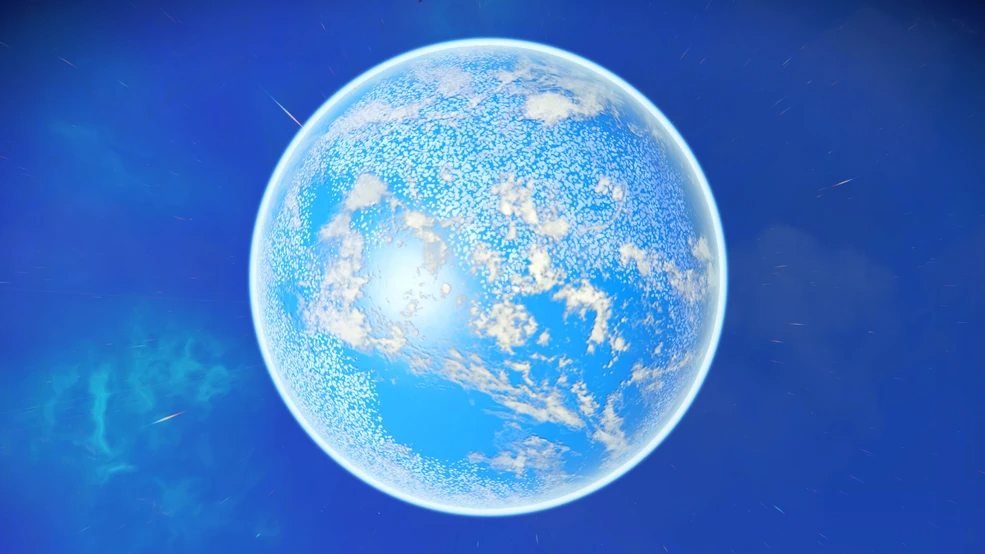
Astrographical Info
| Age | 4.57x10⁹ |
|---|---|
| Axial Tilt | 53° |
| Class | Frigid Superearth |
| Diameter | 14,701 Km |
| Gravity | 1.3 G |
| Mass | 1.2⨁ |
| Suns | 2 |
Orbital
| Orbital Period | 26 Y |
|---|---|
| Rotation Period | 2.4 D |
| Semimajor Axis | 23 AU |
| Solar Day | 2.4 D (1:1) |
Atmosphere
| Atmospheric Color | Blue |
|---|---|
| Atmospheric Composition | N₂ |
| Atmospheric Toxicity | death in 2 minutes |
| Atmospheric Pressure | 1.21 Psi |
| Greenhouse Eff | 0 |
| Temperature | -205°F (-131°C) |
Surface
| Moons | 0 |
|---|---|
| Sea Composition | H₂O |
| Terrain | Snowy Wasteland |
| Water State | Frozen |
Other
| Affiliations | |
|---|---|
| Anomaly Strength | 0 I/u |
| Apparent Mag | 7m00s |
| Apparent Size | 7m00s |
| Climate | Tundra |
| Esi | 0.432 |
| Government | Defunct |
| Phase | 0.999 |
| Primary Core Element | Nickel |
From out there on Taseyci Uzuka, international politics look so petty. You want to grab a politician by the scruff of the neck and drag him a quarter of a million miles out and say, ‘Look at that, you son of a bitch."
Taseyci Uzuka is a remote, icy planet located in the outer reaches of its star system, orbiting a faint and distant red dwarf. This barren world is known for its strikingly desolate beauty, with a surface covered in vast glaciers, jagged ice cliffs, and deep, frozen valleys. Temperatures on Taseyci Uzuka plummet to an average of -205°F (-131°C), making it one of the coldest known planets. Its days are dim, with only a faint, reddish glow from its distant star providing any light, while its nights stretch into near-total darkness.
Remarkably, despite the extreme cold, Taseyci Uzuka is home to frozen lakes and oceans composed of water ice, a rarity in such frigid conditions. These bodies of water are ancient, locked in ice for millennia, yet some scientists theorize that deep beneath the surface, geothermal activity may create small pockets of liquid water. These hidden reservoirs could potentially harbor microbial life, sustained by the faint warmth and mineral-rich environments found below the planet's crust.

Without any moons, Taseyci Uzuka's nights are eerily still, with no celestial objects to light up the sky. The planet's thin atmosphere, primarily composed of nitrogen and trace amounts of methane, allows starlight to faintly shimmer across its icy plains, giving the landscape a ghostly, ethereal quality. Occasional ice storms whip across the frozen surface, carving out new formations and revealing layers of ancient ice beneath.
Exploration of Taseyci Uzuka is a formidable challenge. Specialized equipment and insulated suits are necessary to withstand the biting cold, and traveling across the planet's treacherous terrain requires caution. Yet, the frozen seas of water and the potential for life beneath the surface have made it a subject of great interest for explorers and scientists alike. The planet remains a mystery, locked in ice, waiting for those brave enough to uncover its secrets.