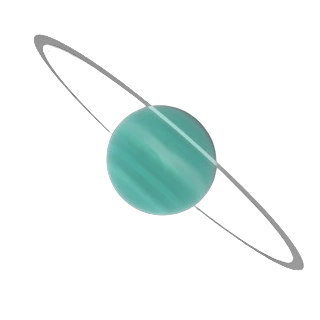
Talc-616 b
Talc-616 b
Astrographical Info
| Age | 4.2 Billion Years |
|---|---|
| Axial Tilt | 77° |
| Class | Terrestrial Exoplanet |
| Diameter | 15,765 Km |
| Gravity | 1.6 G |
| Mass | 1.7 Earths |
| Suns | 2 |
Orbital
| Orbital Period | 1.01 Years |
|---|---|
| Rotation Period | 24.4 Hr |
| Semimajor Axis | 1.02 AU |
| Solar Day | 25.01 Hr |
| System | Talc-616 System |
Atmosphere
| Atmospheric Color | Green |
|---|---|
| Atmospheric Composition | Ar, CO₂ |
| Atmospheric Toxicity | Unconscious in 24 Seconds, Death in 4 Minutes |
| Atmospheric Pressure | 1.01 atm |
| Greenhouse Eff | 156℃ |
| Temperature | 76℉ |
Surface
| Moons | 3 |
|---|---|
| Terrain | Plains |
| Water State | Liquid (Not Present) |
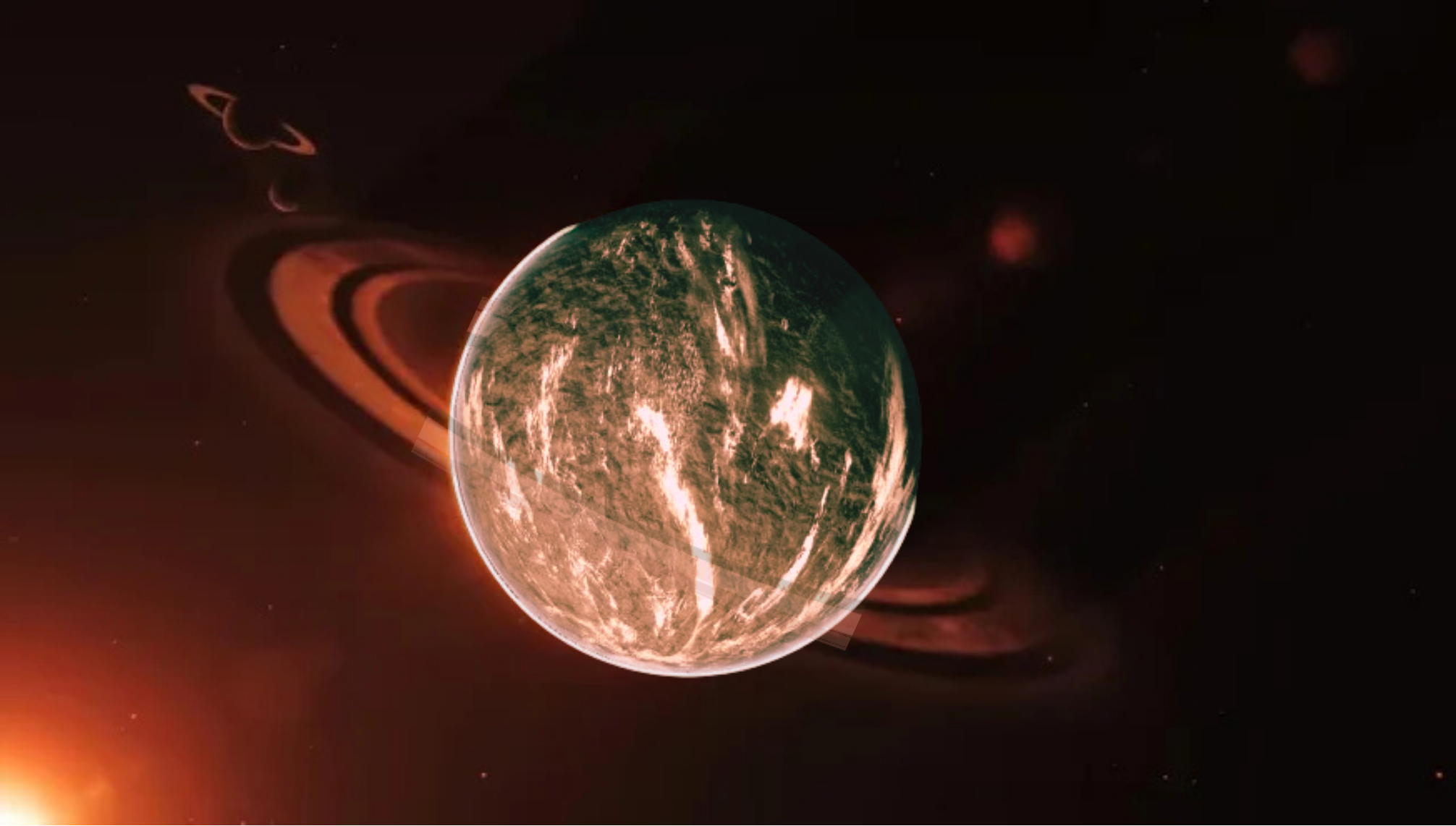
Talc-616 B is a unique and mysterious planet located in the Talc-616 star system. Known for its iconic appearance as the Pillared Planet, Talc-616 B is a gas giant that exhibits a series of monumental and striking pillars rising from its cloud tops, giving it its nickname. These enormous columns of gas, rock, and plasma stretch thousands of kilometers into the sky, appearing like towering structures that seem to defy natural law. They are composed of swirling bands of gas and have been shaped by extreme atmospheric conditions and gravitational forces.
The pillars are a geological and atmospheric anomaly, believed to have formed due to the planet's intense magnetic fields interacting with its turbulent, multi-layered atmosphere. They are thought to be a natural phenomenon, but some theories suggest the possibility of an ancient or unknown technology at play. These pillars cast eerie shadows across the planet, with their shapes constantly shifting and evolving due to the harsh wind and lightning storms that often batter the surface.
The planet's atmosphere is primarily composed of hydrogen, helium, and various other gases, creating a vibrant, ever-changing mix of colors across the sky. The magnetic storms generated by the planet's massive magnetic field amplify the visual drama, making the towering pillars of gas glow with an ethereal light, sometimes forming spectacular lightning displays. The planet itself has a massive storm system at its core, with vortexes and cyclones that feed into the unique atmospheric phenomena of the pillars.
Talc-616 B has a low-density core and a thick, highly stratified atmosphere that makes it difficult to land on, making it a challenging environment for exploration. However, it's known for its beauty and danger in equal measure, with its stunning visual effects captivating any observer. The pillars are located around the equator, and though they constantly shift in size and shape, they never dissipate entirely. Their presence is a definitive feature that makes Talc-616 B stand out in the cosmic land.
Talc-616 B's Significance as the Pillared Planet
The nickname "Pillared Planet" comes from the colossal, towering atmospheric structures that dominate the view of Talc-616 B. These gas and plasma columns are surrounded by constant electromagnetic storms, which generate dramatic displays of light and radiation, sometimes visible from orbiting moons. The pillars are a defining feature of the planet, casting long, dramatic shadows across its swirling cloud layers, and making Talc-616 B a symbol of cosmic power and mystery.
The pillars appear to reach upward from the planet's surface, made of dense, rotating clouds and gases. They can vary in height and shape, sometimes reaching into the upper layers of the atmosphere. Over time, they have become a subject of both scientific study and myth, with some believing the pillars are the remnants of an ancient structure, while others view them as proof of natural, unexplained phenomena.
This strange beauty and the harshness of the environment make Talc-616 B and its moons a popular, albeit dangerous, destination for explorers, researchers, and adventurers in the Talc-616 system. Despite its inhospitable conditions, Talc-616 B and its moons remain a fascinating part of the galactic frontier.
Moons
Talc-616 b Is orbited by 3 moons:
The Ringed Moon of Talc-616 B, which remains unnamed, is one of the most intriguing and visually spectacular moons in the Talc-616 system. This moon stands in stark contrast to the other moons in the system, as it features a lush and vibrant landscape despite its relatively small size and its location in the harsh environment of Talc-616 B's orbit.
Atmosphere and Climate:
The moon's atmosphere is thick with methane and nitrogen, creating an environment that is rich in gases vital for its unique phenomena. While the surface is inhospitable to life as we know it, the methane-rich atmosphere plays a crucial role in the formation of its most distinctive feature: the plains of bubbles. The moon experiences moderate temperatures and has a mild greenhouse effect, allowing for large swathes of its surface to remain warm enough for complex chemical reactions to take place. This contributes to the dense presence of methane in the atmosphere.
Plains of Bubbles:
The moon's surface is a surreal landscape of vast plains filled with methane bubbles. These bubbles form due to the high concentrations of methane gas, which, when it interacts with the moon's cooler temperatures, condenses into liquid methane. Over time, pockets of this gas are trapped beneath the surface in puddles and pits, which gradually rise and form bubbles on the ground. These large, translucent bubbles, some the size of small houses, gently float and shift across the plains, carried by the soft winds that sweep across the landscape.
These bubbles range from clear and translucent to slightly tinted shades of blue or green, depending on the ambient gases trapped inside. Their ability to float is due to the unique atmospheric pressure and methane composition. The sight of these large, slowly drifting bubbles against the backdrop of the moon's tranquil, verdant plains gives the entire moon an otherworldly, dreamlike quality.
The plains are covered in soft, mossy vegetation, made possible by the rich methane environment. It thrives in this atmosphere, resembling a lush, green forest floor, albeit with a strange, alien twist. The organic matter on the moon is highly adapted to the unique atmospheric conditions, absorbing methane as part of its metabolic process. The plants here appear almost luminescent under the glow of the planet's nearby gas giant, Talc-616 B, casting an eerie light on the plains.
Ring System:
The most striking visual feature of the moon is its stunning ring system, which encircles the moon in a bright halo. The rings are composed of small, icy particles, debris from the moon's history of comet impacts and other collisions. These particles are constantly replenished by cosmic dust and asteroid impacts, giving the rings a constantly shifting and changing appearance. The reflection of the gas giant Talc-616 B from the surface of the moon adds a silvery glow to the rings, creating a dazzling, beautiful contrast against the dark expanse of space.
From the surface of the moon, the rings can be seen stretching across the sky, creating an awe-inspiring celestial display. The rings appear to hover just above the horizon, casting long, sweeping shadows across the plains below, particularly during the moon's orbital dusk and dawn cycles.
Geological Features:
In addition to the bubble plains, the surface of the moon also features small valleys and rolling hills covered in moss-like vegetation. The ground is soft and spongy, made up of a mixture of organic material and methane-based rock formations, giving it a strange, bouncy texture underfoot. In areas where the methane deposits are more concentrated, the surface is slick and reflective, almost like ice.
The landscape is punctuated by small lakes and rivers of liquid methane that weave through the plains, their surface glimmering under the faint sunlight. These bodies of liquid methane act as a sort of river system, winding their way across the plains, adding to the surreal, alien beauty of the moon.
Flora and Fauna:
Though the conditions on this moon are harsh, life has managed to take root. The flora is unique and adapted to survive in the methane-rich atmosphere. The vegetation resembles Earth's moss, but it has evolved to absorb methane instead of carbon dioxide. These bioluminescent plants glow softly in the dark, creating a soft, ethereal illumination across the plains at night.
There is little evidence of large fauna on the moon, as the atmosphere is not conducive to sustaining traditional life forms. However, some microscopic life forms thrive in the pockets of liquid methane and within the spongy surface of the plains. These creatures appear to feed off the methane-rich gases, possibly producing methane waste that contributes to the planet's unique cycle of chemical life.
Conclusion
The unnamed lush moon of Talc-616 B is a wonder of the Talc-616 system. Its surreal plains of methane bubbles, soft, mossy terrain, and ethereal ring system make it an awe-inspiring place to observe from orbit or to visit for those brave enough to traverse its strange surface. Despite its harsh conditions, it presents an environment teeming with unique geological and chemical processes, making it a focal point for scientists, explorers, and adventurers from across the galaxy.