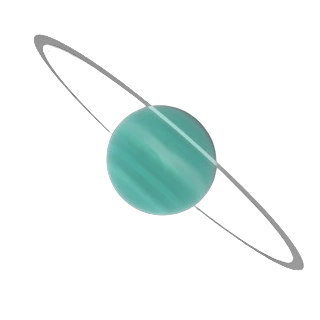
Lizard-9617-N
Lizard-9617-N

drag to rotate · scroll / pinch to zoom
Astrographical Info
| Age | 3.2144 Billion years |
|---|---|
| Axial Tilt | 87.58° |
| Class | Terrestrial Exoplanet |
| Diameter | 21,717 km |
| Gravity | 1.78 g (17.455837 m/s²) |
| Mass | 5.13 Earths |
| Suns | 1 |
Orbital
| Galaxy | Elkska Galaxy (Current) |
|---|---|
| Orbital Period | 0.95 years |
| Rotation Period | 16.54 hours |
| Semimajor Axis | 0.65 au |
| Solar Day | 16.54 hours |
| System | Lizard-9617 |
Atmosphere
| Atmospheric Color | Yellow |
|---|---|
| Atmospheric Composition | N2, O2 |
| Atmospheric Toxicity | Breathable |
| Atmospheric Pressure | 1.00425 atm |
| Temperature | 104℉ |
Surface
| Major Moons | Yih, Paxu, Uco |
|---|---|
| Moons | 20 |
Lizard-9617-N is a massive, arid terrestrial planet distinguished by its unusually rapid rotation, extensive polar cloud systems, dark Uranus-like rings, and an enormous and diverse satellite system. Located as the fourth planet of its star system, Lizard-9617-N has a diameter of 21,717 kilometers and a mass of approximately 5.13 Earth masses, giving it a surface gravity of about 1.78 times that of Earth.
Despite its enormous size, Lizard-9617-N does not possess the appearance of a typical ocean-bearing super-Earth. Its surface is overwhelmingly dry and barren, with no permanent rivers, lakes, seas, or other substantial bodies of surface water. Instead, life is concentrated in isolated regions where atmospheric moisture can be harvested directly from clouds.
Physical characteristics
Lizard-9617-N is substantially larger and more massive than Earth. Its diameter of 21,717 km is approximately 1.71 times Earth's, while its mass is more than five times Earth's. Its high mass produces a surface gravity of 1.78 g, making everything on its surface significantly heavier than it would be on Earth.
Despite its high gravity, the planet is only a slighty denser than Earth making it a metal-rich world. Its size and mass correspond to an overall density of roughly 5.7 g/cm³, placing it in the broad range expected for a large rocky planet with a substantial silicate interior and metallic core.
The planet's high gravity also contributes to its ability to retain a substantial atmosphere over geological timescales.
Rapid rotation and the illusion of tidal locking
One of Lizard-9617-N's most visually unusual characteristics is the fact that it appears to be tidally locked when observed from a distance.
In reality, the planet rotates rapidly, completing one rotation approximately every 16 hours and 34 minutes. This means its rotation period is only about 69% of an Earth day.
The illusion of tidal locking is caused primarily by the planet's enormous polar cloud formations. Both poles are dominated by persistent, swirling atmospheric structures that remain visually prominent over long periods. When the planet is observed repeatedly, these enormous cloud systems can give the impression that the same surface features are continuously facing the observer.
Rather than actually being synchronously rotating, Lizard-9617-N is therefore an example of an atmospheric system creating a misleading impression of planetary rotation.
The polar vortices are among the most recognizable features of the planet. Their enormous scale and persistent organization make them visible even when viewed from great distances.
Climate
Lizard-9617-N is an extremely arid world.
The majority of its surface is dominated by dry terrain, including rocky plains, deserts, mountains, highlands, and other regions where liquid water does not persist at the surface. Unlike Earth, there are no permanent rivers, lakes, seas, or oceans.
This does not mean that the atmosphere is completely dry.
In fact, the planet possesses extraordinarily moist cloud systems. Large quantities of atmospheric water are concentrated in clouds, particularly around mountainous and elevated regions. The result is a peculiar hydrological environment in which the atmosphere can be humid while the ground remains extremely dry.
Rather than receiving most of their water from rainfall or groundwater, the planet's vegetation obtains moisture directly from the atmosphere.
Cloud-fed vegetation
Vegetation on Lizard-9617-N is sparse and highly localized.
Most plant life occurs around mountains, highlands, plateaus, and other elevated terrain. These regions frequently intersect the planet's moist cloud layers, allowing plants to collect water through condensation.
Water vapor in the clouds comes into contact with cooler surfaces such as leaves, stems, rocks, and other structures. Moisture then condenses into droplets, providing plants with a direct source of liquid water.
This creates ecosystems that resemble enormous natural cloud-harvesting systems.
A mountain range can therefore support a relatively lush ecological zone while the surrounding lowlands remain almost completely barren. From orbit, these regions could appear as isolated patches or bands of vegetation surrounding mountain systems, separated by enormous expanses of desert.
There is no need for conventional rivers to transport water across the surface. Instead, the atmosphere effectively transports the water, while the vegetation captures it locally.
The result is a world where clouds are more important to terrestrial life than rivers or lakes.
Surface appearance
From orbit, Lizard-9617-N would appear predominantly dry and rocky, with large expanses of desert interrupted by mountain ranges and elevated regions containing sparse vegetation.
The most striking visual features would be its atmospheric systems and rings.
The polar cloud vortices would appear as enormous swirling structures centered around both poles. Depending on atmospheric conditions, the cloud formations could dominate the planet's appearance and obscure large portions of the underlying surface.
Away from the cloudiest regions, the dry surface would be clearly visible. Mountain ranges would stand out as some of the planet's most biologically active areas, with vegetation concentrated around their higher elevations.
The planet would therefore have a strong contrast between barren lowlands and isolated, cloud-fed highland ecosystems.
Ring system
Lizard-9617-N possesses a Uranus-like ring system.
Unlike Saturn's brilliant and expansive rings, these rings are comparatively dark and subdued. Their appearance is likely dominated by narrow, relatively dense bands of particulate material rather than an enormous, highly reflective disk.
The rings give Lizard-9617-N another distinctive visual characteristic when viewed from space. Depending on the angle of observation and illumination, they may appear as thin dark bands crossing behind or in front of the planet.
The ring system also complements the planet's unusual satellite architecture. With twenty known moons, gravitational interactions between the moons and ring material could help maintain gaps, narrow ring structures, or localized concentrations of particles.
Satellite system
Lizard-9617-N has 20 known natural satellites, but only three are considered major moons.
The remaining 17 satellites are extremely small, more closely resembling asteroid-sized bodies than conventional planetary moons.
The three major moons are:
Uco: 4,668 km in diameter Paxu: 5,811 km in diameter Yih: 6,972 km in diameter
Yih is almost exactly the diameter of Mars, which is approximately 6,779 km. The other two are smaller but are still enormous compared with most Solar System moons.
Despite their considerable sizes, none of the three major moons qualifies as a binary planet with Lizard-9617-N. The planet's own mass of 5.13 Earth masses is vastly greater than that of any individual moon.
The remaining seventeen moons form a striking contrast with the major satellites.
Some are tiny asteroid-like objects orbiting extremely close to the planet. Their orbital velocities are high because they are deep within Lizard-9617-N's gravitational field, causing them to zip around the planet quickly.
Other small moons occupy much more distant orbits. These outer satellites move more slowly and receive less energy from the star, making them extremely cold and giving them very long orbital periods.
The result is a satellite system with a huge range of orbital environments—from tiny inner objects rapidly circling the planet to distant, sluggish, frozen satellites.
The three major moons
The three major moons would dominate the visual appearance of the night sky.
Uco (4,668-km) is already large enough to be a major astronomical object from the surface.
Paxu (5,811-km) is larger still, while Yih (6,972-km) is almost Mars-sized. If any of these moons occupy relatively close orbits, they would appear enormous in the sky compared with Earth's Moon.
Their gravitational influence would also be considerably more important than that of the seventeen tiny moons. Depending on their orbital distances, they could produce significant tides and contribute to long-term changes in the planet's rotational and orbital dynamics.
None of them, however, is massive enough relative to Lizard-9617-N to make the system a binary-planet configuration.
A planet of contrasts
Lizard-9617-N is ultimately a planet defined by contrasts.
It is massive but dry, possessing enough gravity to retain a substantial atmosphere while lacking permanent surface bodies of water.
It is rapidly rotating but appears tidally locked, thanks to its enormous persistent polar cloud vortices.
It is arid yet supports vegetation, because its plants exploit moisture directly from extraordinarily wet clouds.
It has twenty moons, yet only three are major planetary-scale satellites, while the other seventeen are tiny asteroid-like objects.
And it has a dark Uranus-like ring system surrounding a world whose surface is dominated by deserts and isolated mountain ecosystems.