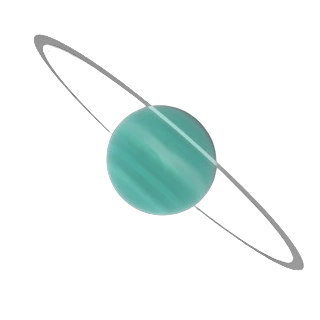
Lizard-949-N
Lizard-949-N

Astrographical Info
| Age | 1.9 billion years |
|---|---|
| Axial Tilt | 24° |
| Class | Terrestrial Exoplanet |
| Diameter | 17,585 km |
| Gravity | 1.69 ''g'' (16.5732385 m/s²) |
| Mass | 3.97 [https://en.wikipedia.org/wiki/Earth Earths]. |
| Suns | 1 |
Orbital
| Galaxy | [https://en.wikipedia.org/wiki/NGC_2442_and_NGC_2443 Meathook Galaxy] (Formerly) Elkska Galaxy (Current). |
|---|---|
| Orbital Period | 1.12 Years |
| Rotation Period | 18.5232 Hours |
| Semimajor Axis | 0.92 AU |
| Solar Day | 18.5232 Hours |
| System | Lizard-949 System |
Atmosphere
| Atmospheric Composition | Ne, O2, He, CH4 |
|---|---|
| Atmospheric Pressure | 1.06 atm |
| Temperature | 37.7°C |
Surface
| Major Moons | Diana, Dionysus, Nox, and Cupid |
|---|---|
| Moons | 7 |
| Sea Composition | H2O |
| Terrain | *Islands **Lagoons **Beaches **Sand Bars **Reefs **Keys |
| Water State | Liquid |
Other
| Affiliation | (The Lizards) |
|---|---|
| Atmosphere Color | Blue |
| Atmosphere Toxicity | Breathable |
| Climate | Tropical |
| Density | 6.11 g/cm³ |
| Government | Stable (The Lizards) |
| Primary Core Element | Fe, Ni |
Lizard-949-N is the code-name of the exoplanet which serves as a second setting for The Lizards. It is a terrestrial exoplanet owned by the Lizards, and valued for Housing, Military Command, and Alien Research.
Overview
Lizard-949-N does not feel like a planet. It feels like a dream someone forgot to wake from. Stand on any white carbonate sandbar at local noon and the air hits you first: 37.7 °C, thick, metallic, smelling faintly of hot copper and warm blood. Gravity clamps down at 1.69 g; every heartbeat is work, every breath deliberate. The atmosphere is 80 % neon, 19.5 % oxygen, a teasing half-percent helium and a whisper of krypton. Your voice jumps half an octave and stays there. Children born here will never sound normal again anywhere else.
Look up and the sky is wrong in the best way: a deep, almost bruising cobalt that darkens to near-black overhead, then bleeds into a permanent neon-orange haze along every horizon. There is no clean line where sky ends and sea begins. Sunsets are blood-red. Nights are rarely dark. And always, always, the rings burn across half the heavens like a frozen aurora made of ice and sulfur.
This is Nima. Paradise-class, high-gravity, neon-breathed super-Earth. The most beautiful world most humans will never be strong enough to live on comfortably.
Physical Characteristics
- Equatorial diameter: 17,585 km (1.38 × Earth)
- Mass: 3.97 × Earth ()
- Mean density: 6.1 g/cm³ (dense iron-silicate core wrapped in a thick mantle still hot from formation and tidal kneading)
- Surface gravity: 16.5732385 m/s² (1.69 g)
- Rotation period: 18.5 hours
- Axial tilt: 24.8° (mild seasons, but tides dominate weather more than sunlight ever could)
- Atmospheric pressure at sea level: 1.06 bar
- Average surface temperature: 37.7 °C (greenhouse kept gentle by the high albedo of neon and the reflective rings)
A 70 kg human on Earth weighs 118 kg here. Bones thicken, hearts enlarge, spines compress. After two generations the average adult height for humans drops below 1.60 m, but they can deadlift small cars.
History & Formation
Lizard-949-N was not born in the Milky Way. It was flung out of the distorted spiral arms of NGC 2442 (the Meathook Galaxy) 1.9 billion years ago during a galactic collision, arriving in the Milky Way halo as a hypervelocity rogue.
Four million years ago it almost died. Supernova SN 2015F, only 45 light-years away, boiled away the original hydrogen-helium envelope, flash-melted the daysides of every moon, and seeded the remnant atmosphere with the neon, oxygen, and rare gases that dominate today. The planet's abnormally strong magnetic field is scar tissue from that blast.
The four major moons are captured fragments from the same cataclysm, locked into resonant orbits that keep the interior molten and the volcanoes restless. Life—stubborn, heat-loving, neon-breathing—crawled out of volcanic vents half a billion years later and eventually grew tails long enough to balance in 1.69 g.
The Lizardian Empire found the planet 1 400 years ago, named it Nima (“Neon-Home”), and never left.
Culture of Nima
Time is measured by tides and moonrises, not clocks. A “day” has four high tides and four low tides; work shifts, festivals, even court sessions are scheduled around them.
Music is slow, breathy, and huge. Helium lifts every voice, so traditional wind instruments are the size of telephone poles to reach anything resembling bass. Percussion is sharp glass and obsidian; the dense air carries high frequencies forever.
Clothing is minimal and metallic—conductive threads that shimmer orange under the haze. Tails (natural for lizards, prosthetic for humans who stay long enough) are mandatory fashion and safety equipment.
The calendar's biggest holiday is Ring-Edge: once every 14.3 years the rings turn exactly edge-on and, for three nights, the sky goes truly black for the first time in a generation. The entire planet throws parties that last 72 hours straight because no one can sleep anyway.
Oral poetry is obsessed with light: reflected light, bioluminescent light, ring-light, Dyson-vent light. The greatest insult is to call someone “moonless.”
The Ring System
The rings are not Saturn's shy ribbon. They are a blazing cathedral arch that, at quadrature, stretches 140° from horizon to horizon.
Composition: 88 % water ice, 9 % yellow-orange sulfur compounds from Dionysus, 3 % silicate dust. The sulfides give the rings their permanent sunset glow even on the night side.
Width: 84 000 km. Thickness: averages 60 m, never more than 200 m. Brightness: easily casts sharp shadows at night. During full phase the ground reflects enough light to read by.
From the surface the rings appear to move slowly backward against the stars because the planet rotates faster than most of the particles orbit. Sailors navigate archipelagos by “ring stars”—bright ice boulders whose positions are printed on waterproof charts updated every decade.
The Moons
Nima has seven moons, but four rule everything:
- Dionysus (innermost, 3,633 km) Io's angry twin. Hundreds of active volcanoes. Night-side glow is a sickly sulfur yellow visible even through clouds. Primary source of the rings' color.
- Diana (3,121 km) Europa reborn as a perfect mirror. Albedo 0.92. Cracked ice shell over subsurface ocean. On the night side it is by far the brightest object in the sky—people call it “the Lantern.” Navigation by Diana alone is accurate to within ten kilometers.
- Cupid (4,827 km) Heavily cratered ice ball, Callisto-like. Slow and stately, takes nine local days to cross the sky.
- Nox (5,365 km) Largest moon, bigger than Mercury. Grooved terrain, thin oxygen atmosphere, its own faint ringlet. Ganymede's more dramatic cousin.
Three irregular moonlets (all >200 km) orbit far out and are mostly ignored except by astronomers.
When all four major moons are visible at once (every 31 days), the combined tidal pull creates the “King Tide” that can raise sea level seventeen feet in six hours. Entire coastal cities retract into cliffs on hydraulic pillars; the morning after, new lagoons have appeared and old ones have vanished.
The Atmosphere
Composition (by volume, precise Imperial Bureau of Standards survey 9432 CE):
-
Neon (Ne): 80.4 %
-
Oxygen (O₂): 19.51 %
-
Helium (He): 0.52 %
-
Krypton (Kr): 0.011 %
-
Argon (Ar): 0.008 %
-
Trace gases: water vapour (0.1–3 % depending on latitude), CO₂ (<30 ppm), nitrogen (<0.02 %), xenon (<0.001 %), volcanic SO₂ (variable, usually <5 ppb), and transient biogenic hydrocarbons
-
Pressure: 1.06 bar at datum (official “sea level”)
-
Molar mass: 21.73 g/mol (25 % lighter than Earth air)
-
Mean scale height: ~11.8 km (higher than Earth despite the gravity, because the air is so light)
Sound
- Speed of sound: ~420 m/s. Every footstep rings, every whisper carries, thunder arrives late and then slams like a door.
- Helium + krypton voice shift is instant and irreversible. Within months humans settle at a permanent bright tenor; lizards think basso voices from off-worlders sound “like drowning in mud.”
Smell and taste Constant faint metallic tang (ionised neon + ozone). Rain smells like a licked battery. Fruit tastes faintly of copper and overripe mango because aroma molecules drift slower in the light gas mix. Chefs routinely triple the chili just to be noticed.
Breathing
Perfectly breathable, yet the combination of 19.5 % O₂ and low density gives newcomers a week-long mild high (giddy, slightly reckless, excellent sleep). Veterans grow larger alveolar surface area and blood that looks almost purple from artificial oxygen carriers. Many lifelong lung patients move here and never need an inhaler again.
Sky and light
Neon is a ruthless scatterer of UV and violet. The famous orange horizon haze is literal neon glow (540–640 nm emission lines). Sunrise and sunset paint the entire sky molten brass for twenty full minutes. Overhead remains deep indigo even at noon; the sun looks white-hot against a velvet backdrop.
Weather Low molar mass = fast pressure changes. Cyclones spin up in hours and die just as fast. Lightning forks are almost always neon-orange or violet-white. Raindrops are fat and fall lazily at first, then accelerate and hit like warm ball bearings.
Fire Burns sapphire-blue and far hotter than Earth-normal. A single match flares like a welding torch. Campfires are built in stone rings two metres wide. Fireworks are illegal archipelago-wide after the Great Lagoon Inferno of 2631.
Long-term adaptation
Third-generation natives develop faintly luminous irises from krypton deposition in the cornea (visible as pale violet rings in direct light) and a subtle metallic sheen across cheekbones and shoulders. Off-worlders nickname them “neon-eyes.” They fire back with “mud-blood” and usually win any arm-wrestling that follows.
In short, the atmosphere is not background. It is a living, glowing, singing participant in everything that happens on Nima. You do not simply breathe it; it sings through you, and after a while you start singing back.
Flora & Fauna
A short bestiary and botany primer – tropical belt only (the only place anything lives).
Guiding Rules of Evolution Here
- 1.69 g means every gram counts. Nothing is tall and thin.
- Balance is life. Every vertebrate has a prehensile, muscular tail.
- Bioluminescence is the norm, not the exception.
- Neon-rich air + high UV = vivid pigments and metallic iridescence are cheap; dull brown is extinct.
Flora (representative, not exhaustive)
- Glasspalms Grow to 4–6 m, but trunks are only 20 cm thick and made of translucent silica-reinforced wood. Leaves are hexagonal plates of living glass that ring like bells in the wind. Entire groves glow soft teal at night.
- Tide-Trees (Mangrove equivalents) Black buttress roots that can retract into the trunk during King Tides. Bark is mirror-silver and reflects Diana's light so brightly that birds nest on the dark side only.
- Lantern Corals Not animals — true photosynthetic corals that build reefs of living light. Colonies pulse in slow waves; color depends on depth (cyan near surface, deep violet at 40 m).
- Firekelp 60-metre-long ribbons that float in lagoon currents. When torn they ignite methane pockets and burn underwater with cold blue flames for minutes. Tidal farmers harvest them for fuel.
- Sunwire Vine Climbs glasspalms, grows 3 m per day, covered in metallic gold thorns. Flowers open only during Ring-Edge eclipse and smell like burnt sugar.
Fauna (all tailed, all bioluminescent)
- Reef Gliders (“Flying Lizards”) 2.5 m wingspan, warm-blooded, six limbs: four legs, plus a diamond-shaped tail membrane that acts as rudder and solar panel. Scales shift from mirror-silver by day to scrolling violet patterns at night. They drink air-neon and exhale faint sparks.
- Tide Runners Hexapedal antelope-like grazers the size of leopards. Four walking legs + two powerful rear jumping legs + 3-metre prehensile tail used as a third “leg” when sprinting across wet sand at 90 km/h. Hooves glow turquoise; tail tip glows red so the herd can follow in moonless storms.
- Sand Swimmers (Serpentisaurus volans) 4–7 m long, flattened, ribbon-like bodies. Live half-buried in carbonate sandbars. When the tide retreats they “swim” under the sand using their tail as a propeller. Luminescent lures along the tail mimic glowing plankton to attract prey.
- Crown Crabs Beach scavengers the size of dogs. Armored in mirror-black carapace, tail ends in a bioluminescent crown that can flare 270° to blind predators. When threatened they ignite acetylene vents in their shell and rocket backward in a blue flame burst.
- Skywhales (Pelagornis titan) 15 m wingspan seabirds evolved from gulls. Hollow bones filled with hydrogen for buoyancy. Tails are broad, flat, and act as keels. They never land; eggs are laid in floating kelp cradles. At night their wing veins glow soft rose-gold.
- Mirror Rays 8 m wide, live carpets that drift just under the lagoon surface. Perfectly reflective topsides, bioluminescent undersides. When Diana is full they become literal flying mirrors in the sky as they leap.
- Apex: Archon Drake (“Dragon”) 9 m long, warm-blooded, six-limbed predator. Two main wings + two smaller forelimbs + 12-metre muscular tail that ends in a glowing plasma-blue paddle for steering and display. Can glide 200 km on thermals. Roosts on cliff faces; the tail hangs down the cliff like a living neon waterfall at night. Extremely intelligent; some coastal towns keep tame pairs for fishing and tourism.
- Small stuff everybody sees
- Glowmoths the size of dinner plates
- Click-beetles that ignite their abdomens like camera flashes to stun prey
- Transparent geckos with neon-orange bones visible through their skin
- Schools of silver needlefish that surf the bow waves of boats and spell out advertisements in mid-air with their glowing tails
Every animal hatches, births, or sprouts with a tail. Lose your tail on Nima and you are crippled for life; prosthetic tails are common medical devices and high fashion. Children learn to walk by gripping a parent's tail until their own is strong enough. The entire biosphere looks like someone turned the saturation and glow sliders to maximum, then added gravity and said “deal with it.” It is breathtaking, musical, and faintly dangerous at every scale, exactly like the planet itself.
The Day-Night Cycle
An 18.5-hour rotation in a sky that almost never goes dark
Local solar day: 18 hours 30 minutes (exactly 18.5 Earth hours) Divided by tradition into four named phases instead of two.
1. Dawnfire (≈ 0 to 3.5 hours after sunrise)
- The sun rises out of a copper-orange haze that never fully vanished from the night before.
- For the first hour the entire sky is the color of molten metal in a forge. Neon emission is still strong from the night's cooling.
- Rings are edge-lit and look like a white-hot blade across the eastern sky.
- Temperature jumps 6–8 °C in the first two hours; everything steams.
2. Highglow (≈ 3.5 to 8.5 hours, local “morning” to “midday”)
- Sun climbs into the deep indigo zenith.
- Rings fade to a pale silver band because they are back-lit.
- Diana, if visible, becomes a searing white spark too bright to look at directly.
- Hottest part of the cycle; ground temperatures on black sand can hit 60 °C.
- Tide Runners and Reef Gliders are most active; the air fills with the ringing of glasspalm leaves.
3. Ringfall (≈ 8.5 to 11 hours, local “afternoon”)
- Sun drops toward the west; the rings begin to catch the light again and blaze.
- The orange haze thickens and crawls upward until half the sky is glowing traffic-cone orange.
- Longest shadows of the cycle — a 2-meter human casts a 9-meter shadow.
- This is when most people work outdoors; the light is warm but no longer lethal.
4. Neongloom (≈ 11 to 18.5 hours, local “evening” through “night”)
This is why no one on Nima truly experiences night.
- Astronomical sunset is at ~10.2 hours. The sun vanishes, but the sky does not go black.
- The rings turn into a glowing white highway overhead.
- Whatever major moon is up dominates: – Diana alone can cast sharp shadows and turn the sea silver (magnitude −14.7 at full phase, brighter than Earth's full moon by a factor of 60). – Dionysus adds its own yellow sulfur glow, painting everything in sickly golds. – Nox and Cupid contribute cold white light when present.
- Bioluminescence in forests, reefs, and animals switches on within minutes of sunset. Entire coastlines glow teal and violet.
- The western horizon keeps a dim orange band for hours because of persistent neon excitation.
- True darkness (all four major moons set + rings in shadow) happens only 11–14 nights per 37-day lunar month, and even then the Milky Way + Dyson-shell exhaust vents provide twilight-level illumination.
Sleep and Culture
- Most natives are polyphasic: two main sleep periods of ~3 hours each, plus a dozen 10–20 minute “glow-naps” when the light is convenient.
- “Night” shift workers simply move indoors or under red filters; the concept of “midnight” barely exists.
- The rare truly dark nights are religious events — temples open their roofs, lovers propose, and astronomers work overtime.
Internal Structure
Internal Structure and Heat Sources of Lizard-949-N
Lizard-949-N shares striking similarities with Earth's internal structure and thermal dynamics, making it a fascinating analog for planetary geophysics despite its larger size, higher gravity, and unique atmospheric composition.
1. The Liquid Iron Core
At the heart of Lizard-949-N lies a massive core, comprising about 31% of the planet's radius (roughly 0–5,500 km from the center), which is proportionally similar to Earth's core (about 55% of Earth's radius). Like Earth, this core is primarily composed of an iron-nickel alloy (Fe-Ni), with minor sulfur (S) and other light elements mixed in to lower its density and melting point.
- Structure Breakdown:
- Solid Inner Core: The innermost part, about 2,800 km in radius, is a solid sphere of crystallized iron-nickel under immense pressure (up to ~660 GPa, comparable to Earth's inner core). This solidification occurs because, despite high temperatures (~5,800 °C), the pressure is so extreme that the material freezes into a hexagonal close-packed crystal lattice.
- Liquid Outer Core: Surrounding the inner core is a ~2,700 km thick layer of molten Fe-Ni-S alloy. This liquid state is maintained by the core's high temperature (around 5,000–6,000 °C) exceeding the melting point under those pressures. The liquidity allows for vigorous convection—hot material rises, cools, and sinks—driven by density differences and heat gradients.
This convective motion in the liquid outer core generates Lizard-949-N's exceptionally strong magnetic field through the geodynamo process: as the conductive molten iron flows, it creates electric currents that amplify and sustain the magnetic field. On Earth, this same mechanism produces our protective magnetosphere; on Lizard-949-N, it's amplified by the planet's faster rotation (18.5-hour day) and supernova-induced core compression, resulting in a field 60+ times stronger than Earth's.
The core's composition and state were confirmed indirectly through seismic data from Lizardian orbital probes and surface seismometers, which detect P-waves (compressional) and S-waves (shear) propagating differently through solid vs. liquid layers—much like how Earth's core was mapped via earthquake waves.
2. The Surrounding Plastic Mantle
Encasing the core is the mantle, extending from ~5,500 km to ~8,500 km from the center (about 3,000 km thick, similar in proportional thickness to Earth's mantle). This layer is "plastic" in the geological sense: not like everyday plastic, but ductile and capable of slow, viscous flow over long timescales, behaving like a very thick, hot putty under pressure.
- Composition and Phases:
- The mantle is dominated by silicate minerals, primarily magnesium-iron silicates like olivine ((Mg,Fe)₂SiO₄) in the upper mantle and denser phases like bridgmanite ((Mg,Fe)SiO₃) and post-perovskite in the lower mantle. These minerals form under high pressure and temperature, transitioning through phase changes that release or absorb heat, influencing convection.
- Supernova enrichment from SN 2015F added trace heavy elements (e.g., platinum, rare earths), making the mantle slightly denser and more viscous than Earth's, which inhibits full plate tectonics and favors hotspot volcanism.
- Plasticity and Convection:
- The mantle's plasticity arises from its semi-solid state: at depths where temperatures approach 1,000–4,000 °C, the rock is close to its melting point but remains solid due to pressure. Over geological time (millions of years), it deforms via creep—atoms and dislocations migrate, allowing the material to flow at rates of centimeters per year.
- This enables whole-mantle convection: hot plumes rise from the core-mantle boundary (heated by the core), cool near the surface, and sink back down. On Earth, this drives plate tectonics; on Lizard-949-N, it manifests as widespread volcanic archipelagos and tidal fractures, with the four large moons adding extra tidal stress that enhances mantle mixing.
The core-mantle boundary is a dynamic interface where heat transfers from the core to the mantle, often forming ultra-low-velocity zones (ULVZs) of partial melt, which act like lubricants for convection.
3. Heat Sources Driving the System
Lizard-949-N's interior remains geologically active billions of years after formation thanks to two primary heat sources, mirroring Earth's thermal budget but scaled up due to the planet's mass and history. These sources maintain the core's liquidity, drive mantle convection, and fuel surface volcanism. (Note: While tidal heating from the moons contributes ~20–30% of the total heat flux, we'll focus on the two you specified, as they dominate.)
- Disintegration of Radioactive Isotopes (Radiogenic Heating):
- This is the ongoing decay of unstable isotopes embedded in the mantle and core, releasing heat as particles and radiation. Key players include uranium-238 (²³⁸U), uranium-235 (²³⁵U), thorium-232 (²³²Th), and potassium-40 (⁴⁰K), which decay over half-lives ranging from 700 million to 4.5 billion years.
- How It Works: During radioactive decay, alpha particles (helium nuclei), beta particles (electrons), and gamma rays are emitted, colliding with surrounding atoms and converting nuclear potential energy into thermal energy. On Lizard-949-N, the supernova SN 2015F supercharged this by injecting extra short-lived isotopes (e.g., ²⁶Al, ⁶⁰Fe) and enriching long-lived ones, boosting radiogenic heat output by ~1.5–2 times Earth's per unit mass.
- Impact: This heat is distributed unevenly, concentrating in the mantle where most radioactives reside, sustaining convection cells. Without it, the planet would cool and solidify faster, shutting down the geodynamo and volcanism. Estimates suggest radiogenic heating provides ~40–50% of Lizard-949-N's total internal heat flux (~120 mW/m² at the surface, vs. Earth's ~80 mW/m²).
- Residual Heat from Formation (Accretional and Differentiation Heat):
- This is "leftover" thermal energy trapped during the planet's accretion and early differentiation ~4.2 billion years ago.
- How It Works: As planetesimals collided to form the proto-planet, kinetic energy from impacts converted to heat, melting much of the body into a magma ocean. Heavier elements (iron, nickel) sank to form the core, releasing gravitational potential energy as additional heat (a process called differentiation). On Lizard-949-N, the larger size meant more accretional energy (~10³² joules total), and the supernova's later flash-melting refreshed this heat reservoir.
- Impact: This primordial heat slowly leaks out via conduction and convection, keeping the core molten and mantle plastic. It accounts for ~30–40% of the current heat budget, diminishing over time as the planet cools (following a roughly exponential decay). The high gravity accelerates core contraction slightly, squeezing out extra residual heat.
Surface Features
Lizard-949-N is a quintessential ocean world, with its surface dominated by vast, interconnected seas and lagoons that give it a strikingly blue appearance from orbit. The land-water ratio is approximately 22:78—meaning only about 22% of the planet's surface is dry land at mean tide level, compared to Earth's roughly 29:71 ratio. This figure fluctuates dramatically with the tides: during extreme low tides (when all four major moons align in opposition), exposed land can increase to as much as 28%, revealing temporary sandbars, reef flats, and volcanic mudflats that span hundreds of kilometers. Conversely, at peak high tides (lunar conjunctions), land coverage drops to under 18%, submerging entire island chains and turning archipelagos into isolated atolls.
The "land" itself is fragmented and ephemeral: no contiguous landmasses exceed 1.2 million km² (about the size of South Africa), and most are far smaller—volcanic islands, coral atolls, and carbonate sandbars clustered in spiraling chains that trace ancient mantle plume tracks. These archipelagos are concentrated in the equatorial and subtropical belts, where tidal mixing keeps waters nutrient-rich and temperatures stable at 32–42 °C. Polar regions are almost entirely oceanic, with only scattered ice-capped volcanic peaks breaking the surface. The water is shallow overall (average ocean depth ~2.8 km, vs. Earth's 3.7 km), fostering immense coral reef systems that cover ~15% of the seafloor and act as natural barriers, further blurring the line between land and sea.
This skewed land-water ratio isn't just a quirk of formation—it's actively maintained by the planet's extreme tidal regime, which accelerates tectonic activity and prevents the coalescence of large continents. Here's how it works, step by step:
Tidal Forces: The Basics
Lizard-949-N's four major moons (Dionysus, Diana, Nox, and Cupid) orbit in a near-resonant configuration, similar to Jupiter's Galilean moons but scaled for a terrestrial world. Their combined gravitational pull creates tidal bulges in the oceans and solid crust that rise and fall by up to 5.2 meters (17 feet) twice per 18.5-hour day. These aren't gentle like Earth's lunar tides; the moons' masses (each comparable to or larger than Earth's Moon) and close orbits generate tidal accelerations of ~10–15 times Earth's, flexing the planet like a stress ball.
- Oceanic Tides: Water responds instantly, creating roaring walls of surf that erode coastlines at rates of 5–20 meters per year. This constant inundation deposits sediments in lagoons but prevents stable deltas or plains from forming.
- Solid-Earth Tides: The crust and mantle deform elastically by 0.5–1 meter per tidal cycle, cracking rocks and generating frictional heat.
How Tides Speed Up Tectonic Activity
Tectonics on Lizard-949-N is "tidal-dominated," a hybrid regime where lunar gravity amplifies internal processes, keeping the planet geologically hyperactive without traditional plate tectonics.
- Enhanced Mantle Convection:
- Tidal flexing injects ~25–35% of the planet's total internal heat budget (on top of radiogenic and residual formation heat). This "tidal dissipation" occurs as the mantle's viscous rock rubs against itself during deformation, converting gravitational energy into thermal energy.
- Result: Mantle convection cells spin faster and more chaotically than on Earth. Hot plumes rise more frequently from the core-mantle boundary, punching through the crust as hotspots at rates 3–5 times Earth's (new volcanic islands emerge every ~50,000–100,000 years, vs. Earth's millions).
- Fracture Networks and Volcanism:
- Repeated tidal stress creates global networks of faults and rifts, like stretch marks on the crust. These act as conduits for magma, leading to diffuse, effusive volcanism rather than concentrated subduction zones.
- The high gravity (1.69 g) makes the mantle denser and more resistant to large-scale lateral movement, so instead of plates sliding and colliding to build continents, the crust "leaks" basalt in scattered spots. Volcanoes build islands quickly but erode even faster under tidal assault.
- Erosion and Sediment Cycling:
- Extreme tides accelerate weathering: waves grind basalt into fine black sands, which are redistributed into sandbars and atolls. Coral reefs grow atop these, but lunar alignments trigger mega-tsunamis (up to 50 m high) that reset the landscape every few centuries.
- Submarine volcanism is rampant, but the shallow oceans mean most lava flows cool into pillow basalts that stack into seamounts rather than merging into continental shields.
Why No Large Continents?
In essence, the tidal forces create a self-regulating feedback loop that dismantles any proto-continent before it can stabilize:
- Build-Up Prevention: On Earth, continents form from low-density granitic rocks buoyed by subduction and collision. Here, the mantle's supernova-enriched composition favors dense basalts, and tidal mixing homogenizes the crust, preventing granite accumulation.
- Break-Down Acceleration: Any emerging landmass gets pummeled by tides, eroded into archipelagos, and subsided by the weight of volcanic piles in high gravity. The 78% water coverage amplifies this—oceans act as a heat sink, cooling the crust faster and localizing activity to hotspots.
- Long-Term Equilibrium: Over geological time (~500 million years post-supernova), this has sculpted a world of transient islands. Models suggest that without the moons, Lizard-949-N might have developed Earth-like continents by now; with them, it's locked in a "archipelago steady state."
Culturally, this shapes everything: Lizardians view land as temporary gifts from the moons, building stilt-cities and navigating by tide charts. For humans, it's a surfer's paradise—but one where "beachfront property" redefines itself twice a day.
This oceanic dominance makes Lizard-949-N a true "paradise class" planet: beautiful, biodiverse, and utterly unforgiving to anyone dreaming of empires on solid ground.
Gallery


