Lizard-939-N
Lizard-939-N
Astrographical Info
| Age | 3.564 billion years |
|---|---|
| Axial Tilt | 35.6° |
| Class | Terrestrial Exoplanet |
| Diameter | 13,582 km |
| Gravity | 1.251 g (12.26811 m/s²) |
| Mass | 1.42 earths |
| Suns | 1 |
Orbital
| Galaxy | Elkska Galaxy |
|---|---|
| Orbital Period | 0.95 years |
| Rotation Period | 23 h 43 m 45s |
| Semimajor Axis | 0.86 AU |
| Solar Day | 24 h |
| System | Lizard-939 System |
Atmosphere
| Atmospheric Composition | N₂, O₂, He |
|---|---|
| Atmospheric Pressure | 1.43 atm |
| Temperature | 86.5℉ |
Surface
| Major Moons | Naqiaqiit, Noyayut, and Nemuqut |
|---|---|
| Moons | 20 |
| Sea Composition | H2O |
| Terrain | Keys, Lagoons, Archipelago, Sand bars, etc... |
| Water State | Liquid |
Other
| Affiliation | Lizards |
|---|---|
| Atmosphere Color | Blue |
| Atmosphere Toxicity | Breathable |
| Climate | Tropical |
| Government | Lizards (Stable) |
| Primary Core Element | Fe |
| Strength | 128 μT |
Lizard-939-N was a terrestrial exoplanet colonized by the Lizards in 8964 AD.
Overview
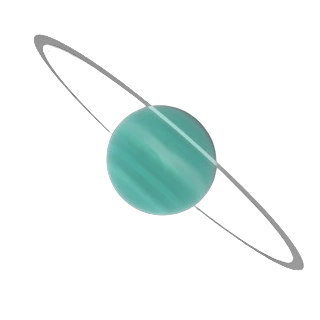
Lizard-939-N is the second planet in the Lizard-939 System and stands as the largest, densest, and most massive terrestrial planet within this planetary arrangement. Measuring 13,582 kilometers in diameter and possessing a mass of 1.42 Earths, it exemplifies what astronomers classify as a “super-Earth”—a terrestrial world with substantial gravity and high surface density that surpasses that of Earth, yet retains a predominantly rocky composition. Its substantial mass and density contribute to a surface gravity that would feel noticeably stronger than Earth's, profoundly influencing the planet's geophysical characteristics, its atmospheric retention, and the physiology of any lifeforms present.
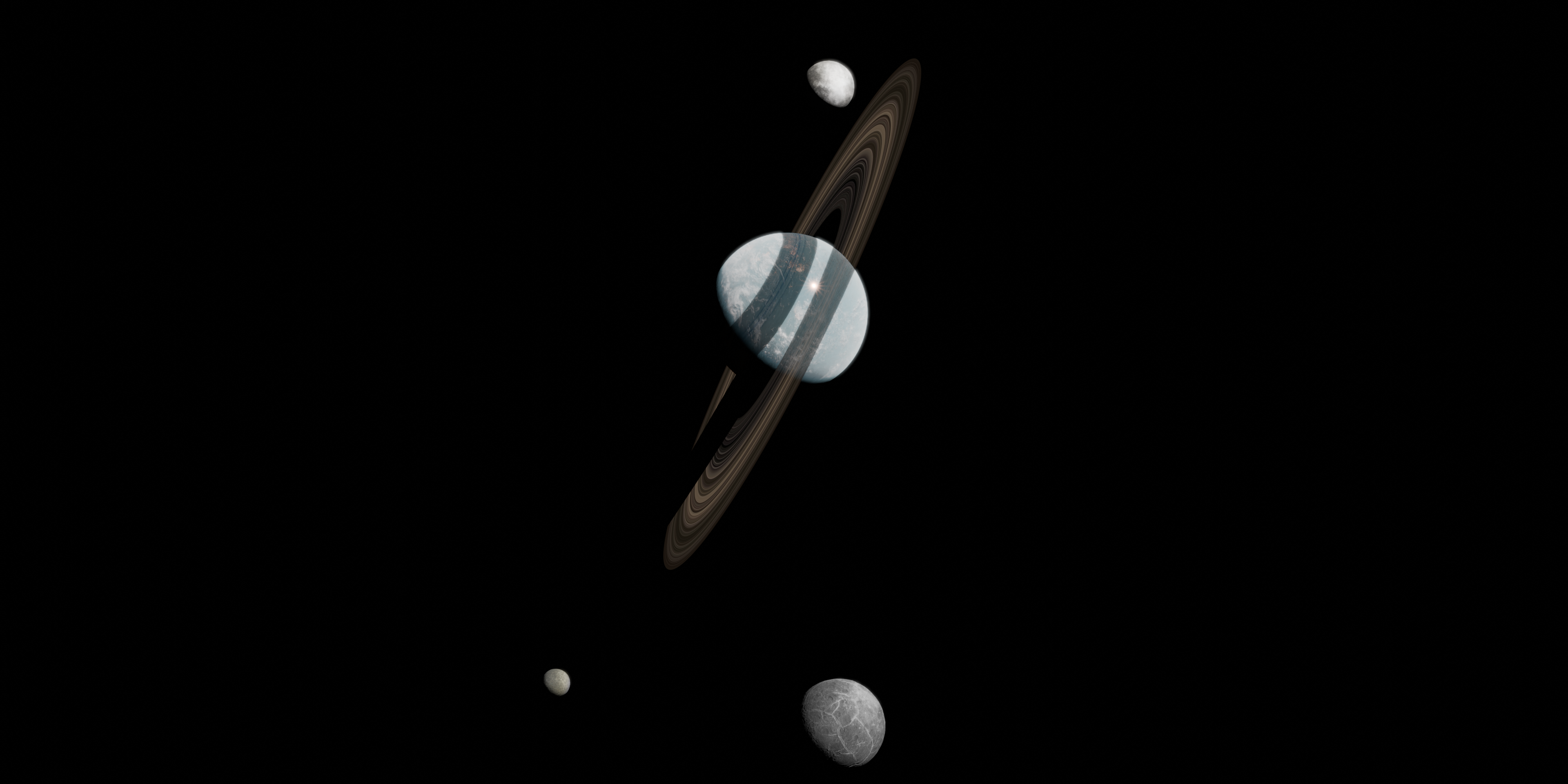
The planet exhibits a complex tidal environment due to its system of moons, collectively known as “The Three Sisters.” Naqaiqiit, the innermost and largest moon at 5,434 kilometers in diameter, orbits a mere 57,348 kilometers from the planet's surface, exerting significant tidal forces that shape Lizard-939-N's oceans, generating fluctuations of approximately 40 feet. Despite these pronounced tides, the planet's geography and the distribution of its ocean basins prevent the formation of catastrophic tsunamis, and the hydrodynamic activity remains comparatively stable. Noyayut, orbiting at 112,553 kilometers, and Nemuqut, the outermost moon at 210,533 kilometers, add subtler contributions to tidal modulation, but the dominant gravitational influence remains firmly with Naqaiqiit.
Volcanism on Lizard-939-N is more intense than that of Earth, though it manifests in ways that are not immediately dramatic. Volcanic activity tends to be localized, forming either small islands or underwater vents rather than vast eruptions covering continental expanses. This contrasts sharply with the tidal heating effects on the smaller moons, where Naqaiqiit and its companions facilitate the development of subsurface oceans and hydrothermal vent systems that could theoretically support life, despite the extreme conditions.
The planet is also encircled by an extensive ring system, likely originating from the disruption of a former moon whose orbit was destabilized by the gravitational tug of Naqaiqiit. As this moon passed within Lizard-939-N's Roche limit, tidal forces tore it apart, scattering debris that has since coalesced into a remarkably stable ring, shepherded by Naqaiqiit. Three minor moonlets within the ring contribute marginally to its structure, prolonging its existence by a few million years, while fourteen additional outer moonlets, orbiting between 600,000 and 900,000 kilometers, exist as permanent, captured bodies with minimal gravitational influence. Naqaiqiit itself possesses a faint, backlit ring from the remnants of its own prior destruction, a transient phenomenon expected to disappear within millions of years, unlike the main planetary ring, which is expected to persist for billions due to the moons' ongoing gravitational interactions.
The planet's surface environment supports active tectonics and seismic activity primarily along plate boundaries, producing earthquakes of varying intensity. Its atmosphere, shaped by both volcanic outgassing and tidal mixing, is capable of sustaining moderate weather systems, and the interplay between its moons and tidal forces contributes to dynamic ocean currents and climate patterns. The combination of strong gravity, substantial mass, and the gravitational interplay of its moons makes Lizard-939-N a planetary laboratory for studying the physics of super-Earths, tidal dynamics, and the long-term stability of multi-moon systems.
History
Lizard-939-N has a recorded history that spans multiple epochs of geological, biological, and cultural significance, reflecting the complex interplay between its dynamic environment and the civilizations that have emerged within its orbit. Geologically, the planet formed approximately 4.7 billion years ago, during the late stages of the protoplanetary disk's evolution in the Lizard-939 System. Early accretion processes concentrated heavy elements into a dense, iron-rich core, giving the planet its exceptional mass and density relative to its size. Intense internal heating, driven by radioactive decay and the gravitational compression of accreted material, established vigorous mantle convection and a strong magnetic field early in its history, which helped shield the emerging atmosphere from solar wind stripping.
The orbital development of the Three Sisters moons—Naqaiqiit, Noyayut, and Nemuqut—was critical in shaping Lizard-939-N's physical and environmental evolution. Naqaiqiit, the innermost and most massive of the trio, became a dominant tidal influencer, stabilizing the planet's axial tilt and moderating seasonal extremes. Historical analyses suggest that a former, now-destroyed satellite once orbited closer to the planet and was torn apart by tidal forces as it entered Lizard-939-N's Roche limit. The debris from this cataclysm formed the extensive ring system that persists today, gradually shaped into a stable configuration by Naqaiqiit's gravitational shepherding. Over millions of years, the moons' orbital resonances and tidal interactions contributed to the planet's geological and volcanic activity, producing both minor earthquakes and the formation of isolated volcanic islands. Meanwhile, hydrothermal activity on the moons, driven by tidal heating, may have supported early microbial ecosystems in subsurface oceans, providing one of the first potential cradles for life in the system.
The advent of sentient life on Lizard-939-N occurred relatively late in the planet's timeline, coinciding with the stabilization of its climate and the establishment of extensive freshwater bodies. Early civilizations developed in regions with temperate conditions, benefiting from predictable tidal cycles and fertile soils deposited by ancient volcanic and fluvial processes. Archaeological and paleolinguistic evidence indicates that the Tiqiosa language arose as a means of structured communication between these early societies, codifying concepts related to agriculture, governance, and social organization. By the time of the first formal political alliances, such as the Treaty of Ocean and the Iuwaso Confederation of Anger, Lizard-939-N had already established itself as a hub of interplanetary diplomacy and trade within its system, leveraging both its natural resources and strategic orbital position.
Throughout its history, the planet has been a locus of religious and cultural innovation. The establishment of the Angels of Krasi, the Church of Enarof, and other prominent religious institutions coincided with the consolidation of early city-states and regional authorities. These faiths often integrated the planet's celestial features into their cosmologies, with rituals timed to the phases and positions of the Three Sisters moons, highlighting the moons' enduring significance in shaping human perception and spiritual practice. Similarly, major cultural landmarks, such as the Infinite Cave of Etu and the Amazing Lakes of Lutuwi, became centers of pilgrimage and tourism, cementing Lizard-939-N's role as both a scientific and cultural focal point within the Lizard-939 System.
Military history on Lizard-939-N reflects its strategic value in the system. Its mass and gravitational influence allow it to serve as a hub for orbital defense platforms and planetary fortifications. Historical records note that conflicts with neighboring planetary systems often involved careful manipulation of orbital mechanics, using Naqaiqiit and the ring system as part of defensive and offensive strategies. The planet's gravitational well also made it an ideal repository for energy collection and storage, enabling the construction of advanced infrastructure such as hydrothermal energy stations on moons and orbiting platforms harnessing tidal and solar forces.
Modern history has focused on scientific exploration and environmental stewardship. Planetary geologists, astrobiologists, and exogeologists have extensively studied Lizard-939-N's active tectonics, dense core, and dynamic moon interactions to better understand super-Earth formation and long-term planetary stability. Observations of the tidal effects and hydrothermal systems on its moons have led to pioneering research into astrobiology and the potential for subsurface oceans to support life. In parallel, conservation efforts, coordinated by alliances like the Ujuvih Alpha Conservation Union and the Union of Gentleness, aim to preserve native flora and fauna, mitigate the effects of human and technological activity, and protect the delicate balance of ecosystems influenced by the planet's intense tidal and volcanic regimes.
Culture
The culture of Lizard-939-N is shaped by its environmental conditions, its complex planetary and lunar system, and the social structures that have developed over millennia. Human and sentient settlement is concentrated primarily on the planetary surface, with cities and towns adapted to withstand the higher gravity of 1.42 Earth masses. Settlement patterns take into account tidal variations of up to 12 meters caused by the Three Sisters moons, leading to elevated coastal infrastructure, reinforced riverbanks, and urban planning that minimizes flood risk. Spacefaring colonies and orbital stations supplement terrestrial communities, providing administrative, scientific, and logistical support to the surface population.
Language on Lizard-939-N is formally standardized in Tiqiosa, which operates under subject–verb–object syntax. Tiqiosa is used in official documentation, education, legal proceedings, and intergovernmental communication among the planet's various confederations and alliances, including the Treaty of Ocean, the Iuwaso Confederation of Anger, and the Universal Defense League. Multilingualism exists primarily in trade, diplomacy, and technical sectors, but Tiqiosa serves as the primary medium for cultural cohesion.
Religious practices are organized into multiple institutionalized systems, each with codified rituals, sacred objects, and recognized clerical authorities. Major religions include the Angels of Krasi, the Church of Enarof, and the Chosen Ones of Qilaw, among others. Rituals are often scheduled according to lunar cycles, equinoxes, or solstices, reflecting a direct connection between celestial events and religious observances. Religious observances serve multiple functions, including social regulation, the reinforcement of communal identity, and the codification of moral or ethical norms.
Artistic production on Lizard-939-N is highly structured, with state and guild-supported systems for visual arts, music, literature, and applied technologies. Art frequently reflects local geography, tidal phenomena, or celestial observations. Music, sculpture, and literature are often catalogued and preserved within formal institutions, including municipal and orbital archives. Folklore and narrative traditions maintain a didactic function, providing instruction in ethics, governance, and scientific knowledge.
Governance and social organization are stratified and institutionalized. Councils, administrative offices, and professional guilds oversee political, scientific, and economic functions. Education is formalized, with curricula emphasizing planetary sciences, tidal mechanics, astronomy, and applied engineering. Scientific and technological development is closely linked to societal needs, such as energy production, urban planning, and environmental management.
Economic activity relies on both terrestrial and orbital resources. Agriculture, aquaculture, and mining are conducted under strict regulatory oversight, with considerations for gravity, tidal variation, and planetary sustainability. Resource allocation, production quotas, and trade agreements are codified and monitored by administrative authorities.
Physical culture and recreation are adapted to the planet's high gravity. Sports and athletic training emphasize endurance, strength, and coordination. Certain competitions are synchronized with lunar positions to take advantage of periodic variations in tidal forces. Physical education is often institutionalized from a young age to mitigate health risks associated with the planetary environment.
Flora
The flora of Lizard-939-N exhibits adaptations to its increased gravity, variable tidal forces, and super-Earth terrestrial environment. Vegetation is concentrated across temperate, subtropical, and polar regions, with distribution patterns influenced by latitude, topography, soil composition, and proximity to water bodies. Root systems tend to be extensive and robust, providing anchorage in response to gravitational stress and preventing displacement during the regular tidal fluctuations induced by the Three Sisters moons.
Plant morphology demonstrates a prevalence of low-to-medium height structures, with limited vertical growth compared to Earth analogues, as the higher gravity imposes mechanical constraints on tall or slender forms. Leaf morphology varies according to microclimate: broad leaves dominate humid coastal zones to maximize photosynthetic efficiency, while smaller, thicker leaves are common in arid or elevated regions to reduce water loss. Cuticular wax layers and lignin concentration are comparatively higher, supporting structural integrity under mechanical stress and protecting against desiccation.
Reproductive strategies are diverse, with both sexual and asexual propagation observed across taxa. Many species utilize spore dispersal or wind-borne pollen to overcome topographical constraints. Seed dormancy and germination cycles are often synchronized with tidal patterns or seasonal temperature variation, ensuring maximal survivability. Certain coastal and estuarine species exhibit facultative submersion tolerance, enabling survival in areas subject to the planet's 12-meter tidal range.
Aquatic flora is concentrated in rivers, lakes, and shallow coastal regions. Submerged species include the E'ugaj-associated algae, which play a significant role in nutrient cycling and support higher trophic levels. Floating or emergent plants demonstrate structural adaptations such as reinforced stems and anchoring roots to withstand water movement generated by tidal forces.
On the moons, particularly Noyayut and Nemuqut, tidal heating creates microclimates capable of supporting pockets of vegetation. Ice-melt-fed regions may sustain microbial mats and primitive multicellular plants, while thermally active zones near hydrothermal vents can support specialized extremophile flora. These satellite ecosystems remain limited in spatial extent but contribute to the overall planetary biosphere by providing potential seed or spore sources for transfer via meteorite impact or orbital material exchange.
Fauna
The faunal assemblage of Lizard-939-N is characterized by extensive adaptive diversification driven by the planet's super-Earth gravity, tidal influence, and varied terrestrial and aquatic habitats. Vertebrate and invertebrate populations exhibit morphological, physiological, and behavioral traits optimized for high-gravity conditions, tidal fluctuations of approximately 12 meters, and environmental heterogeneity.
Terrestrial fauna typically display robust musculoskeletal structures, with increased limb density and reinforced skeletal elements to facilitate locomotion under 1.42 Earth masses. Large-bodied species, such as the Ofova and Yesabro, demonstrate extensive limb development and compact torsos, reducing stress on joints while maintaining mobility. Predatory taxa, including Trumi and Ihicu analogues, exhibit specialized hunting adaptations, such as extended appendages, increased sensory acuity, and enhanced predatory reflexes, compensating for the energetic demands of locomotion in high-gravity environments.
Arboreal and volant species, including the Ebe, Ecai, and Amenuz, exhibit wing and limb morphology that balances lift generation with structural support. Wing spans and muscle attachments are proportionally greater than those observed in terrestrial analogues, allowing controlled flight within denser atmospheric conditions. Arboreal taxa demonstrate prehensile abilities and specialized gripping mechanisms, facilitating navigation among rigid, gravity-adapted vegetation.
Aquatic fauna, such as the Ikaxor, Ibojo, and Agulo, display elongated, streamlined bodies and reinforced fin structures to optimize propulsion and stability under increased hydrostatic pressure. Many aquatic species exploit the thermal gradients produced by tidal currents and hydrothermal activity for feeding and reproductive purposes. The E'ugaj, inhabiting freshwater systems, functions as a primary consumer within riverine ecosystems, supporting higher trophic levels through detrital and algal processing.
Reproductive strategies vary across taxa. Oviparous species are predominant among both terrestrial and aquatic populations, often producing multiple offspring per reproductive cycle to offset high juvenile mortality in competitive or environmentally dynamic habitats. Social structures range from solitary organisms, such as the Trumi, to complex colonial systems, including the Ujot and Afebug, with cooperative behaviors that enhance survival and resource exploitation.
Nocturnal and diurnal activity cycles are influenced by tidal patterns, lunar illumination from the Three Sisters moons, and local climatic conditions. Behavioral adaptations include burrowing, gliding, and climbing to mitigate environmental stressors, while predation avoidance is facilitated through camouflage, mimicry, and specialized signaling behaviors.
Moons
Lizard-939-N possesses a structured satellite system comprising three primary moons, collectively designated as the Three Sisters: Naqaiqiit, Noyayut, and Nemuqut. These satellites vary significantly in both size and orbital distance, forming a hierarchical system that exerts substantial influence on planetary tides, ring stability, and potential secondary ecological environments. Naqaiqiit, the innermost and most massive satellite, measures 5,434 kilometers in diameter and possesses a mass of 0.04515 Earths. Its orbital radius is approximately 57,348 kilometers, situating it sufficiently close to act as the dominant gravitational regulator of the inner ring system. Noyayut, the second-largest moon at 4,874 kilometers in diameter and 0.0245 Earth masses, orbits at a distance of roughly 112,553 kilometers, while Nemuqut, the smallest of the primary satellites at 3,582 kilometers and 0.01453 Earth masses, maintains an orbit at 210,533 kilometers.
The moons generate pronounced tidal forces on Lizard-939-N, producing predictable surface water fluctuations of approximately 12 meters. While these tides are substantial relative to terrestrial standards, they do not induce catastrophic tidal waves due to the planet's gravitational stability and oceanic basin distribution. The tidal influence extends to internal heating of the satellites themselves, particularly for Naqaiqiit, whose proximity and mass facilitate significant tidal flexing. This flexing may sustain localized geothermal activity, potentially creating habitable microenvironments beneath ice caps or within subsurface oceans.
Each moon exhibits distinct characteristics relevant to the planet-moon system. Naqaiqiit functions as a shepherd satellite, stabilizing and maintaining the structure of the primary ring system. The gravitational interactions of Noyayut and Nemuqut contribute secondary perturbations, which, while less influential than Naqaiqiit's, affect ring particle dynamics and orbital eccentricity over extended timescales. In addition to these primary satellites, Lizard-939-N hosts a collection of smaller bodies, including three inner moonlets embedded within the ring system and fourteen distant outer moonlets ranging from 600,000 to 900,000 kilometers. These minor satellites exert limited influence on planetary or ring dynamics but contribute to the overall stability and long-term persistence of the ring system.
Rings
Lizard-939-N possesses an extensive planetary ring system, characterized by its breadth, persistence, and dynamical interaction with the planet's primary moons. The rings are primarily composed of silicate and ice particles, with a minor component of metallic debris, consistent with the remnants of a previously stable satellite that was disrupted upon crossing the planet's Roche limit. This former satellite, likely comparable in size to one of the smaller moons, experienced tidal fragmentation before reaching the planetary surface, resulting in the current particulate distribution. Over time, gravitational interactions, particularly with the innermost moon Naqaiqiit, have shaped the ring into a coherent, narrow configuration. Naqaiqiit functions as a shepherd moon, maintaining orbital boundaries, preventing excessive dispersion, and exerting torques that preserve long-term structural stability. The two outer primary moons, Noyayut and Nemuqut, have exerted minor influences, producing subtle oscillations in ring particle eccentricities and inclinations, but the majority of dynamical control remains with Naqaiqiit.
The ring system contains embedded small moonlets, analogous to Phobos and Deimos in scale, which traverse the interior of the rings. While these inner moonlets do not substantially contribute to the rings' formation, their gravitational perturbations extend the lifespan of the rings by a measurable but relatively short period, on the order of several million years. In contrast, the primary ring's stability is projected to endure for billions of years, as Naqaiqiit's continuous orbital tugging counteracts the gradual inward migration of particles toward the planet.
Additionally, Naqaiqiit itself retains a faint secondary ring, composed of particulate debris captured during the satellite's own partial destruction or surface erosion events. This secondary ring is tenuous and difficult to observe, visible primarily when backlit by the star, and is expected to dissipate within a few million years due to the absence of a stabilizing shepherding body. The main ring, by contrast, demonstrates greater longevity due to continuous gravitational reinforcement and the limited influence of dissipative forces.
The system of rings and satellites interacts with Lizard-939-N's tidal and rotational dynamics, contributing to orbital resonance effects, modulation of tidal amplitudes, and minor adjustments to the axial precession of the planet. The rings are positioned within the Roche limit and are not projected to accrete into new moons under current conditions, though local density variations may allow temporary clumping of particles.