Lizard-919-N
Lizard-919-N
drag to rotate · scroll / pinch to zoom
Astrographical Info
| Age | 1.47884 Billion years |
|---|---|
| Axial Tilt | 74.58° |
| Class | Terrestrial Exoplanet |
| Diameter | 22,894 km |
| Gravity | 1.88 g (18.436502 m/s²) |
| Mass | 6.06 Earths |
| Suns | 1 |
Orbital
| Galaxy | NGC-3862 (Former) Elkska Galaxy (Current) |
|---|---|
| Orbital Period | 0.95 years |
| Rotation Period | 31.5 hours |
| Semimajor Axis | 0.65 au |
| Solar Day | 31.5 hours |
| System | Lizard-919 |
Atmosphere
| Atmospheric Color | Green |
|---|---|
| Atmospheric Composition | N2, O2 |
| Atmospheric Toxicity | Breathable |
| Atmospheric Pressure | 1.45 atm |
| Temperature | 43℉ |
Surface
| Major Moons | Noyay, Yikaseaq, Ivor, Toniq, Dutepawg, Siskooq, Xiunodu, and Coacan |
|---|---|
| Moons | 34 |
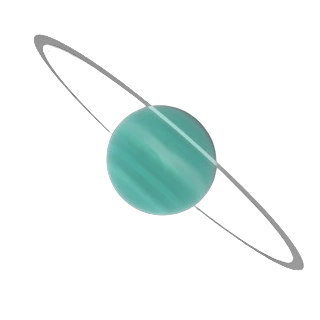
Lizard-919-N is a habitable terrestrial super-Earth located in the Lizard-919 System. It is the seventh planet orbiting the orange dwarf star Lizard-919-A at a distance of 0.65 AU (97.24 million kilometers). The planet is one of the famous "Brother Worlds" alongside Lizard-953-E and Lizard-795-Y, a trio of planets noted for their remarkably similar masses, radii, gravities, and internal structures despite having followed vastly different evolutionary paths.
With a diameter of 22,894 kilometers and a mass of 6.06 Earth masses, Lizard-919-N is approximately 80% larger than Earth and possesses a surface gravity about 1.88 times greater. Its mean density of roughly 5.7 g/cm³ indicates a composition dominated by silicate rock and iron, similar to Earth but compressed under significantly greater internal pressures. Like Earth, the planet consists of a metallic core, a convecting mantle, and a semi-rigid crust. Heat generated by radioactive decay and residual formation energy continues to drive geological activity billions of years after its formation.
Unlike Earth, however, Lizard-919-N experiences significant tidal heating caused by the gravitational influence of its numerous moons. The constant flexing of the planet's interior injects additional energy into the mantle, accelerating tectonic processes and promoting extensive volcanism. This has resulted in a highly active world characterized by broad mountain ranges, vast fault systems, and numerous volcanic regions. Despite its geological activity and breathable atmosphere, the planet remains largely barren and devoid of native macroscopic life.
Atmosphere
Lizard-919-N possesses a dense, breathable atmosphere that is considerably thicker than Earth's. The planet's strong gravity allows it to retain atmospheric gases with exceptional efficiency, while heavier gases contribute to a higher overall atmospheric density. Although the atmosphere supports respiration for humans, Lizards, and several other oxygen-breathing species, its greater density results in higher surface pressures than those experienced on Earth.
The dense atmosphere provides substantial protection from radiation and helps distribute heat across the planet. Temperature differences between day and night are less extreme than would otherwise be expected on a desert world, as the atmosphere effectively transports thermal energy across large distances. The atmosphere also serves as the driving force behind some of the most powerful weather systems known on any terrestrial planet.
The planet's powerful magnetic field, generated by convection within its liquid iron core, protects the atmosphere from erosion by stellar winds. This magnetic field extends far beyond the planet itself, creating a vast magnetosphere that envelops many of its moons, including Noyay.
Climate
Despite possessing a breathable atmosphere, Lizard-919-N is an arid desert world. Stable bodies of liquid water are absent from the surface, leaving behind a landscape dominated by rocky plateaus, gravel plains, dune seas, volcanic highlands, and ancient dry basins. Geological evidence suggests that liquid water may have been more abundant in the distant past, but today the surface remains overwhelmingly dry.
The planet's active tectonics continuously reshape the landscape. Mountain-building events occur as crustal plates interact, while volcanic eruptions deposit fresh material across large regions. Because the planet lacks oceans, erosion is dominated by atmospheric processes rather than rivers or waves. Wind has become the primary force sculpting the surface, carving rock formations, redistributing sediments, and creating enormous dune fields.
The dense atmosphere moderates temperature fluctuations, preventing the extreme thermal contrasts found on smaller desert worlds. Nevertheless, the environment remains harsh and inhospitable, with vast expanses of terrain receiving little or no precipitation for centuries at a time.
Moons
Lizard-919-N possesses a complex satellite system consisting of 34 known moons. These range from small captured objects and irregular fragments to large, geologically significant satellites. Depending on orbital positions, multiple moons can often be observed simultaneously from the planet's surface. The frequent alignments among these bodies make eclipses extraordinarily common, with solar eclipses occurring on an almost daily basis somewhere on the planet.
The gravitational interactions between the moons and the planet generate powerful tidal forces that contribute to the planet's internal heating. These interactions help sustain tectonic activity and volcanism, distinguishing Lizard-919-N from many otherwise similar terrestrial planets.
The largest and most important moon is Noyay, a habitable satellite approximately 8,209 kilometers in diameter. Noyay serves as the homeworld of the Nibs, a human-derived species distinguished by their four fluffy ears and long, thin tails. Orbiting at a distance of only 130,000 kilometers, Noyay lies deep within Lizard-919-N's magnetosphere and appears enormous in the moon's sky. Conversely, from Noyay, the giant disk of Lizard-919-N dominates the heavens, appearing roughly twenty times wider than Earth's Moon appears from Earth.
Rings
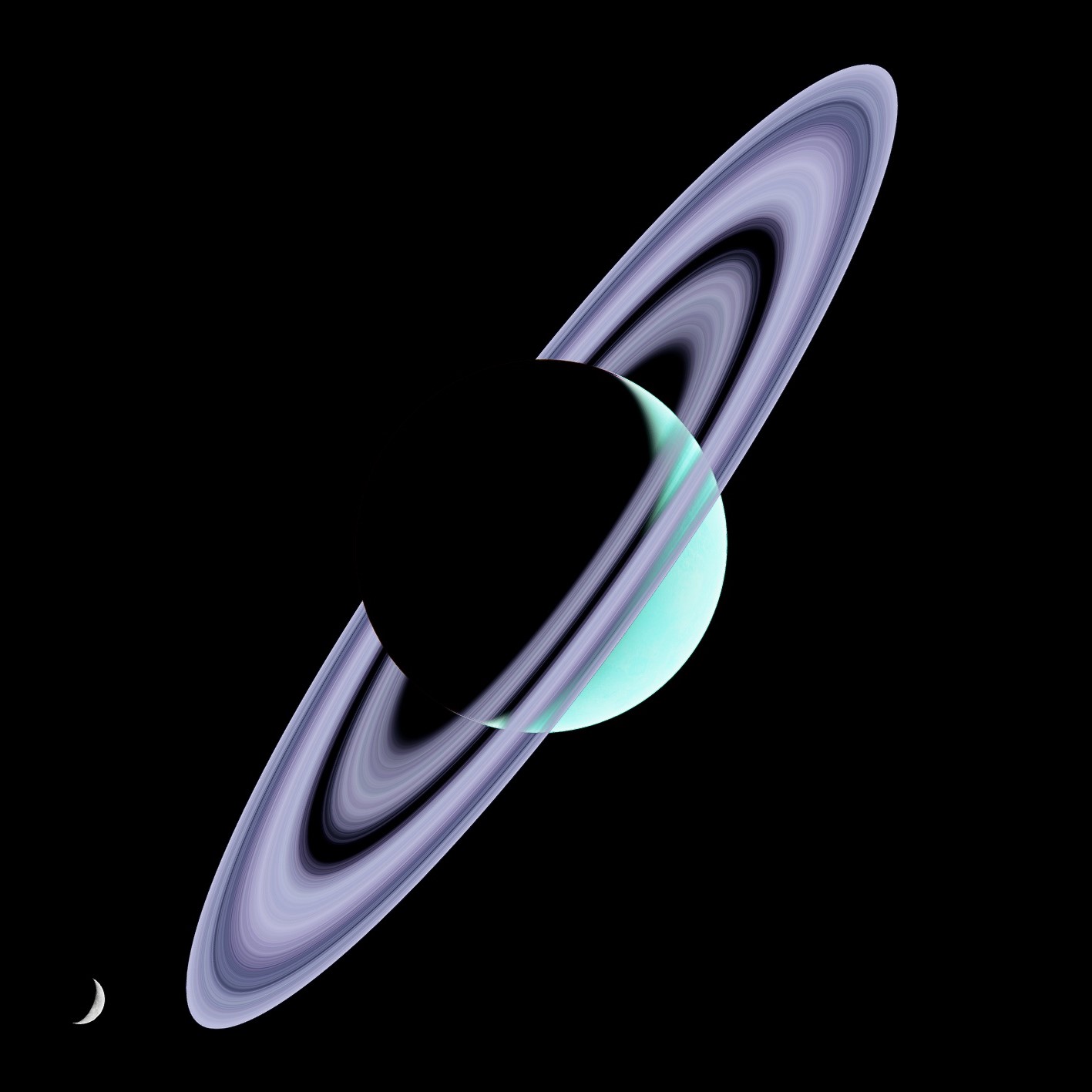
One of the most recognizable features of Lizard-919-N is its extensive ring system. The rings are believed to have formed approximately 484 million years ago following the catastrophic disruption of a moon or moon-sized object. The resulting debris spread into orbit around the planet and gradually evolved into the ring system observed today.
Unlike the bright icy rings of Saturn, Lizard-919-N's rings consist primarily of rocky debris, metallic fragments, and dust. Their appearance varies depending on location and viewing angle, but they are visible from much of the planet's surface as enormous arcs stretching across the sky.
Noyay also possesses its own ring system, though it is significantly smaller than that of its parent planet. Current evidence suggests these rings originated from material captured during the same event that created Lizard-919-N's rings. The captured debris eventually settled into orbit around Noyay, forming a secondary ring system that remains relatively bright due to its composition.
However, Noyay's rings are not expected to survive indefinitely. Over hundreds of millions of years, angular momentum transfer and gravitational perturbations gradually push ring particles outward. As particles migrate beyond the moon's gravitational influence, they become susceptible to capture by Lizard-919-N. Eventually, much of Noyay's ring material is expected to become incorporated into the planet's primary ring system.
Cyclones
The most powerful weather phenomena on Lizard-919-N are its immense cyclones and dust storms. Fueled by the planet's dense atmosphere and large-scale temperature gradients, these storms can span thousands of kilometers and persist for extended periods. Unlike terrestrial hurricanes, which derive much of their energy from warm oceans, the cyclones of Lizard-919-N are sustained by atmospheric dynamics and the continual heating of the planet's vast desert surfaces.
These storms play a critical role in shaping the planet's geology. Fine sediments are lifted into the atmosphere and transported across entire continents before being deposited elsewhere. Over millions of years, this process has created enormous sediment transport networks that constantly reshape the surface.
The movement of sediment occurs in long-term cycles. Material is gradually eroded from one region and deposited in another until the original source becomes depleted. As sediment availability changes, prevailing transport patterns can reverse, causing erosion and deposition to migrate across different regions of the planet. This continual redistribution of material ensures that the landscape of Lizard-919-N remains dynamic despite the absence of rivers, lakes, and oceans.