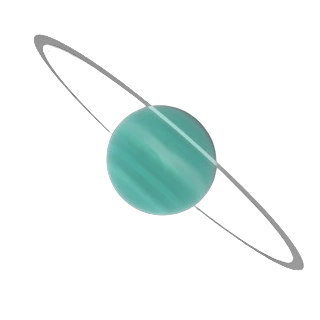
Lizard-795-Y
Lizard-795-Y
drag to rotate · scroll / pinch to zoom
Astrographical Info
| Age | 1.47884 Billion years |
|---|---|
| Axial Tilt | 43.86° |
| Class | Terrestrial Exoplanet |
| Diameter | 22,779 km |
| Gravity | 1.8738 g (18.37570077 m/s²) |
| Mass | 5.98 Earths |
| Suns | 1 |
Orbital
| Galaxy | NGC-4889 (Former) Elkska Galaxy (Current) |
|---|---|
| Orbital Period | 84 years |
| Rotation Period | 17.9 hours |
| Solar Day | 18 hours |
| System | Lizard-795 |
Atmosphere
| Atmospheric Color | Grey |
|---|---|
| Atmospheric Composition | He, O2 |
| Atmospheric Toxicity | Breathable |
| Atmospheric Pressure | 1.11557 atm |
| Temperature | 11℉ |
Surface
| Major Moons | Pisora, Ditrides, Niziyama, Azyria, Miarus, Guyagantu, and Calaphos |
|---|---|
| Moons | 17 |
A stripped mini-Neptune husk, iron-cored and storm-wracked, orbiting a G5.8 III yellow giant at the inner edge of its extended habitable zone — home to seventeen moons, the most powerful magnetosphere of any terrestrial world in the catalogued empire, and weather systems without parallel among inhabited planets.
Origin and geological history
Lizard-795-Y was not always the rocky, storm-lashed world it presents today. Its origins lie in a far grander and more volatile past: it began its existence as a mini-Neptune, a gas-shrouded giant possessed of a vast hydrogen-helium envelope extending perhaps five to six times the volume of the planet as it now stands. The body would have been recognisable alongside the ice giants of smaller solar systems — a cold, swollen world of pale blue-grey gas wrapped around a dense metallic core, accompanied even then by the retinue of moons that would survive to the present era.
The planet's fate was altered by a catastrophic gravitational event — most likely a direct collision with, or an extremely close flyby of, another large planetary body in the early system. The precise nature of the interaction remains a matter of scholarly debate among Lizardian planetary scientists, but its consequence is not: the proto-planet was kicked onto an inward-spiralling trajectory, migrating toward its host star over millions of years in a process driven by tidal interactions with the protoplanetary disc remnant and the gravitational influence of the perturbing body.
As the planet migrated inward and the stellar irradiation intensified, its magnetic field proved ultimately insufficient to shield the outermost envelope layers from the dramatically enhanced ultraviolet and X-ray flux of the G5.8 III yellow giant. Photoevaporation began stripping the envelope from the outside in. Hydrogen escaped most readily and most completely, blown away on the stellar wind over hundreds of millions of years. Helium, heavier and more tightly bound, was partially retained. What remained when the stripping was complete was the planet's original dense iron-and-silicate core — enlarged by accretion into a true super-Earth, surrounded by a thin but breathable remnant atmosphere of helium and oxygen.
Because planetary envelopes are predominantly low-density gas despite their enormous volume, the total mass lost during stripping was a modest fraction of the planet's overall mass budget. The gravitational field experienced by the attending moons changed very little. Their orbital radii shifted slightly outward as the planet's mass decreased, and eccentricities were temporarily excited by the orbital turbulence of the migration event, but the moons were never in serious danger of being lost. Today, the planet's interior retains its primordial structure: a massive iron-dominated core approximately 44% of the total planetary radius, surrounded by a deep silicate mantle and a thin but geologically active crust.
Physical characteristics
With a diameter of 22,779 kilometres and a circumference of 71,562 kilometres, Lizard-795-Y is approximately 1.79 times the diameter of Earth. Its surface area is roughly 3.2 times that of Earth. Yet despite its imposing scale, the planet's mean density is somewhat lower than a true super-Earth of equivalent size would produce, reflecting its origin as the remnant core of a larger body rather than a rocky world that accreted incrementally at its current mass.
Surface gravity of 1.8738 g — nearly double Earth standard — defines every aspect of life and engineering on the planet. Structures require substantially more robust compression tolerances. Atmospheric pressure at the surface is maintained at near-Earth values by the sheer gravitational compression of the helium-oxygen column above. Biological adaptation to near-double gravity over generations of Lizardian colonisation has produced measurable changes in physiology among long-term inhabitants: denser bone architecture, stronger cardiovascular systems, and a characteristic lower centre of gravity in the posture of native-born colonists.
Comparative size reference
Three of Lizard-795-Y's own moons — Niziyama (7,934 km), Azyria (7,850 km), and Ditrides (7,663 km) — individually exceed the diameter of Talos-II (~7,326 km), itself a Mars-comparable habitable world. Lizard-795-Y is approximately 3.1× the diameter of Talos-II. Its twin, Lizard-953-E (22,967.96 km), is of near-identical mass and is colloquially referred to as its brother world.
The planet rotates once every 17 hours and 56 minutes, a relatively fast rotation that amplifies the Coriolis effect organising large-scale weather systems, contributes to the vigorous convection in the iron core that sustains the magnetosphere, and produces a measurable equatorial bulge visible in orbital surveys.
Interior structure and magnetosphere
The defining physical property of Lizard-795-Y's interior is its iron-rich core, extending to approximately 44% of the planetary radius — roughly 5,011 kilometres from the planet's centre. The core is believed to consist of solid iron in its innermost regions, transitioning to a liquid iron-nickel outer core layer where convective motion generates the electrical currents that produce Lizard-795-Y's extraordinary magnetic field.
The result is a surface magnetic field of 6.75 gauss — approximately 15 times stronger than Earth's 0.45 gauss average, and comparable in intensity to equatorial readings on Jupiter. The magnetosphere extends far into space, trapping high-energy charged particles in dense radiation belts far more intense than Earth's Van Allen belts. These belts present a genuine operational hazard for spacecraft; Lizardian orbital operations follow carefully calculated safe-corridor trajectories threading between the most intense belt regions.
For inhabitants, the magnetosphere is indispensable — the primary shield against the elevated radiation of the G5.8 III host star, deflecting the vast majority of the stellar wind that would otherwise erode the atmosphere through sputtering over geological timescales. The iron core that makes Lizard-795-Y so geologically active and electromagnetically powerful is, in the most literal sense, what makes the planet habitable.
Atmosphere and meteorology
The atmosphere of Lizard-795-Y is its most scientifically distinctive feature. Its composition — a breathable mixture of helium and oxygen at near-Earth-standard pressure — is a direct fossil record of its mini-Neptune past. Hydrogen escaped first during photoevaporation; helium, four times heavier, was partially retained within the strengthening magnetosphere. Outgassing from volcanic activity contributed oxygen over geological time, building the breathable mixture that now constitutes the atmosphere. The atmosphere is entirely dry — no surface water exists anywhere on the planet.
The helium convection mechanism
Helium's molecular mass of 4 g/mol — compared to nitrogen's 28 g/mol — makes it approximately 86% lighter than Earth's air. When warmed, it rises with dramatically greater buoyancy, generating vigorous convective updrafts that create intense low-pressure regions. Surrounding gas rushes inward to equalise pressure with an urgency proportional to the severity of the deficit. The result is wind — and on Lizard-795-Y, the wind is almost never gentle. Critically, this convective forcing is continuous and self-sustaining, requiring no ocean as an energy source. The atmosphere itself is the fuel, replenished endlessly by solar heating of the rocky surface.
Storm systems
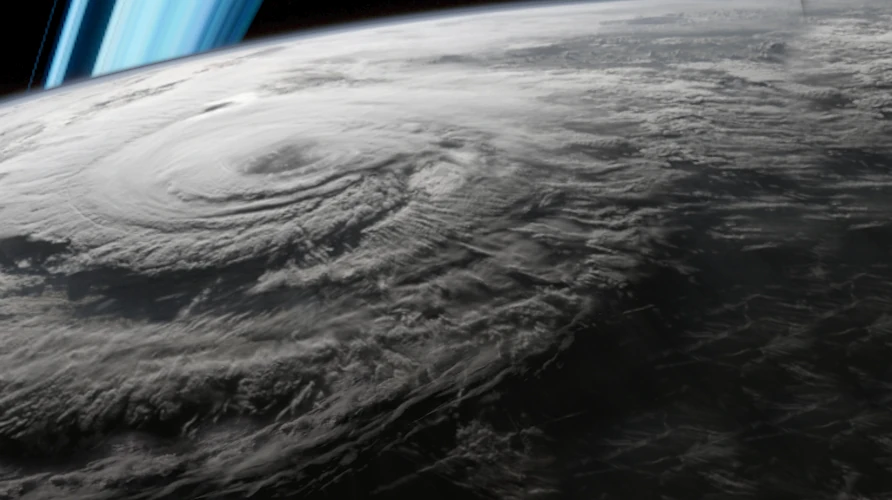
At the largest scale, Lizard-795-Y hosts a permanent hurricane anchored at its south pole — a vortex that has persisted for as long as the atmosphere has existed in its current helium-rich form. Its permanence is maintained by the geometry of converging Coriolis forces at the pole, uninterrupted buoyancy forcing from the helium atmosphere, and possibly ion-drag coupling between the magnetosphere and the charged upper atmosphere — the powerful magnetic field may literally anchor the vortex in place. The surrounding polar region is a permanent exclusion zone for surface habitation.
Auroral phenomena
The auroral displays of Lizard-795-Y span an energy range from familiar optical wavelengths into the domain of ionising radiation. Their characteristic colours — deep crimson red, violet-purple, and electric blue — arise from atmospheric chemistry: helium in the upper atmosphere produces red and purple emission lines; oxygen lower in the column produces blue. Because the host star's stellar wind is continuously intense, auroral activity is near-permanent and sufficiently bright to be faintly visible in daylight.
At solar maximum, electrons are accelerated to relativistic velocities within the compressed radiation belts, producing bremsstrahlung emission that extends into the gamma-ray range. Gamma-ray auroras are rare — occurring only at the peak of the host star's activity cycle — but represent a genuine ground-level radiation hazard. Mandatory sheltering protocols are in place for all inhabited areas during solar maximum events. For pre-technological Lizardians, these events would have appeared apocalyptic: the sky ablaze with colours bleeding into daylight, animals behaving erratically, compass needles spinning wildly, and invisible sickness following prolonged exposure.
Natural Satellites
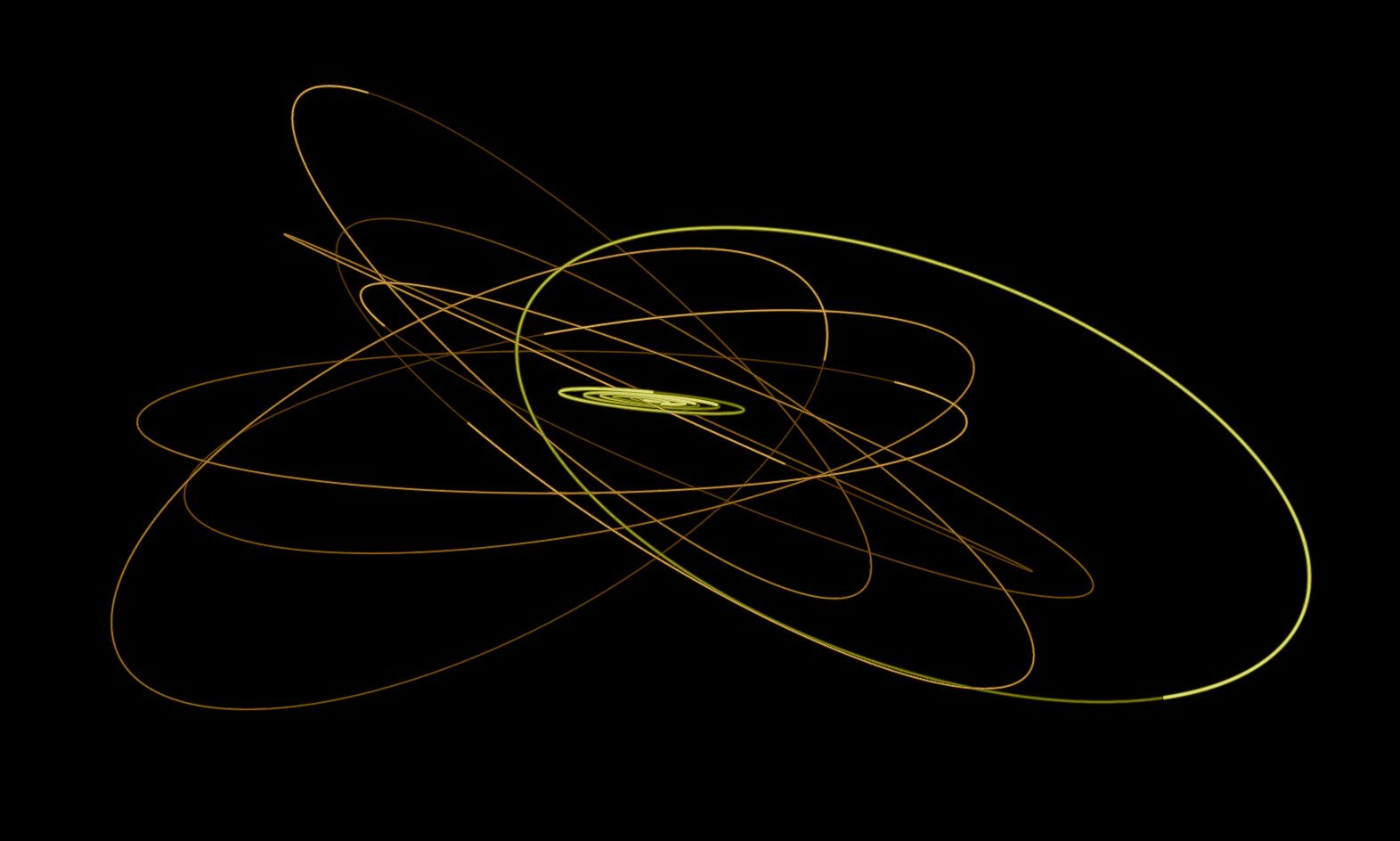
Lizard-795-Y is attended by 17 confirmed natural satellites, with one additional body currently under evaluation. The system is remarkable for both the number and diversity of its major moons, spanning from the near-planetary Niziyama at 7,934 kilometres down to the diminutive Calaphos at 696 kilometres.
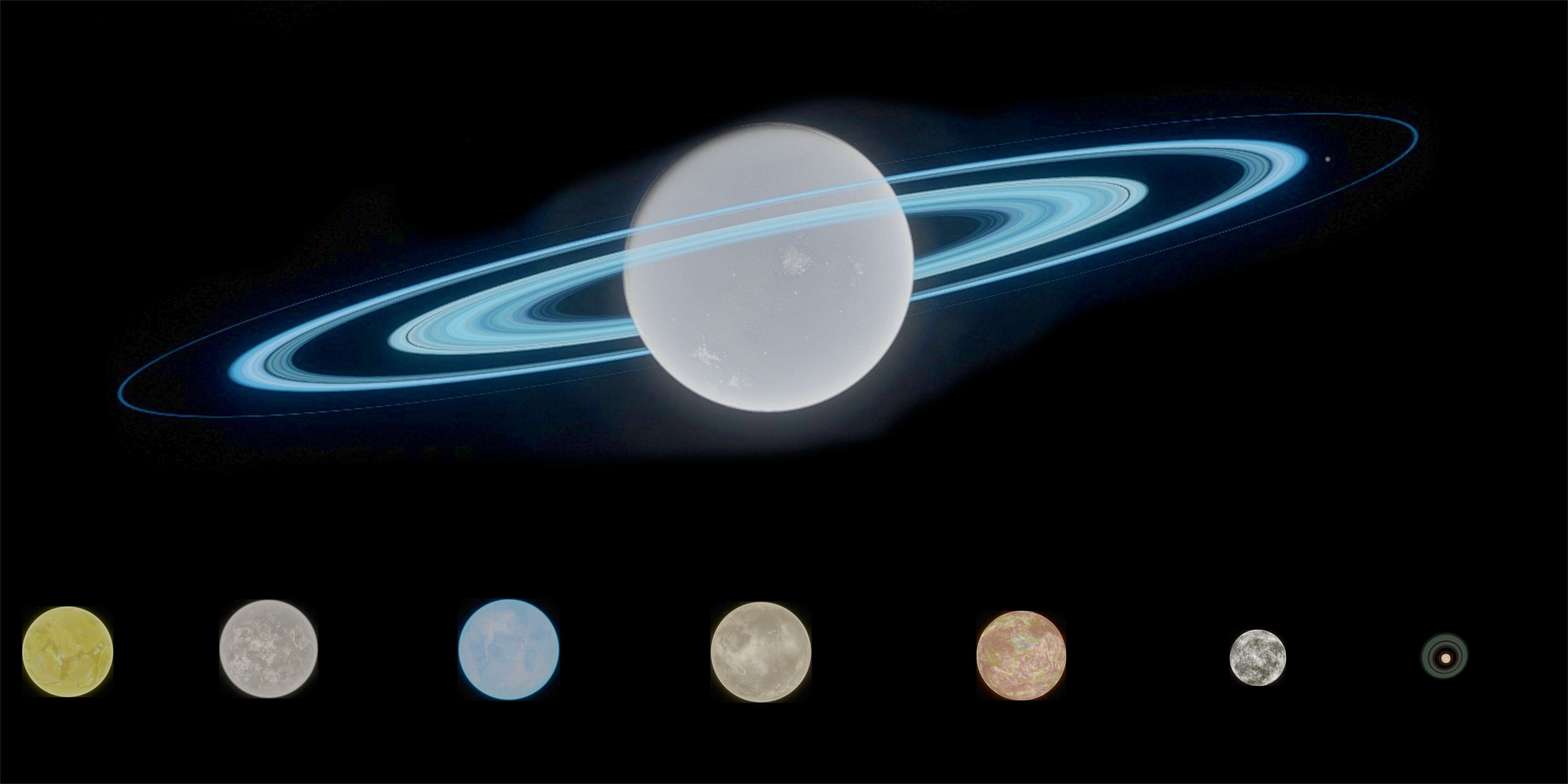
The orbital architecture of the system is one of the most dynamically disordered among inhabited planetary systems in the catalogue: wildly varying inclinations, significant eccentricities, and apparent crossing paths speak to a system still reshuffling itself after the upheaval of the planet's inward migration. The inner major moons have largely circularised through tidal damping; the outer moons retain the chaotic signatures of that turbulent history.
The ring system
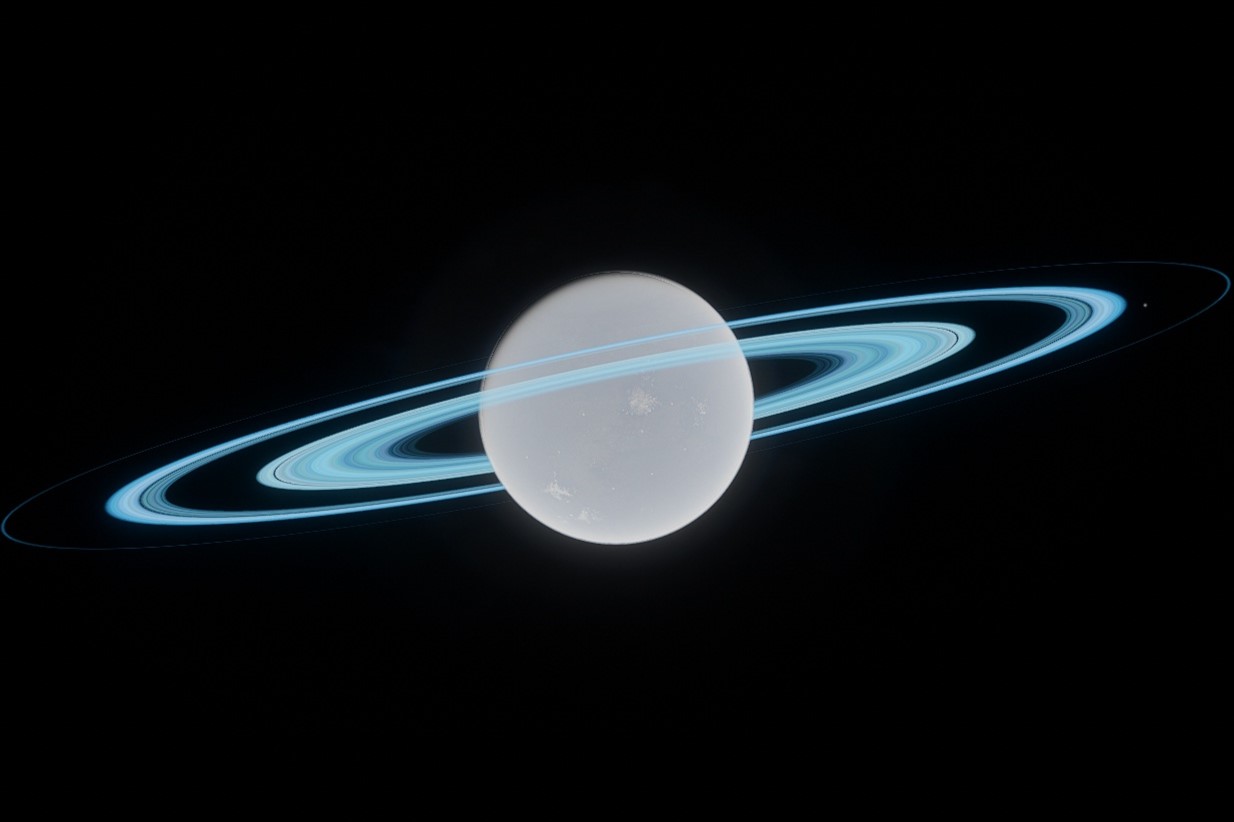
Lizard-795-Y possesses a distinctive blue ring system whose origin is traceable to the destruction of a former moon. Destabilised through a gravitational chain — Guyagantu delivering an initial gravity assist, Pisora delivering a second — the doomed moon spiralled inward past the Roche limit and was systematically torn apart over thousands of years. Its copper-bearing dust, scattering blue light preferentially, now constitutes the striking blue rings visible from orbit.
Calaphos: the wandering moon
As the outermost major satellite, Calaphos was gravitationally ejected from the system during peak orbital instability following the planet's inward migration — spending several million years as a free-floating body before being recaptured through a three-body interaction likely mediated by Guyagantu. Its surface, exposed to unshielded stellar radiation during its wandering, differs measurably from the other major moons in composition and texture, making it of particular scientific interest as a body that has effectively experienced two distinct environmental histories.
Colonisation and civil history
Lizard-795-Y was formally colonised in Imperial Year 9119 by the Lizardian Empire using faster-than-light interstellar transport — a deliberate, planned operation reflecting the full technological maturity of an interstellar civilisation. Its initial purpose was explicitly military: during the People Alien–Lizard War, the planet served as a primary garrison world for managing the intraspecies blood-craving instinct that proximity among Lizardian soldiers triggered. Large enough to distribute troop concentrations across continental distances, accessible via FTL logistics, and equipped with weaponry including orbital strike cannons, singularity cannons, and Dyson sphere infrastructure components, Lizard-795-Y was simultaneously a quarantine facility and a formidable strategic installation.
Following the war, all military systems were decommissioned and the planet transitioned to its current status as a residential world. Its complex timekeeping traditions — 17 lunar cycles, each with seven months, producing overlapping phases of extraordinary complexity — were standardised under the Imperial decree of Queen Kyama, whose calendar era takes as its epoch the discovery of an ancient precision timekeeping artefact recovered from an unexplored ruin: a choice that places intellectual discovery, rather than conquest or dynastic succession, at the symbolic centre of Lizardian Imperial chronology.
Surface conditions and habitability
Despite its turbulent atmosphere, Lizard-795-Y is rated as hospitable on standard planetary classification scales. The atmosphere is breathable, pressure is tolerable, and temperature ranges across most of the surface permit biological activity. What the rating does not capture is the relentless hostility of the day-to-day environment. Surface architecture is engineered to standards considered extreme overkill on most inhabited worlds: deep foundation anchoring, aerodynamic structural profiles designed to shed wind load, and radiation shielding integrated into all primary structures as a baseline requirement. The south polar region is uninhabitable — a permanent exclusion zone encircled by catastrophic wind shear that no surface installation has successfully maintained. The landscape itself is a record of wind and impact, scoured clean of fine sediment, mountain ranges abraded into asymmetric profiles by millions of years of abrasive dust-laden wind, unmodified by any fluvial erosion.