Lizard-5769-N
Lizard-5769-N
Astrographical Info
| Axial Tilt | 67° |
|---|---|
| Class | Terrestrial Exoplanet |
| Diameter | 19,146 km |
| Gravity | 2.2622 g (22.18460363 m/s²) |
| Mass | 5.13 Earths |
| Suns | 2 |
Orbital
| Galaxy | Elkska Galaxy |
|---|---|
| Orbital Period | 536.96 days |
| Rotation Period | 0.585878929 days |
| Semimajor Axis | 1.3667 AU |
| Solar Day | 0.585878929 days |
| System | Lizard-5769 System |
Atmosphere
| Atmospheric Composition | N₂, O₂, CH₄, He, CO₂ |
|---|---|
| Atmospheric Pressure | 0.74 atm |
| Temperature | 56℉ |
Surface
| Moons | 25 |
|---|---|
| Sea Composition | H2O |
| Water State | Liquid |
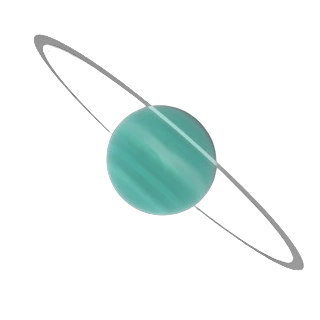
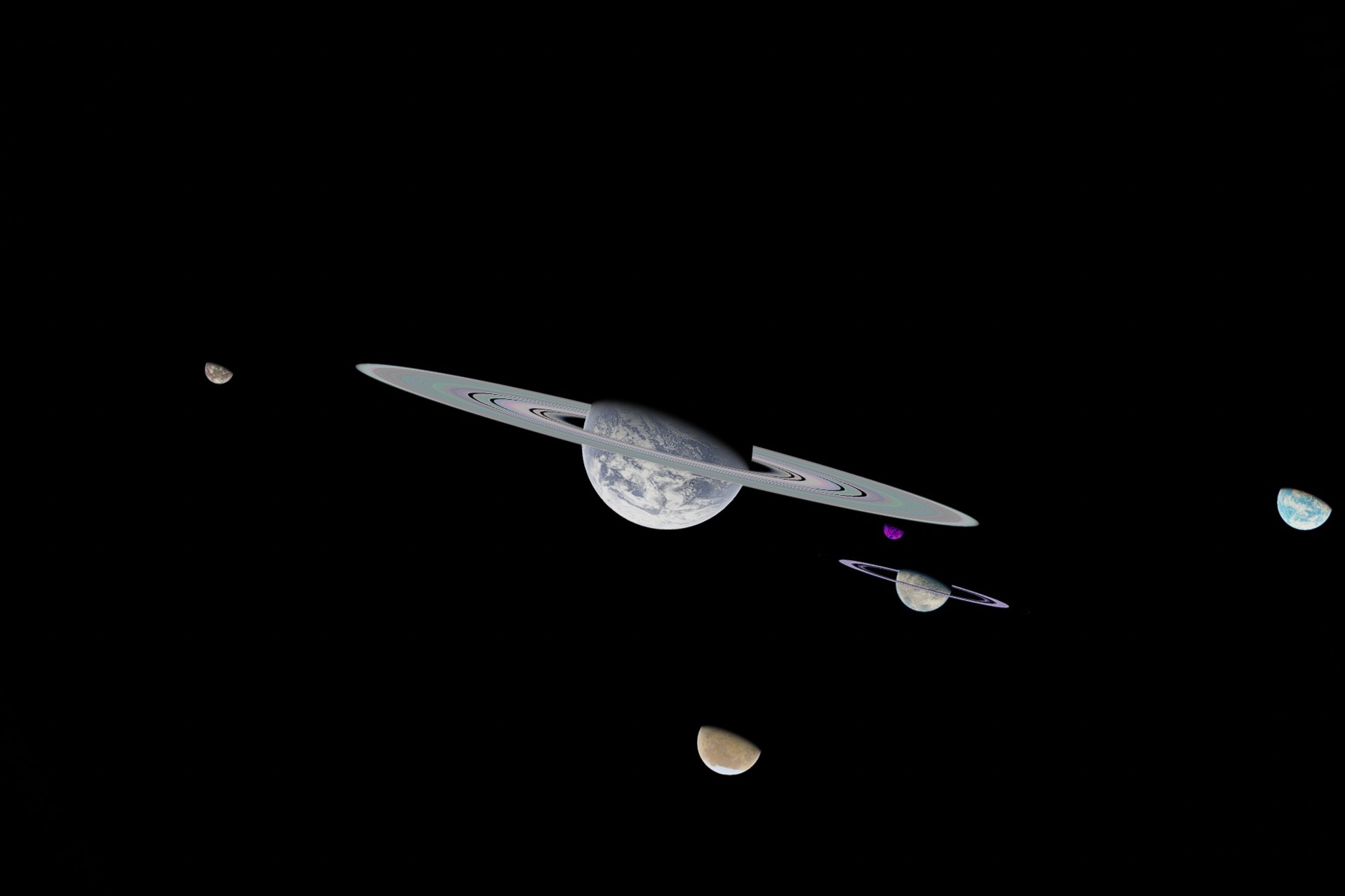
Lizard-5769-N, also known as Treguruta-IX, is a habitable extra planet from the Lizard-5769 Binary Star System. It is the second planet of the yellow dwarf Lizard-5769-α, which is in a binary with Lizard-5769-β at a distance of 30.4 AU (4.5478 billion kilometers).
Its diameter is fifty percent larger than earth's, and its mass is about five times that of Earth's. Due to the larger mass, Lizard-5769-N's gravity is 128% more than Earth's, although its atmosphere is much denser than Earth's due to the presence of heavier gases. Depending on the position of the various moons, two or even three moons can be seen at once in the sky of Lizard-5769-N. This causes solar eclipses to happen on almost a daily basis. Nivebthut and its sister moons also cast large black shadows on Lizard-5769-N.
Atmosphere
Lizard-5769-N's atmosphere is a mixture of nitrogen, oxygen, helium (>5%), neon (>1%), methane, and carbon dioxide (>0.1%) and is about 20% denser than the atmosphere on Earth primarily due to the high percentage of carbon dioxide; a heavy, colorless, odorless, and generally unreactive gas. Lizard-5769-N was able to retain a earth-like atmosphere in spite of its large size because Lizard-5769-α is a very active star, completing a solar cycle every seven and a half years, and it serves to concentrate much of the "stellar wind" which normally sweeps atoms away from the outer edge of the atmosphere. This is because the solar wind is primarily concentrated and released by coronal holes, which are large, cooler, and less dense regions in the star's atmosphere (corona). These areas contain open magnetic field lines that allow hot plasma—consisting mainly of protons and electrons—to escape at high speeds, forming fast solar wind, which resulted in gas being blow away during formation.
The atmospheric pressure is seventy-four percent compared to that of Earth's however at sea level it can be measured to 1.1, due to the higher gravity.
The increased air resistance within this denser atmosphere has a number of effects:
- High terminal velocity. Combined with Lizard-5769-N's 128% higher gravity, a freely falling object's maximum speed is significantly more than on earth. A person who happens to fall from a decent height has a chance of dying, even if they are over a cushioned area. Even over water, falling spread-eagled can result in a larger surface area, allowing an impact with the surface that will likely kill them.
- The increased mass of the denser air means that more force is required to accelerate it as it is moved out of the path of a moving object. Humans on Lizard-5769-N experience this when they try to run – it feels like there is a wind blowing against them, even though the air is still. They are further hampered by the fact that the high gravity causes their legs to give out more readily on paved or smooth surfaces, giving them less energy to force their bodies forward.
- Plants are subject to greater wind force, as the greater air density means that the moving air carries more kinetic energy and more momentum, and the plants, leaves, stems, branches, and trunks must all have a greater strength and/or flexibility to resist it.
Magnetic Field
Lizard-5769-N possesses a liquid iron core, with circulating currents that produce a dipole field similar in structure to the Earth's, strengthened thanks to a higher iron content. This fields shields the surface from cosmic rays of material ejected from Lizard-5769-α.
Internal Structure
Lizard-5769-N's physical construction resembles Earth's: a liquid iron core, a plastic mantle, and a semi-rigid crust. The core's circulating currents produce a dipole field similar in structure to the Earth's. Like Earth, it has two internal heat sources: the disintegration of radioactive isotopes, and energy from the gravitational collapse of its initial formation.
There is an additional and much larger energy input from tidal forces; the nearest inner and outer moons pull on it in contest with eachother. This excess of energy drives continental drift at a much faster rate than Earth, causing the tectonic plates to fracture more extensively because of the increased stress. This explains the lack of large continents on Lizard-5769-N, as well as its volcanism and geothermal activity.