Syraviuq
Syraviuq

Astrographical Info
| Class | Gas Giant |
|---|---|
| Diameter | 115,963 km |
| Gravity | Similar to Earth (m/s² not measured) |
| Mass | 0.22324 M♃ |
| Suns | 1 |
Orbital
| Galaxy | Elkska Galaxy |
|---|---|
| System | Lizard-725 System |
Atmosphere
| Atmospheric Composition | H2, He |
|---|---|
| Atmospheric Pressure | 2 MBar |
Other
| Affiliation | Hox Parasites Lizards |
|---|---|
| Atmosphere Color | Yellow |
| Government | Defunct Hox Parasites |
| Languages Spoken | English (primary) French (possible alternative) Russian (possible alternative). |
| Primary Core Element | H2 |
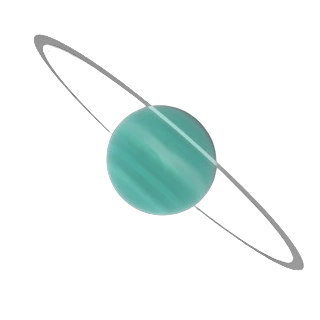
Syraviuq is a colossal gas moon orbiting the supermassive gas giant Lizard-735-Y, located in the outer reaches of the Lizard-725 star system. With a diameter measuring approximately 115,963 kilometers, Syraviuq is nearly as large as some of the smaller gas giant planets found elsewhere in the galaxy, yet it retains characteristics more akin to an ultra-massive satellite than an independent planet. The moon's mass, approximately 0.22324 times that of Jupiter, combined with its composition and gravity, establishes Syraviuq as one of the most extreme environments known to the Lizard civilization.
Syraviuq's orbit around Lizard-735-Y is relatively stable, a testament to the complex gravitational interplay between the gas giant, its other four massive moons—Ygrontiuq, Yvelmiuq, Yzulqiuq, and Ysilqiuq—and the star system's central star. This dynamic results in tidal forces that influence Syraviuq's atmospheric circulation, contributing to powerful weather phenomena and influencing the evolutionary pathways of its aerial biosphere.
The extreme gravity environment of Syraviuq—estimated at approximately 26.309 g at its cloud layers—is a defining factor in shaping the morphology and behaviors of all lifeforms inhabiting its skies. Organisms have evolved specialized adaptations to contend with intense gravitational pull, dense atmospheric pressures, and turbulent jet streams.
II. Atmospheric Composition and Structure
Syraviuq's atmosphere is a stratified, multilayered expanse dominated primarily by hydrogen and helium, with trace amounts of methane, ammonia, and other volatile compounds that contribute to its striking coloration and chemical dynamics. The complex chemistry results in swirling bands of vivid blues, purples, and muted greens visible in high-altitude cloud decks.
The atmospheric pressure increases dramatically with depth, reaching pressures that would crush human-built spacecraft. Despite these harsh conditions, multiple strata within the atmosphere provide relatively stable, buoyant zones where life can exist, float, and thrive. These zones range from the upper cloud layers, where sunlight penetrates faintly, down to mid-level strata characterized by dense aerosols and complex chemical interactions.
Key features of the atmospheric structure include:
- Upper Cloud Decks: Thin layers of ammonia ice crystals, responsible for reflective, bright clouds.
- Mid-level Layers: Rich in water vapor, ammonia, and organic aerosols—regions where temperatures are moderate enough for complex chemistry and biological processes.
- Lower Atmosphere: Extremely dense and hot, with pressures and temperatures increasing exponentially, hosting deep storm systems and intense jet streams.
Thermal gradients generated by tidal heating and internal gravitational compression create complex convective currents. These contribute to massive, planet-encircling storms, some rivaling the scale of Jupiter's Great Red Spot, but with unique morphologies shaped by Syraviuq's size and rotation.
III. The Aerial Biosphere: Life Amid the Clouds
The most extraordinary feature of Syraviuq is its diverse, thriving aerial ecosystem—an entire biosphere suspended in the gas layers, where multicellular life evolved not on solid ground but in the sky itself. This is a world where life exists in three dimensions, drifting, swimming, and gliding through thick gaseous oceans rather than terrestrial or aquatic substrates.
1. Balloon Whales: Giants of the Gas Oceans
At the heart of Syraviuq's ecosystem are the Balloon Whales, titanic gas-filled creatures that defy terrestrial concepts of size and mobility. These leviathans can reach sizes comparable to Earth's iconic Eiffel Tower, measuring hundreds of meters to over a kilometer in length.
- Morphology: Balloon Whales possess enormous internal gas bladders filled with lighter-than-air compounds, chiefly hydrogen and helium enriched by metabolic byproducts, allowing them to float and navigate through atmospheric currents. Their external skin is tough and flexible, lined with dense keratinous layers that protect against abrasive aerosols and predators.
- Syrup Production: Inside their vast bodies, specialized glandular organs synthesize and secrete a unique sweet and sour syrup-like substance. This syrup serves multiple purposes: as a nutrient reservoir, buoyancy aid, and a substrate for symbiotic microorganisms. The syrup is the foundation of Syraviuq's food web, feeding not only the Balloon Whales themselves but also many smaller species.
- Locomotion: Balloon Whales use a combination of muscular fins and controlled heating of their internal gas pockets to ascend and descend through atmospheric layers, effectively “swimming” in the sky. Their movements generate waves and currents that influence the distribution of smaller organisms.
2. The Syrup-Dependent Food Chain
The syrup secreted by Balloon Whales creates a unique niche for various life forms, the most notable being the HOX Parasites—microscopic, needle-nosed creatures capable of symbiotically infecting hosts and manipulating HOX genes.
- HOX Parasites: These tiny parasitic fish-like organisms are coated in a powerful anesthetic compound, allowing them to attach to hosts without detection. They feed primarily on Balloon Whale syrup but can infect terrestrial hosts, including humans, bestowing gene manipulation abilities.
- Wingless Syrup Birds: Small, penny-sized creatures that use a fascinating method to navigate Syraviuq's dense atmosphere. They expel sticky web-like material that acts as a sail, capturing air currents to glide or sail across vast distances in search of Balloon Whales and syrup deposits. Their sails allow them to conserve energy and reach speeds unattainable by muscular flight alone.
- Predator-Prey Dynamics: HOX parasites act as apex aerial predators within Syraviuq's ecological network. Despite their small size, they can launch coordinated attacks at speeds exceeding Mach 1.0, posing risks to larger animals and even human hosts.
IV. Chemical and Physical Adaptations of Lifeforms
The extraordinary gravity and atmospheric density have driven life on Syraviuq to develop remarkable physical adaptations:
- Keratinous Skin: Many organisms, including HOX parasites, have evolved keratin-based external layers rather than traditional cellular skin, granting durability, resistance to abrasion, and stealth.
- Anesthetic Coatings: Parasitic species evolved anesthetic compounds to facilitate undetected infection or predation.
- Syrup Metabolism: The syrup produced by Balloon Whales is biochemically rich, enabling energy storage and facilitating symbiotic relationships between microorganisms and larger species.
- High-Speed Locomotion: Despite dense atmospheric drag, creatures like the HOX parasites can achieve supersonic speeds by using streamlined bodies, fins, and coordination in groups.
V. Interaction with the Lizard Civilization
Syraviuq's unique aerial life forms and biochemistry have become a focal point for scientific study and technological exploitation by the Lizard civilization.
- HOX Parasite Research: The Lizard scientists are deeply invested in understanding the molecular biology of the HOX parasites, aiming to harness gene manipulation for medical, evolutionary, and combat applications.
- Ecological Impact: The interdependence between Balloon Whales, syrup birds, and HOX parasites creates a complex ecological web that researchers monitor closely to avoid disruptions.
- Exploration Challenges: Extreme gravity and atmospheric pressures make direct exploration hazardous. Lizard drones and specialized craft are employed to map and study the aerial ecosystems from within the cloud layers.