Rei
Rei
Astrographical Info
| Age | 1.677·10⁹ years |
|---|---|
| Axial Tilt | 85.9910547° |
| Class | Gas Giant |
| Diameter | 112,193 km |
| Gravity | 0.85395 g (8.3743887675 m/s²) |
| Mass | 0.20836 M♃ |
| Suns | 1 |
Orbital
| Galaxy | Elkska Galaxy |
|---|---|
| Orbital Period | 3.74133384 days |
| Rotation Period | 3.74133384 Days (Tidal Locking) |
| Semimajor Axis | 1,585,459 km |
| Solar Day | 3.748527 Days |
| System | Lizard-513 |
Atmosphere
| Atmospheric Color | Grey |
|---|---|
| Atmospheric Composition | H2, O2 |
| Atmospheric Toxicity | Breathable |
| Atmospheric Pressure | 2 Megabars |
| Temperature | 75℉ |
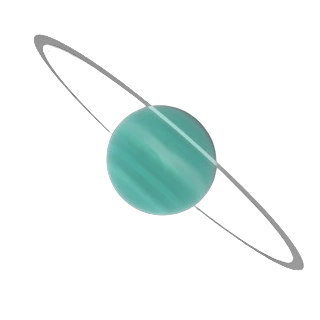
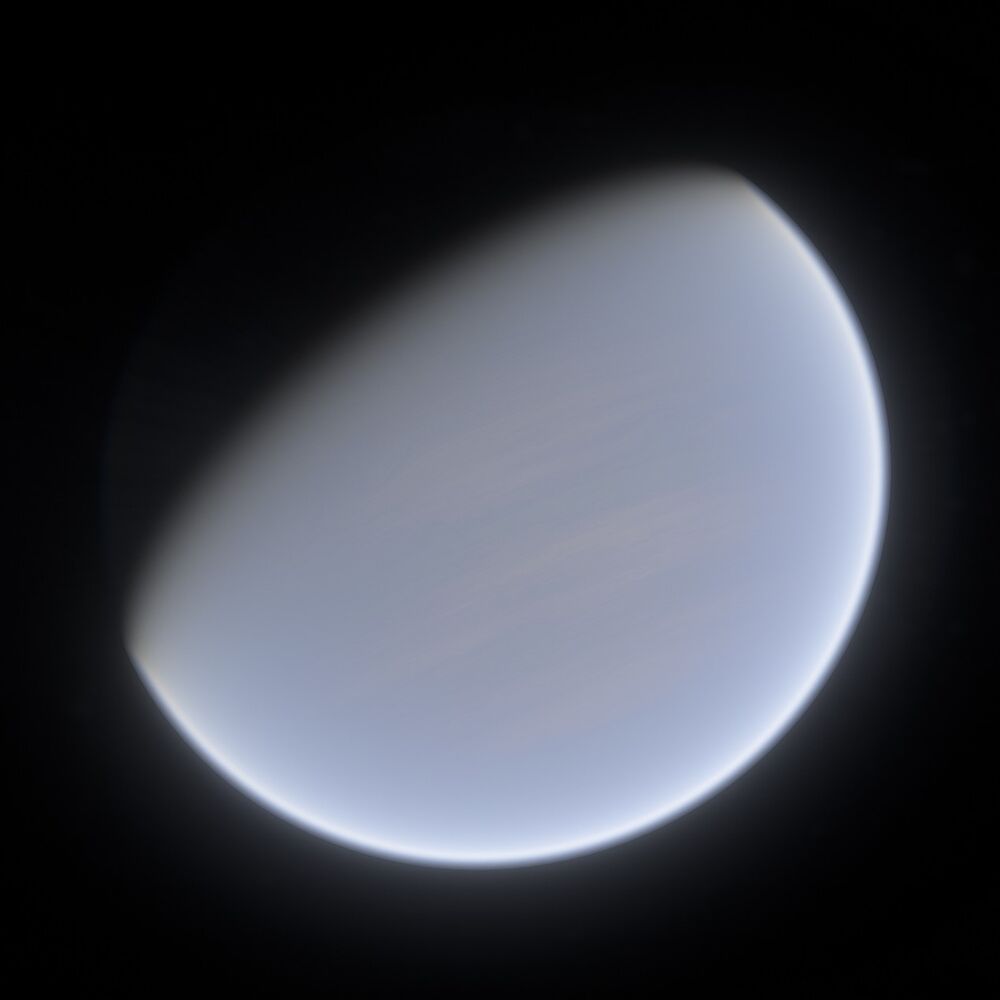
Rei is a Saturn-like habitable extrasolar moon from the Lizard-513 System. It is the fourth moon of the gas giant Lizard-513-O, which orbits Lizard-513-A. It is located 44.423 light-years (261 trillion miles) from Lizard-953-E.
Despite being almost as large as Saturn, Rei is only a moon of a planet that has seventy-seven other moons. However, due to the smaller mass, Rei's gravity is 15% less than Earth's, although its atmosphere is much denser than Earth's due to Rei being a gas giant. Depending on the position of the various moons, two or even three moons can be seen at once in the sky of Rei. This causes solar eclipses to happen on almost a daily basis. Rei and its sister moons also cast large black shadows on Lizard-513-O.
Magnetic Field
Rei possesses a metallic hydrogen core, with circulating currents that produce a dipole field similar in structure to the Earth's. This fields shields the surface from cosmic rays of material ejected from Lizard-513-A.
Rei's global field also interacts with Lizard-513-O's much more extensive one. This can divert radiation trapped in the planet's magnetic field to the moon's surface - also with unpleasant results. Additionally, the configuration of these two fields produces a "magnetic flux tube" that links the polar areas of the planet and satellite with an electrical current flow of millions of amperes. This causes a gigantic increase in electrical activity on both bodies, with massive lightning storms and other electromagnetic-phenomena.
Internal Structure
Beneath the liquid droplet clouds that make up its visible 'surface', Rei's atmosphere gradually thickens as its temperature and pressure build up from gravitational compression. When the pressure reaches about two megabars (approximately 29,000,000 pounds per square inch, which is almost two million times Earth's sea level atmospheric pressure) and the temperature reaches about 6000K (10,340F, slightly hotter than the surface of the Sun), hydrogen undergoes a phase change to its metallic form. The size of the liquid metal portion is about three-quarters of the planet's total diameter. This feature is common to all but the smallest gas giants.
Continuing downward, there is a central core of molten iron, surrounded by a thin jacket of lighter, rockier material. Large amounts of iron are not commonly found in gas giants as they have mainly rocky cores.
Rei has an intense internal heat source that results from the gravitational energy released during the contracting of the gases from which it is formed. Additionally, as hydrogen and Oxygen were compressed, they changed from gases to liquids. This released their 'latent heat' (also called the 'heat of vaporisation', which is the amount of energy it takes to evaporate a liquid into a gas). Finally, some of the oxygen that dissolved in the metallic hydrogen core condensed out & moved downwards, converting its gravitational potential energy into heat via friction processes.